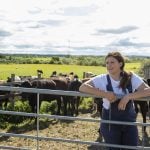
What’s the impact of agricultural business mergers?

Are these companies merging to get stronger, or prepare for changing trends?

Are big agriculture company mergers a good or bad thing for the ag industry in general and for farmers specifically? “It is a big question that doesn’t have any real clear cut answers,” says Murray Fulton, a business professor at the University of Saskatchewan. Historically mergers haven’t been all that favourable in industry in general, […] Read more

The photo shows this old scribe in his young kid days giving advice to a farmer by phone — a very efficient way to do business back in the day when phones were answered. But, I was only able to help because the #12 Soils Map was right beside my phone. My first question was always, “Where are you from?” Then I could take a quick peek at the map and give a much better answer. Many thought I had the soils map in my head — 
but now the truth comes out.

Precision ag Step 1: soil maps

The most important part of precision agriculture is the soil maps of your fields


My first work on precision agriculture was actually in the 1960s and colleagues had been doing work on the idea before that. Back then it was all about identifying specific soil profile types in a field and trying to determine if their variable properties could be managed differently. Some things were clear: 1. Leached (white […] Read more


Keeping canola out of your soybean fields

Keeping canola out of your soybean fields

Volunteer canola: 
Western Canada’s fourth 
most abundant weed

Volunteer canola is thriving in Western Canada. In the 1970s, volunteer canola was the 18th most abundant weed. Today it is the fourth most common in Western Canada. Volunteer canola is especially problematic where herbicide-resistant crops, like soybeans, are added to the rotation. Volunteer canola is a unique weed because it is derived from growing […] Read more


Aphanomyces disease symptoms in the field.

AAFC projects focus on aphanomyces root rot in pulse crops

Good management practices still the best way to control aphanomyces in the field

While improving management practices and reducing risk factors are still the best ways to avoid root rot in pulse crops, Agriculture and Agri-Food Canada (AAFC) researchers hope to find other tools. Syama Chatterton, an AAFC research scientist whose areas of expertise include diseases in pulse crops and soil borne diseases, is working on research projects that focus […] Read more

This photo shows the phosphorus response in a 1958 barley crop near Kindersley, Sask. The blue tinges showing in the “check” side of the 
photo are a result of the photo scanning.

What exactly is sustainability?

There are many ways to farm sustainably, and many ways to discuss the issue

A lot of recent farm press talks about sustainability. When I look up “sustainable” in Webster’s it says: ‘… a method of harvesting or using a resource so that resource is not depleted or permanently damaged…” The first time I remember that term used with respect to agriculture was when a respected farmer on Sceptre […] Read more


The best time to deal with a weed such as kochia is when it's small.

In-crop mechanical weed control

Controlling weeds mechanically can help overcome Group 2 resistant weeds in pulses

Group 2 resistant weeds are an annual problem for lentil producers. But there are a few outside-the-box methods that may give farmers better control than herbicide alone. University of Saskatchewan grad student Alex Alba led a study looking at three in-crop mechanical weed control methods, including: Tine harrows; Rotary hoe; and, Inter-row tillage. Alba used […] Read more

D3: The digital dumbing down

Not all information is better in the digital age. Especially data about the weather

We are now in “the information age.” Information, mostly good but sometimes sketchy, is literally at our fingertips. As I wrote this piece if a spelling error occurred, my software program underlined it in red. Then I quickly opened a web browser and put my spelling of the word into Google and up popped the […] Read more


Greg, Cheryl, and Andrew Herle show reporters some vintage farm equipment, which still comes in handy for seeding small plots.

Seed growers keep their eyes on the future

For the Herle family near Wilkie, Sask., choosing which seed to grow is the key to success

The Herle family has farmed for five generations and produced over 110 crops. Since their ancestors first tilled the Prairie soil, they’ve had a front-row seat to agriculture’s evolution. “Change is constant it seems in this industry,” said Greg Herle, commercial farmer and seed grower, speaking to ag reporters and communications people last spring at […] Read more

canola flowers

Cooler July, thanks to farmers and canola

Swift Current temperature data shows different long-term trends in January versus July

This piece is a result of the Canola Discovery Forum at Canola Days in Saskatoon in December, 2017. Jay Whetter, former editor of Grainews and now communications manager with the Canola Council of Canada, invited me to address the issue of precision agriculture with specific reference to the role soil maps might play. My contribution […] Read more