
Getting the dirt on 4R nutrient stewardship

Getting the dirt on 4R nutrient stewardship

Fertilizer Canada’s 4R nutrient stewardship research tour delivers valuable information

In the ever-changing world of farming, information is a more valuable commodity than the finest canola crop. Consequently, the recently launched webinar series “Across Canada Tour of 4R Nutrient Stewardship Research” sponsored by Fertilizer Canada is must-see viewing. The tour began last month in Alberta, where co-presenter Dr. Miles Dyck offered an overview of 4R […] Read more
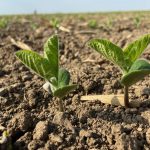


Adding a pulse crop to your rotation will put N back into your soil, some even require less water to produce.

Get your farm ready for global warming

Agronomy management: How can you adapt your Prairie farm to changing climate conditions in the years to come?


Many Prairie farmers have gradually come to accept that global warming is real. Over the past 60 years, our Prairie climate has been gradually changing. In most regions of the Prairies the length of the growing season has increased, the amount of heat (growing degree days and crop heat units) has increased and the number […] Read more

Start planning spring crop rotations

Start planning spring crop rotations

Strong crop rotations can bring along a wealth of long-term agronomic benefits

Crop rotations can be used to take advantage of differences in how each crop in a rotation contributes to increased soil organic matter, aids in pest management, manages soil nutrients and controls soil erosion. Rotating different crops in the same field can effectively promote sustainable crop production. If you haven’t already started planning your crops […] Read more


Dean Glenney found an abundance of earthworm holes in the non-trafficked areas of his field.

CTF benefits soil over time

Fencerow farming system increases corn yield and changes farmers’ soil biology

Fifteen years ago, when the bin-full alarm went off on Dean Glenney’s combine as he harvested his corn crop near Dunnville, Ontario, he had no idea what was going on, and he certainly didn’t expect the record yield of 236 bushels per acre he pulled off the field that season. Since then his yields have […] Read more

This picture of me in my office last month is a little more current, and the computer is a little more modern than in the photo below.

40 years of writing for Grainews

Les Henry reflects on his 40 year tenure in the pages of Grainews

It is hard to imagine that 40 years have slipped by since I scribbled my first piece for Grainews in 1976. It was “Nitrogen: When, what kind and how much to apply.” Today we would call it the 3 Rs: Right time, right source and right rate. The 4th R, right placement, was yet to […] Read more


Tillage recruited to deal with moisture issues

Tillage recruited to deal with moisture issues

Farmers still want to be zero tillers, but high residue, excess moisture and weeds are putting tillage tools back in the field

Necessity is the mother of invention, but weather appears to be the mother of necessity, these days. That seems to fit as producers talk about the need for tillage in this October Farmer Panel. Zero-till and direct seeding are still foremost on producers’ minds when they look at overall cropping practices, but with several or […] Read more

Can tillage fit into a no-till system?

Can tillage fit into a no-till system?

Some zero-tillers are now looking to tillage to manage disease and weed issues

A large majority of farmers in Western Canada have adopted zero-till systems — with the exception of those in the Red River Valley who are dealing with heavy, wet clay soils where tillage is just a fact of life. Most farmers understand the many benefits of zero till, such as prevention of soil erosion, better […] Read more


Building up the soil in your fields

Building up the soil in your fields

Changing your crop rotation and management can change the content of our soil

New research is showing that it is possible to make new, nutrient rich, productive soil on your farm without waiting for eons, simply by changing your crop rotation and management. The research, led by Dr. Stuart Grandy at the University of New Hampshire, is revising our conventional understanding of how soil organic matter (SOM) is […] Read more

A cover crop mix of warm and cool season plants ensures that soil life always has food.

Good reasons to plant cover crops

Not organic? Don’t have cows? Cover crops could still be a fit on your farm

If you went to a workshop about cover crops 10 years ago you wouldn’t have had any trouble finding an empty seat. Today, producers pack these workshops. Word is spreading about the benefits that cover crops could bring to their farms. Cover crops provide many soil and production benefits: increased organic matter content, vibrant, working […] Read more