
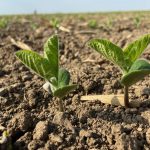
Soybean and flax intercrop example.

Reducing inputs through intercropping

In Part 2 of a 2-part series, a panel of farmers discuss the benefits of intercropping

Many producers who adopt intercrops and cover crops are looking to increase soil and plant health and reduce the need for inputs such as synthetic fertilizers. That effect often becomes clearer the longer they manage the system. The three producers on a panel at an Intercropping Workshop in Brandon, Man., last November shared how they […] Read more

Bean and lentil legumes background as a group of assorted fava soy red black beans as a healthy nutrition high fiber food concept as a healthy cooking natural food ingredient.

In response to, ‘Cover crops and green manure’

Clearing up a tillage misunderstanding from a previous column

It is always a thrill to get letters and book orders from readers. Most letters are complimentary and a joy to receive. But, a recent letter disagreed with ideas in my September column that talked about cover crops and green manure. A phone call cleared up the matter. It was completely my fault for not […] Read more


Tillage can help warm the soil faster for earlier seeding, but it also gives weeds a better environment to germinate.

Tillage systems’ impact on weeds and disease

No-till and minimum-till systems both have agronomic drawbacks and advantages

No-till and minimum-till systems both have their advantages and drawbacks, especially when it comes to managing weeds, disease and insects in next season’s crop. Let’s start by looking at the advantages of no-till systems. Right off the bat, they’re great for soil and moisture conservation — particularly when you’re working on lighter, sandier soils. Growers […] Read more

Brooks and Jen White OYF Manitoba regional finalists – it all starts with looking after the soil.

Canada’s OYF: Manitoba nominees

Manitoba’s Brooks and Jen White focus on regenerating farm and business

Brooks and Jen White, Manitoba’s 2018 Outstanding Young Farmers, have set some specific goals for their grain and bison farm near Lyleton in southwest Manitoba, which all revolve around their vision statement of “regenerative” agriculture. Since taking over the fifth-generation farm in 2012, Brooks and his wife Jen have grown the farm’s bison herd to […] Read more


This photo was taken on August 1, 2009. There was great crop growth, from old fashioned methods.

Cover crops and green manure

In the Palliser Triangle, cover crops aren’t the answer in a dry cycle

The current interest in soil health issues has expanded our thinking and spawned much research and new farm-scale work with many new-to-us plant species. Cover crops are planted in the non-commercial season to add diversity to the mix and juice up the soil organisms that go along with the different plants. In wet years, cover […] Read more

It didn’t take much disturbance to raise the dust during a tillage demonstration at the 2018 Ag In Motion farm show.

Well here is a game changing concept

Profitable crop production with little or no added inputs. Is someone talking nonsense?

Talk about an interesting contrast in messages! In one week during my summer travels I attended a first-in-Canada Soil Health School in Manning (Alberta Peace River region) and a few days later I was eating dust at a tillage demonstration at the Ag In Motion farm show at Langham, Sask. My old brain had to […] Read more


The green crop on the left is a chickpea monocrop still flowering on August 31. On the right is intercrop that is more ripe and not flowering.

Ins and outs of intercropping

Intercropping researcher Lana Shaw shares tips and tricks for successful intercropping


You can’t convince farmers to use long rotations if they are losing money on some of those crops, says Lana Shaw, research manager of South East Research Farm at Redvers, Sask. Nor is it good enough to only have one or two profitable crops in a region. The industry needs to find a way to […] Read more


There’s a perception in the farming community that soil erosion and degradation are in the past, but that simply isn't the case.

Don’t forget lessons of the Dirty 30s

Although there’s a perception that dust is past, tillage erosion is on the rise in Manitoba

It seemed like the beginning of the end of the world: friends and neighbours dying of “dust pneumonia” and massive dust storms sweeping the land. These are some of the recollections of people who were alive in the “Dirty 30s,” recorded for an oral history project by Daryl Ritchison, interim director of the North Dakota […] Read more

This photo shows the phosphorus response in a 1958 barley crop near Kindersley, Sask. The blue tinges showing in the “check” side of the 
photo are a result of the photo scanning.

What exactly is sustainability?

There are many ways to farm sustainably, and many ways to discuss the issue

A lot of recent farm press talks about sustainability. When I look up “sustainable” in Webster’s it says: ‘… a method of harvesting or using a resource so that resource is not depleted or permanently damaged…” The first time I remember that term used with respect to agriculture was when a respected farmer on Sceptre […] Read more