

Rural landscape with wheat field on sunset

Slowing growth to prevent lodging

Should you invest in a plant growth regulator for your cereal crops this season?

Where there’s enough moisture and high fertility levels, lodging can still be a major yield constraint. In cereal crops, plant growth regulators (PGRs) have been shown to produce shorter stems to reduce lodging and maintain grain yields. Researchers in Alberta are trying to optimize PGR use to prevent lodging and improve standability and harvestability in […] Read more
Should I treat my seed with a fungicide?

Should I treat my seed with a fungicide?

Q & A with Nutrien Ag Solutions

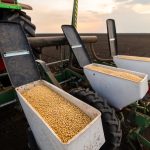
Q: Why should I treat my seed with a fungicide? When should my seed treatment include an insecticide? A: Seeds and seedlings are vulnerable to many soil-borne and foliar pests. Insects and pathogens can destroy germinating seeds and young plants, which are relatively tender and lack food reserves to recover from injuries or to survive […] Read more


It’s a good time to be breeding oats

It’s a good time to be breeding oats

Oat research and development continues despite industry and government funding cuts

Despite a few stumbling blocks, the Canadian oat industry continues to advance and offer good opportunities for oat growers. The good news is that researchers are looking at new, value-added products that provide increased health benefits to consumers. Thanks to improvements in oat breeding and agronomic practices, Canadian oat yields have increased by 18 per […] Read more

Falling number can be obtained free of charge from the Canadian Grain Commission through its harvest sample program until Dec. 31 if you’re registered for the program. (Canadian Grain Commission photo)

Grain grading revamp may add falling number, DON as factors

Two significant grain specs that aren’t yet factors for a crop’s official grade are now under consideration to join that official list. The Canadian Grain Commission on Monday put out a call for “grain sector stakeholders” to submit their views before May 10 on a proposal for falling number and deoxynivalenol (DON) to both become […] Read more


Managing disease in oat crops

Managing disease in oat crops

Fungal diseases, bacterial diseases and viral diseases each need different management

Oat growers across the Prairies have a number of foliar diseases to watch out for in their fields: crown and stem rust and septoria leaf complexes. Oats can also harbour a lot of different species of fusarium but, to date, fusarium hasn’t become an issue to the point where it has impacted oat yield or […] Read more

(Dave Bedard photo)

Viterra buys up all of North Dakota grain terminal

Viterra has bought up the other half of a U.S. joint-venture grain terminal the company helped build in its SaskPool days. The Regina-based grain handling arm of commodity firm Glencore announced Thursday it has closed a deal to buy U.S. food processor General Mills’ 50 per cent stake in the two companies’ grain terminal at […] Read more


Ryan Boyd talks soil structure to attendees of the Canadian Farm Writers’ Federation conference in Manitoba during late August. Also pictured is his daughter, Piper.

Regenerative agriculture for the next generation

Ryan Boyd uses farming practices that rebuild his soil without breaking the ban

When he came back to the farm, Ryan Boyd was looking for a lower-risk farming scenario. As a young farmer, “I didn’t want to stick my neck out and have a large loss in one year,” he told reporters and communications professionals gathered on the approach to one of his fields near Brandon, Manitoba in […] Read more

Sunset in wheat field, late afternoon in wheat field - dusk in the cereal field

Copper: For peat’s sake!

Think peaty soil isn’t worth farming? Just add copper to get better results

Peat is nature’s natural organic compost. As a field crop amendment, peat has a lower carbon-to-nitrogen ratio (C:N), 60:1, than straw or cattle manure — that’s around 80:1. Canada has 270 million — yes, million — acres of peat lands, making up 25 per cent of the world’s peatland supply. Peat is harvested right across […] Read more


Can a cover crop help establish forages?

Can a cover crop help establish forages?

Q & A with Nutrien Ag Solutions

Q: Are there benefits to a cover crop for forage establishment? A. There are many benefits to planting a cover crop (sometimes referred to as a companion or nurse crop) for forage establishment. Cover crops commonly planted alongside perennial forages include oats, barley and wheat. Before a forage stand becomes well established, bare soil can […] Read more

Is it possible to do a better job with less land?

Intercropping lets farmers do more with less

Intercropping helps farmers increase profits on fewer acres. Part 1 of a 2-part series

It’s interesting how many farmers adopting regenerative agricultural practices, like intercropping and cover crops, are either downsizing their operations, thinking about downsizing or have taken the pressure off in terms of looking for more high-priced land to expand (either to buy or rent). The three producers on a panel at an Intercropping Workshop in Brandon, […] Read more