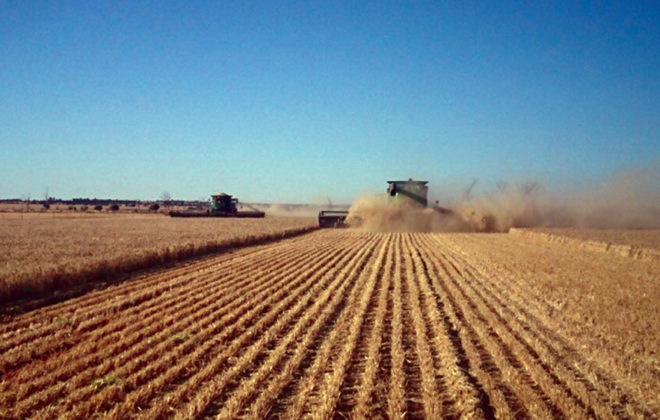
Rotating from cereals to pulses can help lower your seed and soil-borne disease pressure.

Cereals clean up before a pulse crop

Planting a cereal crop can help set up your next pulse crop for success

Cereals are more than just a rotational crop between your canola and lentils; they can play a key role in setting up next year’s pulse crop for success by helping clean up your fields of weeds and soil-borne disease. When you look at weed control and resistance management, cereal crops offer the broadest range of […] Read more


Fall quackgrass growth.

Pre- and post-harvest weed control

Q & A with CPS

Q: When should I start weed control for my crop? A: A weed-free crop at harvest represents the cumulative effort of field management during the season. To manage many weed species, the season begins the previous fall. Pre-harvest weed control tends to focus glyphosate application on perennial weeds such as quackgrass or Canada thistle. At […] Read more

Weed specialist Clark Brenzil says that ideally wild buckwheat should be controlled at the four-leaf stage or smaller.

Wild buckwheat: A weed to watch

Glyphosate alone is just not enough. 
Why is buckwheat so hard to control?

Wild buckwheat consistently ranks among the top five problematic weeds in Saskatchewan weed surveys. Clark Brenzil, provincial weed control specialist at Saskatchewan’s Ministry of Agriculture, explains what makes this weed so tricky. Wild buckwheat is an annual weed found in cropland in the southern Prairies. Despite farmers’ best efforts, the weed is hardy and persistent […] Read more


Choosing that pre-seed herbicide

Choosing that pre-seed herbicide

Q & A with CPS

Q: What are some considerations when selecting a pre-seed herbicide application? A: There are significant benefits to applying herbicides prior to seeding or crop emergence. Pre-seed weed removal reduces competition for valuable moisture and nutrients required for seedling development. When selecting pre-seed herbicides, begin with the crop to be grown. Products available vary considerably by […] Read more

Photo: Thinkstock

Six factors to consider if your soil moisture level is low

To date, all indications are pointing to a dry spring, given the below-average precipitation received in many areas of the Prairies this winter. There are exceptions to every rule of course, but a lot of farmers had relatively dry soils going into winter, so we asked some agronomists and provincial crop experts what factors could […] Read more


6 strategies to manage weeds in pulse crops

6 strategies to manage weeds in pulse crops

From tillage to pre-seed and pre-emergent herbicide applications in pulses

Pulse crop growers face unique challenges in terms of managing weed populations in their crop. Not only are pulse crops less competitive, there are limited choices for pre-seed and in-crop herbicide applications, compared to canola and corn. Plan ahead to manage weed populations and resistance using the tools available. There are many choices for grassy […] Read more

Tame oats exposed to Axial, a Group 1 herbicide. Susceptible plants yellow and die after being exposed to a Group 1 herbicide.

Getting to know your herbicides: Group 1

A look at how Group 1 chemicals work and what you can do to manage weed resistance

Although wild oats are an annual, Group 1-resistant wild oats have become a perennial problem on the Prairies. And wild oats aren’t the only weeds developing resistance to this chemical group. Grainews takes a look at how Group 1 chemicals work and what farmers can do to manage resistance. Group 1 herbicides are commonly applied […] Read more


Graham Collier, technical services manager at Nufarm, talks herbicide resistance during a plot tour west of Saskatoon.

Which weeds will develop resistance?

Stay ahead: know which weeds are most likely to develop resistance to which chemistry

Farmers who want to slow herbicide resistance need to understand weed biology, says Graham Collier. Collier is technical services manager at Nufarm. During a plot tour at Ag-Quest west of Saskatoon, he outlined some of the factors that contribute to herbicide resistance. One factor is the average risk of the herbicide group. Weeds are more […] Read more