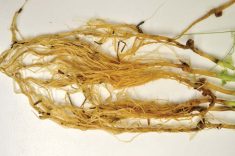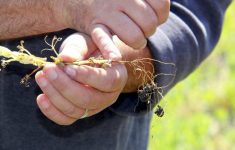

In early April, NuFarm announced that it had received emergency use registration of its INTEGO Solo seed treatment for suppression of Aphanomyces euteiches in field peas.
INTEGO Solo (ethaboxam) is a Group 22 fungicide registered for pythium control and the suppression of seed rot caused by Phytophthora and aphanomyces. It had already been registered Canada-wide for use on lentils, chickpeas, dry beans and soybeans. With this emergency use registration, it can also be used on field peas in Alberta, Saskatchewan and Manitoba.
INTEGO Solo will help protect seedling roots of seedlings during early season growth stages while soil conditions are wet. It is the only Group 22 seed treatment or fungicide registered for pulses in Canada.
Read Also
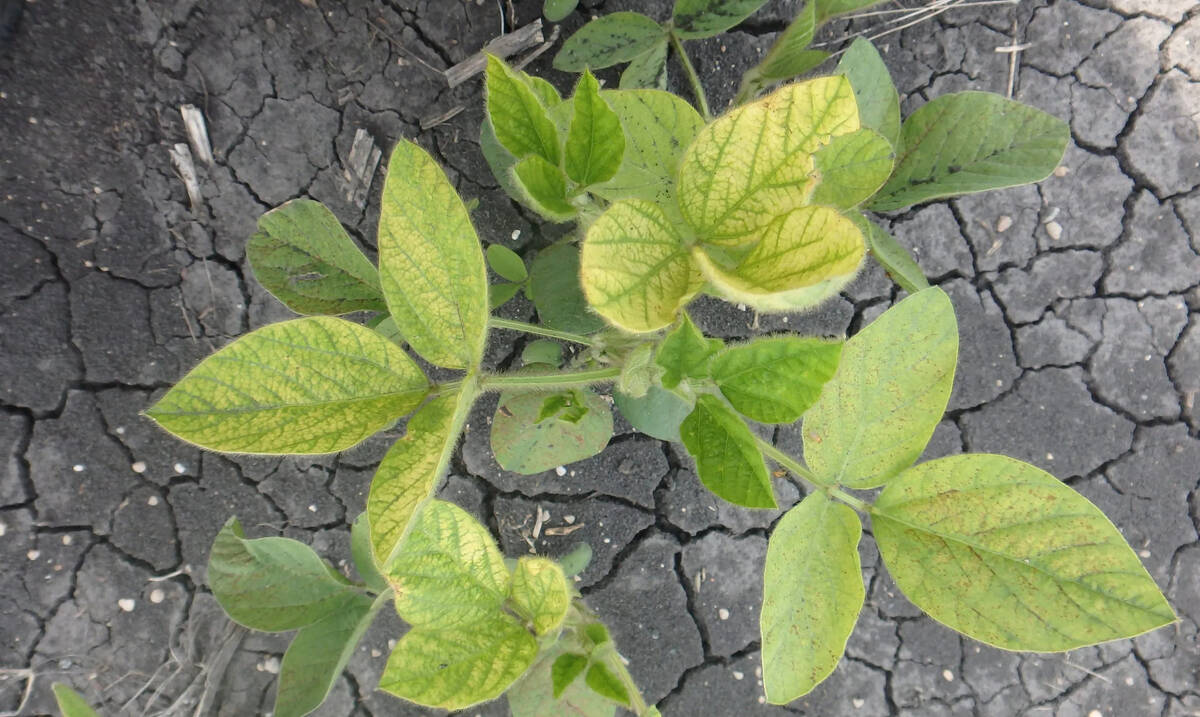
Selecting IDC-tolerant soybeans doesn’t reduce yield, Manitoba study confirms
University of Manitoba research shows soybean varieties selected for iron deficiency chlorosis (IDC) tolerance protect yield in affected areas without reducing performance elsewhere in the field.
Graham Collier, technical services manager for Western Canada with Nufarm Agriculture Inc. wants to remind growers that this product is a “suppression product,” for use as “part of a management system,” and will not completely eliminate problems. It will be helpful for early season protection, but the length of time it will protect the plants will be dependent on environmental conditions.
“It’s there while our soils are moist in the summer,“ Collier says. However, aphanomyces could still infect plants later in the growing season. “We don’t have an option for later in the year yet,” he says. “Everyone’s working on it.”
After harvest, residue from fields treated with this product cannot be fed to livestock. “We have a residue study that’s not done yet,” Collier says.