


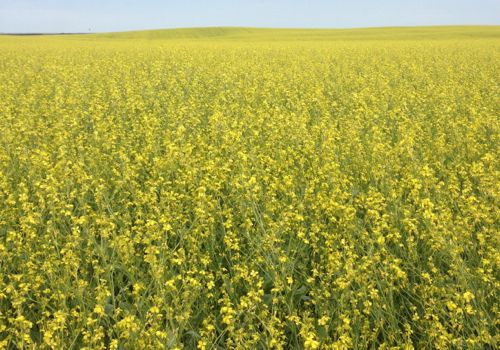
We seeded canola in the field north of our house this growing season. As of early August, the crop was looking good. Have a look at the timelapse video below!

The canola timelapse video project

Drydown option cleared for pulse, sunflower growers
Pulse growers whose products are headed to the European Union have one more desiccant option for this year’s harvest. At the end of July, maximum residue levels (MRLs) were published for the Group 14 herbicide saflufenacil on field peas, soybeans, dry beans and sunflowers. Gord Kurbis, Pulse Canada’s director of market access and trade policy […] Read more

Diagnose your own problem
The Canola Council’s online diagnostic tool is there to help farmers identify problems themselves
Maybe it’s after work hours, or the long weekend. Or maybe you need to make a quick decision. It’s probably not going to replace your favourite local agrologist anytime soon, but the Canola Council of Canada’s website can be very useful when you need a little help. All you need to do is gather as […] Read more
Minogue: Feed option may put carinata in Prairie rotations
Carinata is poised to become a more economical crop option for Prairie farmers now that the crop’s meal has the federal seal of approval. The Canadian Food Inspection Agency recently approved carinata meal as feed for Canadian beef cattle. Carinata is agronomically similar to mustard and canola — and according to Steve Fabinjanski, CEO of […] Read more

Taking the count
The first part of deciding whether or not you need to spray your field is getting an accurate pest count
Most recommendations about pesticides include an economic threshold — if you have more than the specified number of pests per square metre, spraying could be an effective option for you. So before you can make your decision, you’re going to need to take a census. At Saskatchewan Agriculture’s Crop Diagnostic School at Indian Head in […] Read more

Minogue: Available acres may make Brazil top soy player
Raleigh, N.C. — Whatever major boosts may soon come in world soybean production are seen coming from countries with the acres to spare, not necessarily from breeders building better beans. That’s how one major player in Brazil’s soybean sector sees the near future, as growers meeting here Thursday discussed the road ahead for the crop […] Read more

Factors line up for sclerotinia in 2014
To spray or not to spray? It’s a tougher question when it comes to sclerotinia in canola than for most other crop diseases. Last year, the high levels of sclerotinia many forecasters called for didn’t materialize. This year’s disease levels, and farmers’ decisions about going to the expense of spraying to control it, will mainly […] Read more

Minogue: In canola seed, smaller size a better value
Canola’s seed kernel size can vary greatly from year to year, ranging from three to 7.5 grams per 1,000 kernels. While some growers believe larger seeds have a better chance of survival and can be seeded at lighter rates, others say there isn’t enough evidence to assume that larger seeds will always have higher survivability. […] Read more
Estimating costs of production
If you haven't calculated your costs of production on the farm, government numbers can help get you started
Market analysts don’t always agree on price forecasts, but at every farm marketing presentation at least one analyst gives out the same piece of advice: know your cost of production. Calculating production costs is time consuming and frustrating. As soon as you’re done, the prices change. Here are four reasons to do it anyway: If […] Read more
Harvest widows
The editor's column
In the December issue of Grainews we ran a story by freelance writer Marianne Stamm about “harvest widows” — women coping with the strain of having their husbands out of the house for long hours, day after day during the harvest season. When Marianne submitted this story, I was excited. Everything in the article rang […] Read more
Cyber-Savvy Farmer
