Earlier in the year I wrote about how seasonal change into summer’s hotter and humid weather can create increases in fluid retention. As we face another change of season into colder, drier temperatures, it’s common to hear reports of increases in joint stiffness and pain.
Why does this happen? Colder weather can come with changes in atmospheric pressure that cause joints to speak a little louder, soft tissues to hold more postural tension and circulation to move less easily through these tissues. On top of this, our footwear changes, as do our movement habits. We become more prone to time indoors, and when when we are outdoors we wear heavier clothing against the temperatures.
Read Also

Lightning gives and takes in Prairie fields
Lightning in fields can be a source of nitrogen but at times can result in crop damage which, at a glance, resembles a very localized disease outbreak, plant pathologist Ieuan Evans writes.
Soft tissues and joints rely on movement and circulation to provide nourishment, lubrication and stimulation toward the production of new cells in the tissues and joint lining. Similar to how I noted that our lymphatic system requires movement to circulate, our joints need movement and impact to maintain healthy surfaces and move easily.
In the colder months we can support our joints by continuing to move and hydrating well. Movement may look like your choice of outdoor activities: skating, curling, walking, skiing, snowshoeing, daily chores in these months — and even with those excellent options I would encourage you to include some indoor, slow and focused mobility work for the joints too.
Simple flexes
A simple routine is to make a point of moving each joint through its available range of motion, in each direction, a few times daily. This is best done laying down!
Start at the feet, with the toes: wiggle, spread, curl five to 10 times. Then move up to the ankles: point, flex, draw circles, five to 10 times.
Upward from there to the knees, which bend, extend and also rotate (flex the ankle and see if you can turn the lower leg outward and inward from the knee).
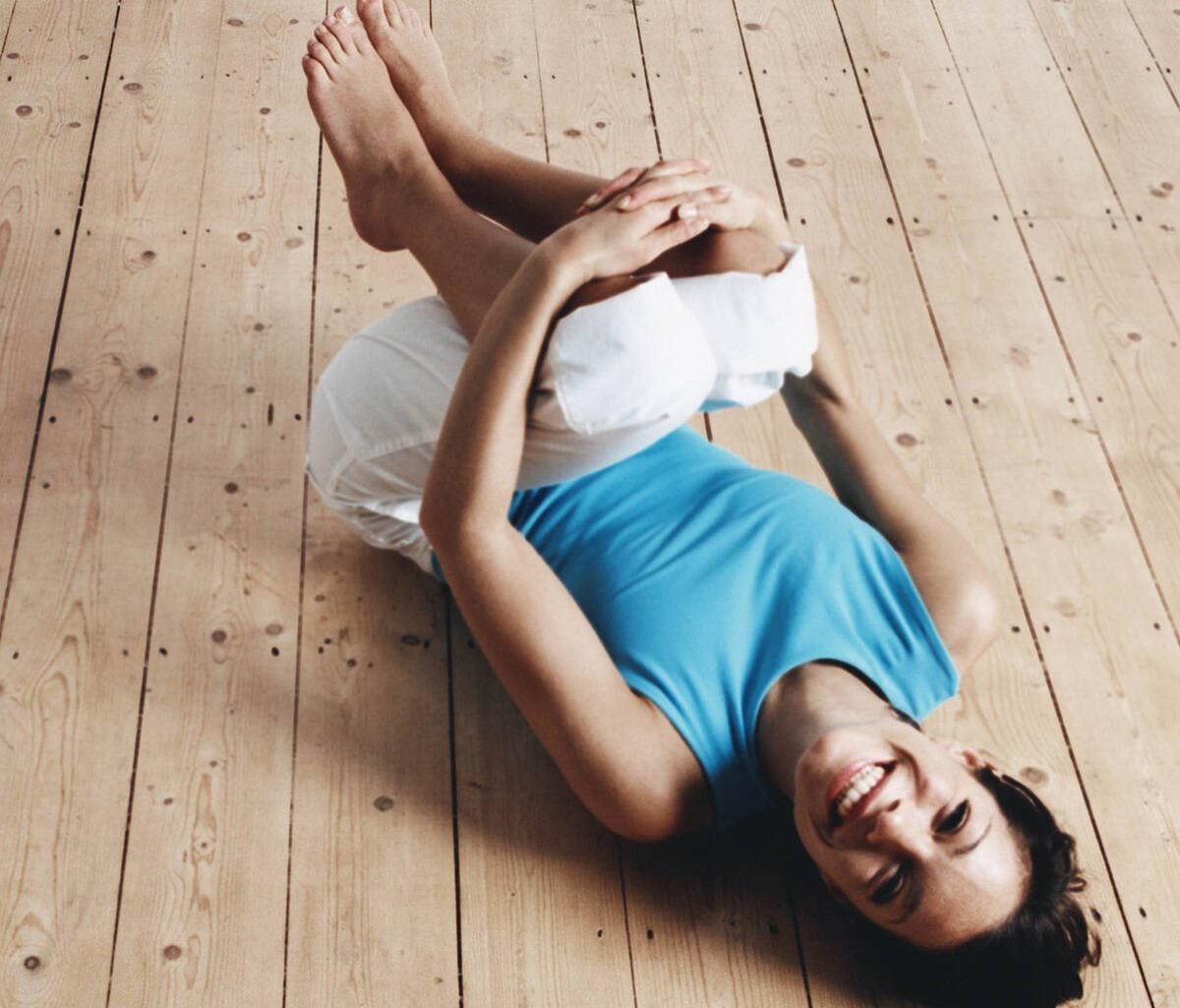
Then, the hips: hug the knees in to the chest; kick the leg long; bend the knees and sway them side to side like windshield wipers.
Move up to the pelvis, rocking it forward and backward, then see if you can draw circles with the tail bone in each direction (it’s harder than you’d think!). This also involves your lower spine.
Turn onto one side and bend the knees up to 90 degrees from the hips, rotate the mid-body open to the opposite side. Repeat five to 10 times, then do the other side. This rotation works your whole spine and ribcage, and the shoulders somewhat too.
Come back to laying on your back and draw circles with your shoulder tips, then bend and extend your elbows, then draw circles with your wrists — all for five to 10 rounds.
Lastly, slowly move your head side to side; shoulder check in each direction; then gently tuck your chin toward the floor or bed behind you and release, all five to 10 times.
This simple, whole-body routine will not only get some circulation flowing into the joint spaces, it also gently works the connective tissues and soft tissues that surround and support joints. You might notice you yawn or have some spontaneous sighs occur during this routine. That means your nervous system is also enjoying the practice.
Joint stiffness and pain can occur for a number of reasons, and as always, it’s important to check in with your health care and movement care practitioners if joint discomfort gets in the way of living life.