

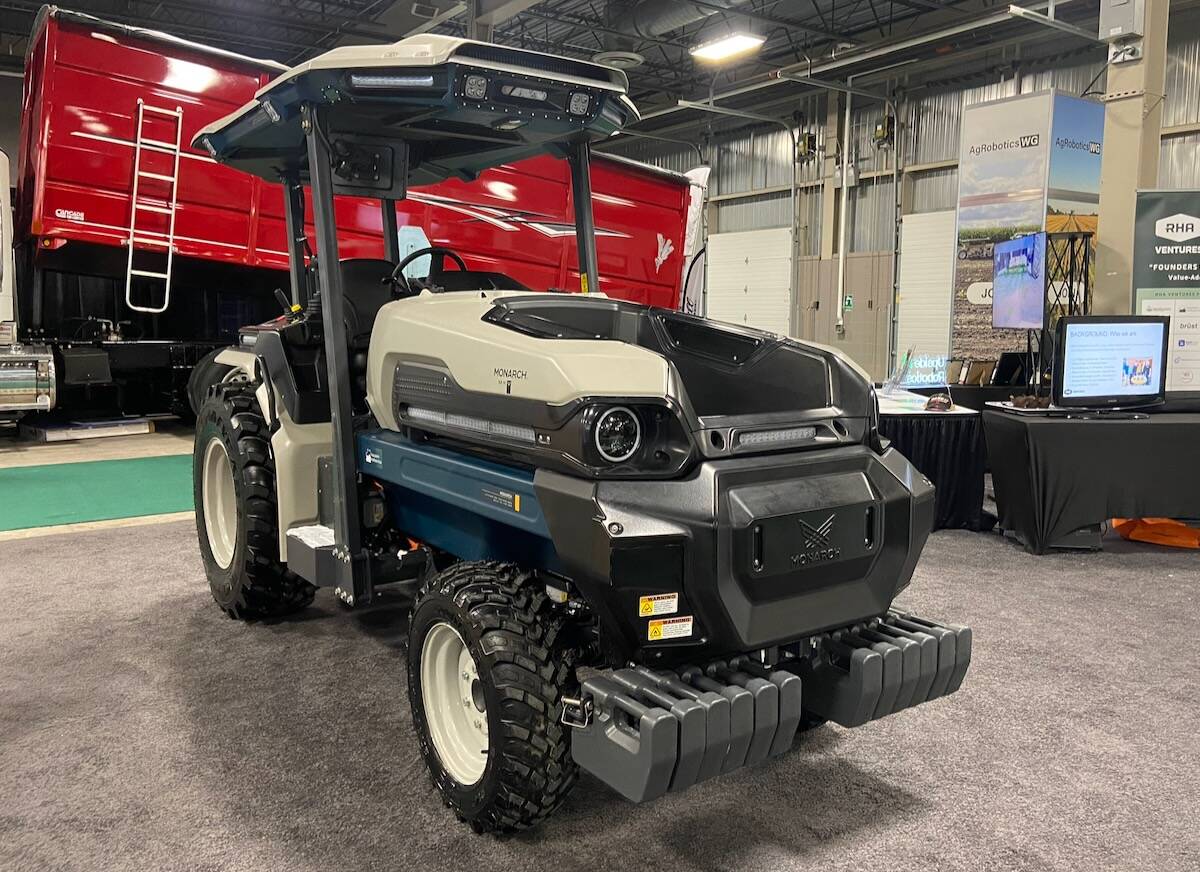
The Canadian distributor of Monarch tractors is awaiting insight into what is next for the electric utility tractor as new owner Caterpillar takes over.
Monarch is American company originally founded to build an electric tractor from the ground up. After several months of economic struggles, it announced last week that its technology has been acquired by Caterpillar.
This follows a series of crippling events for the electric and autonomous tractor pioneer that included a loss of its manufacturing facility and lawsuits from some dealers in the United States over challenges with its autonomous technology.
Read Also

U.S. buyers redirect imported fertilizer overseas as Iran war drives up global prices
Higher overseas prices are leading U.S. fertilizer buyers to resell into more lucrative markets.
WHY IT MATTERS: Monarch was one of the first independent electric tractor companies and has received hundreds of millions of dollars in investment.
Chuck Baresich, of Ontario-based Haggerty AgRobotics, said as a distributor of Monarch tractors they hadn’t heard much from the company recently. That led him to believe a sale of the technology was imminent.
Despite the insect-related names, Caterpillar is a surprise buyer for Monarch, as the company is more known for its large construction equipment than its smaller farm tractors. Acquiring Monarch will give them a foothold in proven electric and autonomous technology.
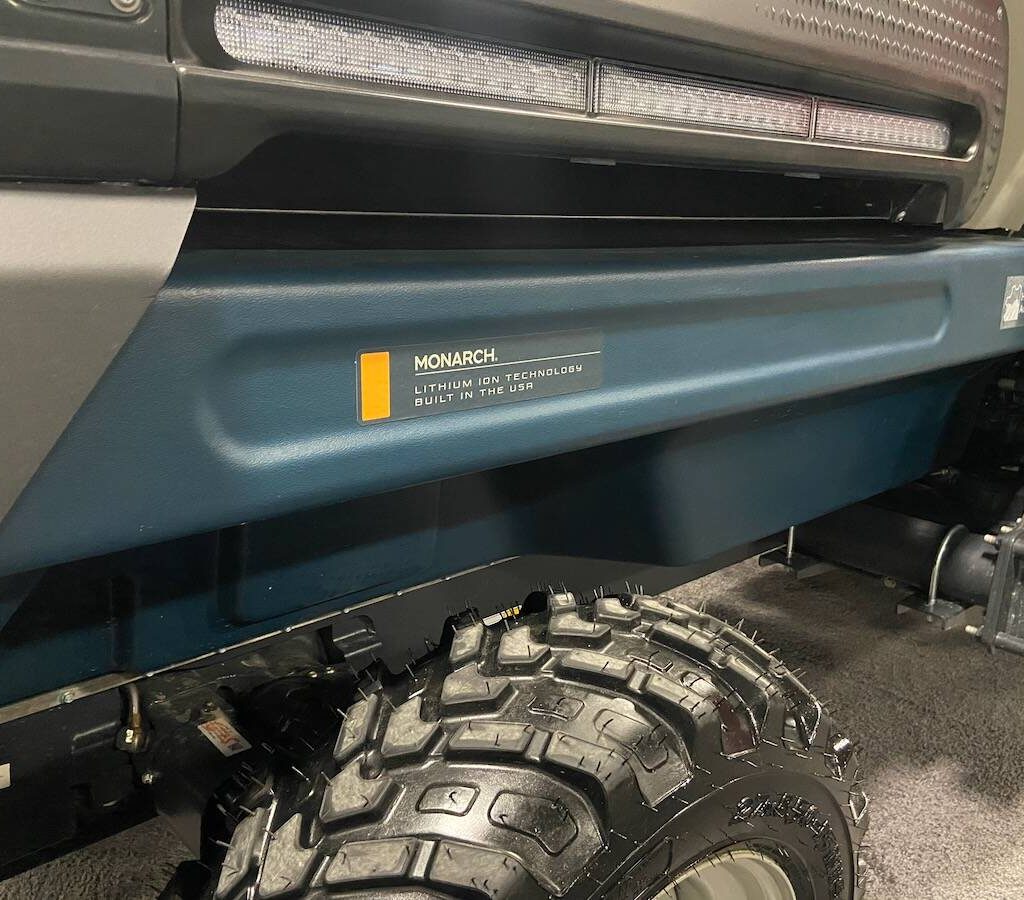
What will happen to Monarch tractors in Canada?
Baresich says there are two potential future routes for Monarch tractor’s technology.
The first possibility is that Caterpillar puts the technology on hold until it decides what to do with it and shuts down the Monarch tractor as it is. Baresich said Haggerty AgRobotics can manage that scenario as it has been servicing the Monarch tractors it already sold, including making some modifications to software.
“If the Monarch server is down, we’ll just run our own software on the tractors,” he said.
The better scenario, said Baresich, is for Caterpillar to continue to support Monarch tractor service, including its computer servers. This would enable current Monarch owners to operate as they have.
That would be a low-cost option for Caterpillar and they would have some recurring subscription revenue.
Haggerty AgRobotics stopped selling and taking orders for Monarchs a few months ago, but is examining other electric tractor options to serve the Canadian market. Their inventory of Monarch tractors was low.
Baresich said the major tractor companies are developing electric utility tractors and they will eventually get to the market, so Haggerty AgRobotics isn’t spending much development time on utility tractors.
Small electric tractors are finding a market in specific niches, especially in vineyards, greenhouses, vegetable operations and dairy farms, where reducing emissions in barns is prized for human and animal health.
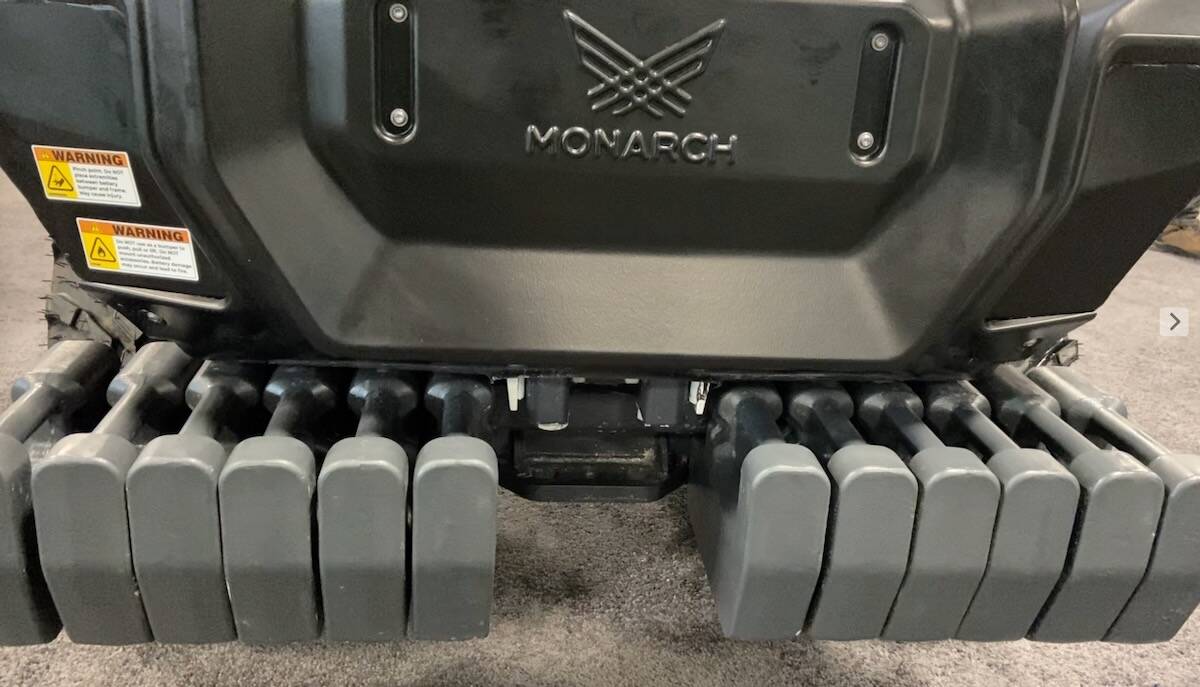
The front view and logo of the Monarch tractor. Photo: File
Monarch ‘really close to being a polished product’
Baresich said the Monarch tractors fit that niche well as they were well-sized and large enough to carry an implement on a three-point hitch.
“The machine they had was really, really close to being a polished product.”
There were some driveability issues with the tractor, including some less-than-smooth gear engagement, but he expected that could be solved.
Some dealers in the United States filed lawsuits against the company after problems with Monarch’s autonomous operation option.
Baresich says those were mostly challenges in dairy farms. Farmers used the Monarch tractors to autonomously push feed and move items around the farm as needed. The tractors needed an indoor positioning system to work autonomously in barns and this hadn’t been developed.
“We didn’t put the tractors in the same position,” he says.