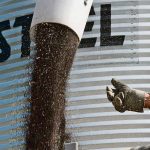

University of Alberta researcher Ehsan Feizollahi helped test the use of cold plasma to decontaminate grains.

Plasma shows promise against fusarium-formed toxins

The fourth state of matter could someday be put to work at a malt house or feedlot near you

Researchers at the University of Alberta are harnessing a high-tech concept to decontaminate grain. They’re using cold plasma, which is created by electrical discharge in a low-pressure gas. One of the most common uses is in fluorescent lighting, which creates light with little heat. Cold plasma is the fourth state of matter, alongside solid, liquid […] Read more


Red-morph English grain aphids, seen here feeding on wheat, are a common cereal pest on the Prairies.

Keeping aphids in check, online and off

Improvements could come for a smartphone app targeting the cereal pest, but you can also take steps to help the pest’s natural predators

Cereal Aphid Manager is a useful smartphone app for farmers looking to control one of the main pests in wheat, barley, oat and rye crops in the Prairies. The tool’s scientific developer, Tyler Wist, believes it’s time to hit refresh on the mobile app first released six years ago. Cereal Aphid Manager helps farmers and […] Read more

This map from PrairieFHB.ca shows the FHB risk level for the CPSR wheat variety AAC Penhold, as of May 15. The higher-altitude Prairie-wide map was pretty green (low risk) so we’ve zoomed in here on the Medicine Hat and Lethbridge area of southern Alberta. Yellow denotes “moderate” risk; red denotes “high” risk, while black (not shown) would denote “very high.”

Maps now mark the spots for fusarium risk

Prairie-wide, variety-specific FHB risk maps now available online

Wheat, barley and durum growers in all three Prairie provinces can now check online whether fusarium head blight may be coming soon to a field near them. We’ve written before in these pages about the development and expected launch of new Prairie-wide fusarium head blight (FHB) risk maps — which have now gone live online […] Read more


The wheat midge is orange in colour and closely resembles a mosquito because of its small size.

Going, not gone: Some hot spots remain for midge

Recent low wheat midge counts no guarantee the problem won't return

Wheat midge populations on the Prairies have been declining for the past few years, but a researcher specializing in insect pests says farmers need to remain vigilant about the threat they pose to crops. “My advice (to farmers) is don’t turn your back on wheat midge, even if you are in a (low level) green […] Read more

Photo: Thinkstock

Prairie wheat bids climb with U.S. futures

Spring wheat bids in Western Canada climbed higher during the week ended April 25, as a rally in United States futures provided support. Chart-based speculative buying was behind much of the strength in the futures, as fund traders bought back some of their large net short position. Declining crop ratings for U.S. winter wheat, the […] Read more


Some winterkill in winter wheat doesn’t necessarily mean the surviving crop is unsaleable

Conditions ripe for winter cereal wreck

Snow cover decline, temperature flux, pooling, freezing all potential problems

Glacier FarmMedia — Minimal snow cover, frigid temperatures in mid-January and above-average temperatures after that may have set the stage for winterkill in winter crops. The risk is high enough to cause concern among crop specialists. “The eastern Prairies are in a little bit better shape than (Saskatchewan and Alberta) but there’s huge swaths that […] Read more


A plot-scale unit seeds wheat into one of the research plots. Wheat varieties were chosen based on regionally popular varieties for each test site.

It pays to adjust seeding rate based on moisture

Keep wheat plant count in line with moisture expectations — and limit the amount of tillering

Research done across Saskatchewan recommends that the best way to optimize wheat yields is to adjust your wheat seeding rate to reflect moisture conditions, says a report from the Western Applied Research Corporation (WARC). The research concluded if you’re heading into what looks like a drier growing season, a mid- to lower wheat seeding rate […] Read more

green spring wheat in a demonstration plot

Field-scale trials with wheat present seeding and yield mystery

Trials see little yield difference by boosting seed count -- but don't plant less

Glacier FarmMedia — Call it an agronomic mystery. It’s been proven time and time again that, barring unforeseen challenges, the more seeds planted, the more crop harvested. But those aren’t the results the Alberta Grains Plot2Farm program has seen in its field-scale trials on spring wheat. Four years of field trials have consistently shown that […] Read more