


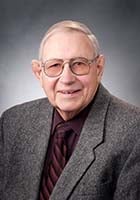
Les Henry shares the story of the College of Agriculture’s “salt patrol,” an important part of extension service in the 1980s
November 1, 2012 marks 100 years since the University of Saskatchewan took in its first class of agriculture students. This old scribe has been at the U of S — as student, professor and professor emeritus — for 52 of those 100 years. A significant milestone for me was the “Salt Patrol” of the 1980s. Before the “Salt Patrol” […] Read moreThe salt patrol
Potash on the Prairies
Nitrogen (N), phosphorous (P), potassium (K) and sulphur (S): the four major nutrients that keep us going in Western Canada. The abbreviation “K” for comes from “Kalium” — German for potassium. The first major K mine began at Stassfurt, Germany in 1861. By 1900 Germany was producing more than a million tons of potassium for […] Read more
Lessons from long term experiments
I have never been a huge fan of research station soil fertility work, and in my day never did an experiment on university or government land. My worry was that the residuals from unknown manure and other applications would make the data of doubtful use in “ordinary” farm fields. This past winter I had the […] Read more
Lessons from long term experiments
I have never been a huge fan of research station soil fertility work, and in my day never did an experiment on university or government land. My worry was that the residuals from unknown manure and other applications would make the data of doubtful use in “ordinary” farm fields. This past winter I had the […] Read more
Variable rate fertilizer
In the third in a series of three articles on precision agriculture, Les Henry gets down to the nitty gritty details of variable rate fertilizer
Variable rate fertilizer (VRF) is probably the input that is talked about the most. Management zones The starting point to VRF is establishing management zones within a field. That can take many forms. Pretty pictures of past crop performance is one way to divide your field into zones. But, maybe the areas that grew really […] Read moreProfessional agriculture
This article is a prelude to a series dealing with precision agriculture. It might be a bit boring and bureaucratic and you may wonder about the relevance but please take 10 seconds to scan before turning the page. A funny thing for an agro to do — but let us start off with the profession […] Read more
The concept of precision agriculture
This is the first in a series of three articles on precision agriculture. Precision agriculture has been with us now for almost 20 years. There is a journal (Precision Agriculture) devoted to just that topic that is now in Volume 12, and there have been at least that many world conferences on the subject. I […] Read more
Land ownership and cycles in land prices
I’d like to start this column by thanking readers who have sent a letter and book order in the past year or so. The letters are the fun part of writing this column and great encouragement to keep scribbling. And, I learn something in the process — I now know where to find Keoma, Alta. […] Read more
Writing and plowing
ethro Tull (1624-1754) invented the first seed drill in the early 1700s. He had observed that “a thin sowing produced the thickest crop,” and the expense of enough seed to broadcast was high. Jethro was the Jim Halford (and Beaujot brothers and Bourgault and Morris) of his time. Here is a quotation attributed to Tull. […] Read more
Soils and Crops: Wanted- a combine for canola
For me, a highlight of the production year is spending some time running the combine. I’ve done it every year since I was 15. The 2011 harvest was a special time on my son-in-law’s farm at Annaheim. The combination of superior soil, good management and absolute cooperation from Mother Nature brought a once in a […] Read more
Cyber-Savvy Farmer
