(Dave Bedard photo)

CP cuts raise worry over potential slowdown

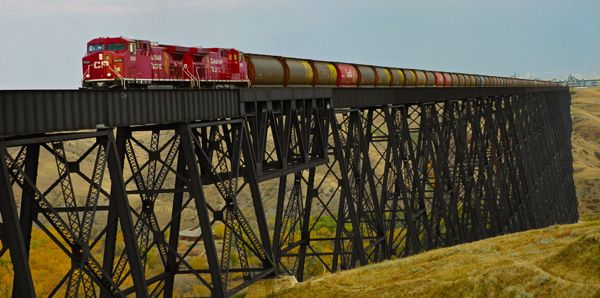
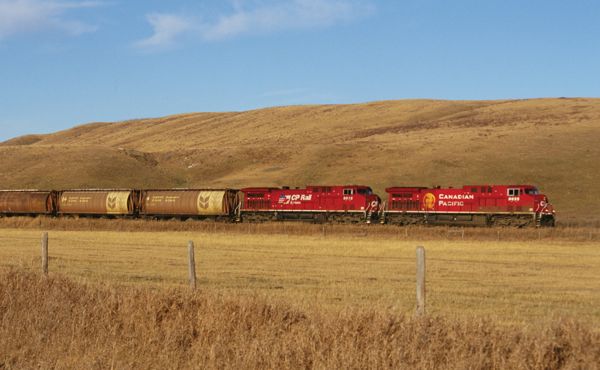
CNS Canada –– Canadian Pacific Railway’s decision to cut 1,000 jobs has caught the attention of two Prairie farm leaders. Norm Hall, president of Agricultural Producers Association of Saskatchewan, worries the move is short-sighted and may catch up with the railway in months and years to come, when commodity prices catch fire again. “You dump […] Read more

(Country Guide file photo)

Lower loonie helps farmers, but only so much

CNS Canada — The slumping price of oil continues to weigh on the Canadian dollar, while at the same time providing a boost to Canadian grain prices. Out-of-country buyers tend to more attracted to Canadian grain and wheat when the loonie is low, as they can get more product for their money. However, one market […] Read more


Manage root rot before seeding

Saskatchewan plant disease specialist recommends good agronomy to reduce root rot

Lentil and pea growers struggling with root rot need to manage the disease before the seed is in the ground, according to Saskatchewan Agriculture’s plant disease specialist. Fusarium, pythium, and rhizoctonia are root rot pathogens long familiar to farmers. But aphanomyces is a relatively new problem, only detected in Saskatchewan in 2012. “It probably was […] Read more


Farmers check out pea plots during the Western Applied Research Corporation’s annual field day at Scott, Sask. Weed control is a perennial problem for pea producers.

Managing Group-2 resistant weeds in pulse crops across Western Canada

Cleavers, mustard, kochia and sow thistle are among the weeds getting harder 
to control, but there are methods, starting with good agronomy

Group 2 resistance is something that is really a big problem across Western Canada,” says Dr. Chris Willenborg, a researcher at the University of Saskatchewan’s plant sciences department. Willenborg has worked on several research projects that inform weed resistance in pulses. The bad news is that resistance is spreading. And the more farmers rely solely […] Read more


Red lentils. (Pulse Canada photo)

India’s pulses under stress, need well-timed rain

CNS Canada –– India, the world’s largest producer of pulses, needs moisture before crops hit the reproductive cycle at the end of January, or existing losses will become amplified, a weather analyst says. The driest areas in India are important pulse-producing regions in northeastern Andhra Pradesh and neighbouring Uttar Pradesh, said Drew Lerner of World […] Read more

(CNW Group/Legumex Walker)

Ex-Legumex crush plant gets new owners, supply deal

Canada’s top grain handler is set to start feeding canola to a U.S. West Coast crushing plant now half-owned by the Prairie company’s parent firm. Regina-based Viterra, the grain handling arm of multinational commodity firm Glencore, on Tuesday announced a supply and marketing deal with Pacific Coast Canola (PCC), a next-to-new crush plant at Warden, Wash., […] Read more


TBARS director Dr. Tarlok Singh Sahota shows off a test plot of black barley in this 2014 file photo.

Thunder Bay ag research station gets stay

More time has been bought for a northern Ontario agricultural research station on the brink of closing to come up with a new operating plan. The Ontario government on Monday announced $350,000 in bridge funding for the not-for-profit Thunder Bay Agricultural Research Association, operator of the Thunder Bay Agricultural Research Station (TBARS), to “develop a […] Read more

(CPR.ca)

CN, CP both over revenue limits for 2014-15 grain haul

Canada’s big two railways will both be required to hand over seven figures in Prairie grain revenue from the 2014-15 crop year after taking in more than their federally-allowed maximums. The Canadian Transportation Agency on Tuesday ruled Canadian National Railway and Canadian Pacific Railway (CN, CP) exceeded their grain revenue entitlements for the crop year […] Read more