
28._Les_henry_wildlife-6_CMYK.jpg
Kildeer: This killdeer set up a nest among the asparagus. Those few plants were not picked and several eggs were successfully hatched. When we got too close the “broken wing” trick was played and photos of it were also possible.
Photo: Les Henry
deer-moose-lhenry
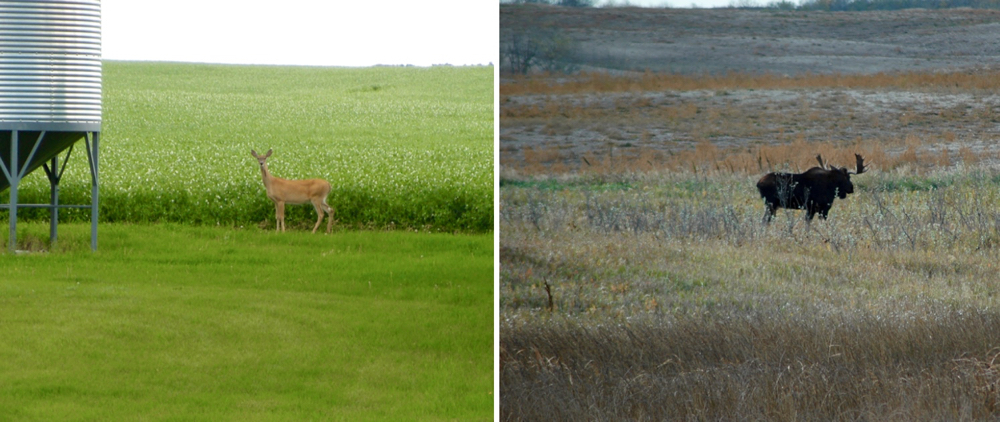
Deer and moose: Deer and moose are constant companions. Moose calves have been raised in my poplar bluffs several times. Bambi has occasionally been raised right in the farmstead shelterbelt of Manitoba maple and caragana trees. Just this summer I was met by Bambi and her mother coming out of the asparagus patch. They take a few nibbles off carrot tops, but we co-exist with few problems. On September 30, 2010 I was lucky enough to take a photo of this bull moose in hot pursuit of a cow with calves at foot.
Photo: Les Henry
28._Les_henry_wildlife-1_CMYK.jpg
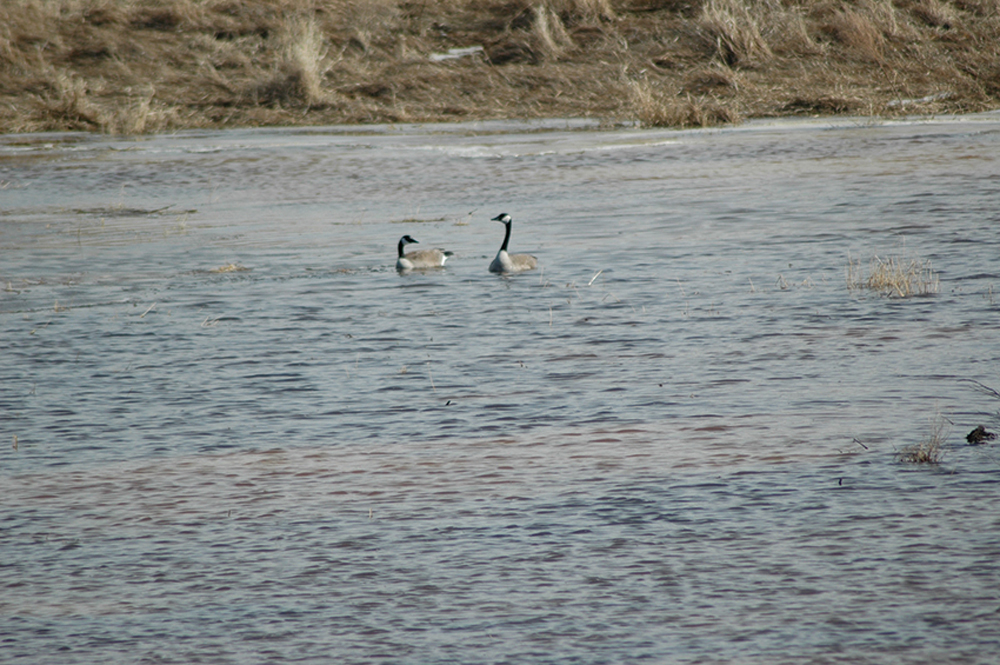
Geese: At the turn of the century all sloughs on NW22 32 3W3 were dry. The big snow of 2005 and subsequent wet years changed all that. The geese in the photo (taken on March 25, 2007), Maude and Jake, made an appearance each year as soon as the ice was off the big slough next to the farmyard. They went on to raise young in grass just east of the slough. In future years, they brought juveniles back to what they found to be a friendly spot. The south end of that quarter had many sloughs in the wet years and eventually a dozen or so geese spent the summer on that quarter. As of September 18, 2019, all sloughs but one are bone dry and the last slough is on its last gasp. I am no longer greeted by Maude and Jake on my first spring visit to the farm. But that will all change when a wet cycle returns.
Photo: Les Henry
28._Les_henry_wildlife-4_CMYK.jpg
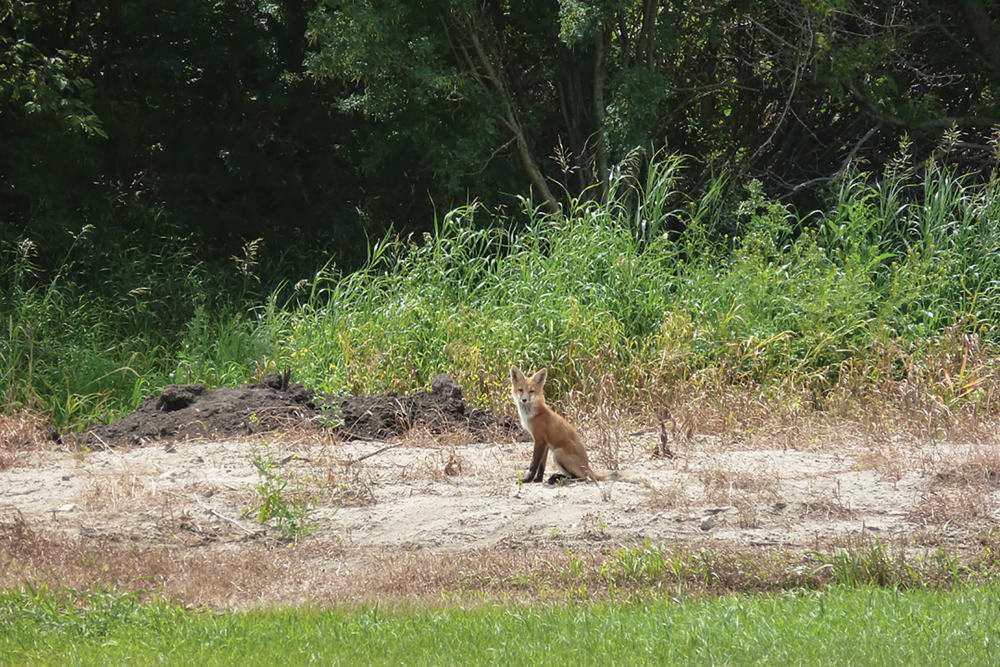
Fox: I encountered this young fox in the yard. He very kindly posed for this portrait. It was my great pleasure in 2014 to raise four fox pups underneath some old wood granaries that I have kept for storage. I was lucky to see a lesson from Mama fox. She had a duck in her mouth and when I appeared she dashed off into the wheat field with pups in hot pursuit — ready to get lunch.
Photo: Les Henry
28._Les_henry_wildlife-5_CMYK.jpg
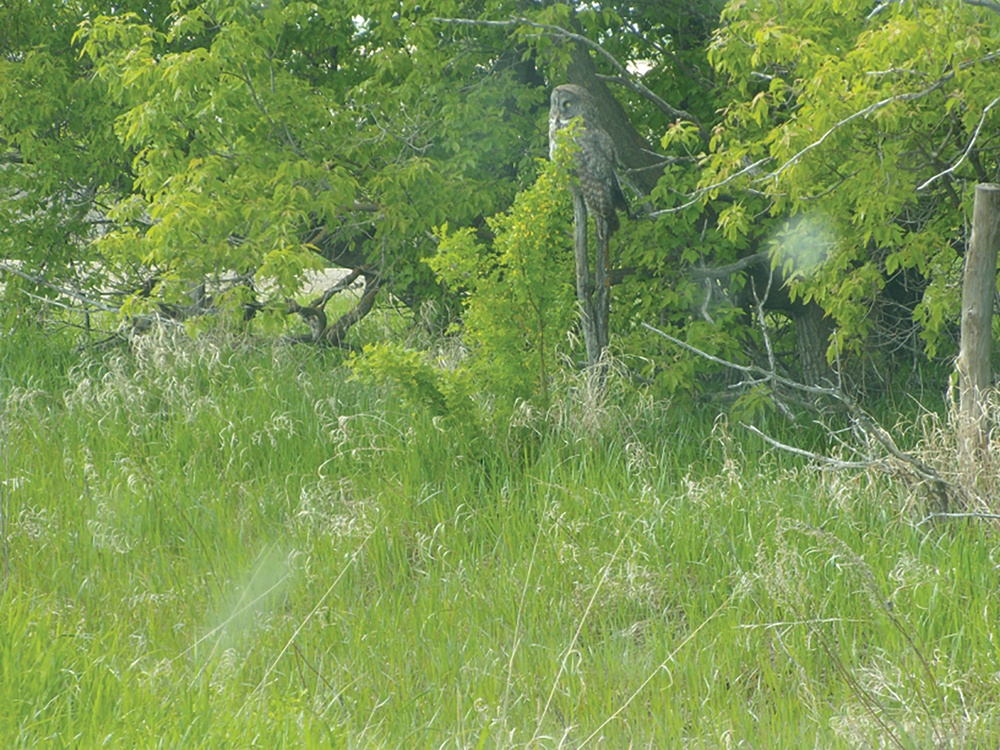
Wise old owl: This big owl was well camouflaged while perched on an old fence post. This spring I observed crows and owls fighting over an old crow’s nest. Owls are bigger so they should win. But they must have agreed to both move on as nothing has been in that nest. I have learned that owls make a habit of taking over existing nests. In the bird world, the big ones rule. Not much different than us I guess.
Photo: Les Henry

For 25 years I have owned land just a half hour drive south of Saskatoon, just east of Blackstrap Lake. In that time, I have had many wildlife encounters and observed several cycles of Mother Nature and her creatures.
Wildlife conservation
Some city slickers like to think farmers are bent on destruction of Mother Nature. Not true. On my farm the only four-legged creatures not welcome are mice and racoons (I have yet to see a rat.)
We are out there every day watching, learning and doing our part to conserve wildlife. Most wildlife populations go through natural cycles, sometimes in tune to weather cycles — such as ducks in sloughs.
I am convinced that in our area of Allan Hills, the diversification of wildlife is much more than it was before farming came along. The poplar bluffs that remain are home to many species that we enjoy. For many centuries natural grass wildfires kept the grass as the only significant vegetation.