
It seems like everything runs off the internet. Refrigerators, washing machines, vehicle dashboard consoles, and cameras are just a few everyday things that require passwords, operate on Wi-Fi and demand online accounts.
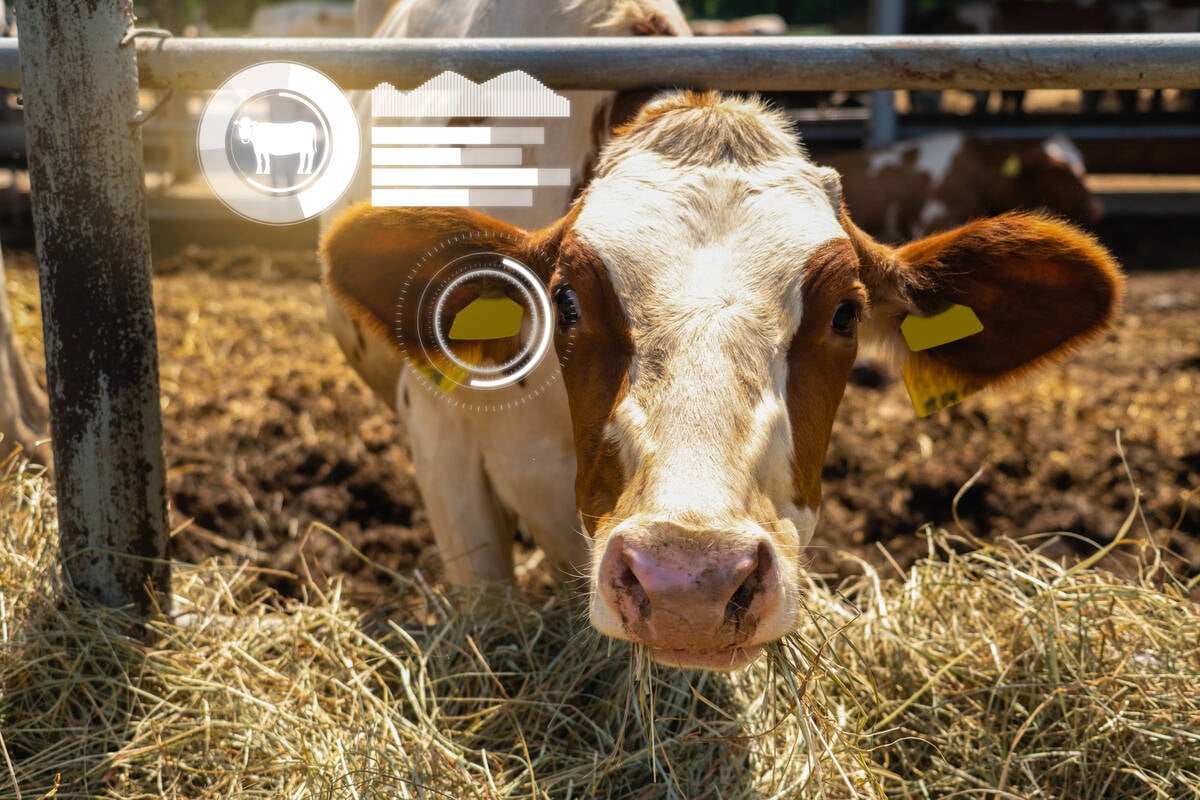
Even my cow herd has been living in the cloud for well over a decade. I’ve been using the same herd-tracking software program since 2011, which is well before I even had a stable internet connection … or a smartphone … or children. Apparently, many things in our lives have changed, but our online herd platform has stayed the same!
When I was young, I kept track of my small cow herd in a coil-bound notebook. As I navigated university and learned to appreciate a good spreadsheet, I started managing herd records through Excel. Over time, we retained multiple daughters from many mama cows, and my spreadsheets got wider and longer than I could make sense of. That’s when I began investigating online options.
Read Also
Deere taps startups to explore sensing, AI tech for farm uses
John Deere has named five companies to its 2026 Startup Collaborator Program, exploring emerging technologies for farm use including soil sensing, AI and predictive equipment monitoring.
Today, there are dozens of programs on the market. Herdtrax (by Telus Agriculture), Go360 bioTrack and Performance Beef are just a few options.
I started with CattleMax, and I haven’t looked back. At the time, I naively didn’t consider important things such as data privacy, company stability and longevity, or adaptability to evolving scale or tag-reading platforms. Luckily for me, CattleMax has continued to adjust over time to meet (or beat) me where I’m at.
Like most programs, there is an annual fee based on the number of animals you track. With that comes a ton of online tutorials, real-time support, and a monthly newsletter where I often learn more efficient ways of tracking information that work for me.
On our farm, we record which dam gives birth to which calf. That information is quickly collected in our calving book at tagging. Later, I enter those animals into the program. From any individual animal record, you can add weights, treatment information, withdrawal times, weaning or sales data. If you retain the female as a replacement, you go on to enter her breeding, preg-checking and subsequent calving information. I can generate reports, still in my beloved Excel, that are easy to customize or print.
You can enter movements from pasture to pasture, and record group data quickly. For example, if I have a pen of replacement heifers that I vaccinate, I can enter the product administered, date, volume, location, person administering it and withdrawal dates just once for an entire group of cattle.
I enter data on a computer or iPhone. For one-time events such as treating a sick animal, I usually tap the info directly into my phone from the pasture. Larger data entry, such as entering our calf crop, I prefer to do at my desk. Avoid entering from a cozy couch where there’s a risk of dozing off and accidentally “moving” every animal you own to your spring heifer calf pasture. This is an oddly specific example, I know.

Time spent, time saved
There are a few downsides to stalking your cattle online. There is an investment in time and the program is only as good as the data you enter.
Our household jokes that CattleMax is little more than a “few clicks of the mouse,” but in reality, it requires a fair bit of time for data entry. On the flipside, we used to spend a long time sifting through papers and files to make lists or find one specific detail, whereas now the answer is at everyone’s fingertips.
As well, the program can help you make informed decisions, but it won’t make the decision for you. There is no data trend, production report or any other metric that beats the value of on-the-ground observation or just plain common sense.
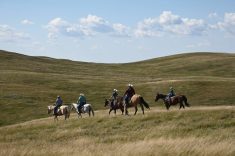
For most of our ranch jobs, we prefer analog. Our saddle horses don’t require a password to operate, our old single-cab stick-shift was built before the internet existed, and our stock dogs don’t know the difference between gigabytes and chew toys.
Yet, after 15 years, I’m still happy with my herd-tracking software. I know where my cows have been, who they’ve been spending time with, who their baby daddies are, and whether they enjoy long walks on the pasture.
I guess there’s room for both.