

Ag equipment manufacturers were back showing their advanced technology at this year’s Consumer Electronics Show in Las Vegas in early January.
At its display, Kubota had two machines to boast about. Both are autonomous tractors: one is already in early commercialization and the other is a futuristic concept machine, suggesting where the technology could eventually lead.
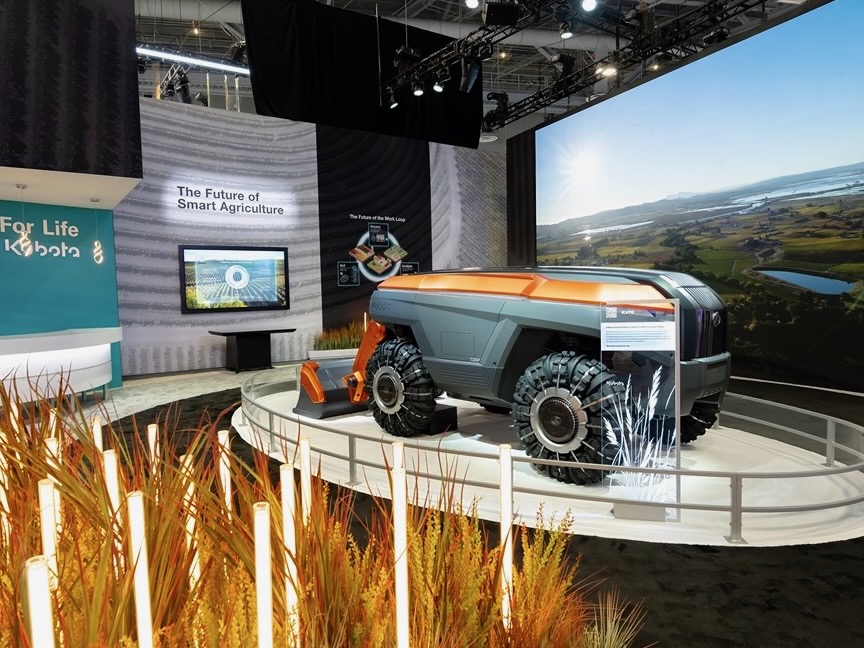
The forward looking machine is what Kubota calls the KVPR. It’s a conceptual, versatile platform the company has dubbed a “transformer robot.” It’s size can expand, contract and move along every axis, delivering the adaptability of multiple machines in one.
Read Also
New Holland upgrades its T7 tractor lineup
New Holland has updated its three Standard Wheelbase T7 tractor models for the 2027 model year.
Notably, the machine on display had no operator station.
Kubota says the kind of versatility built into the KVPR “supports customers across different operations and seasons, makes work simpler and more enjoyable.”
“The KVPR is a concept vehicle, a possible vision of a possible future,” says Barry Greenaway, director of product for construction, commercial and residential equipment at Kubota Canada.
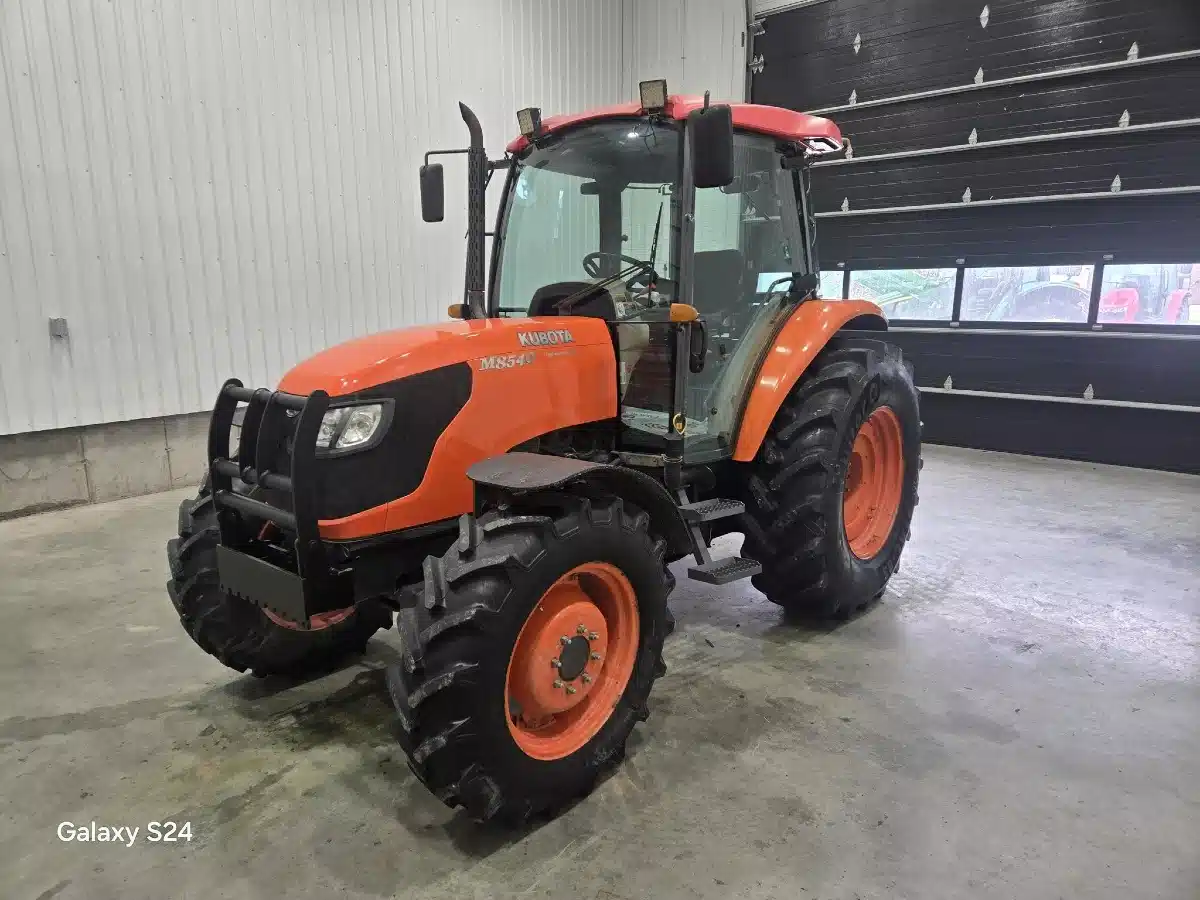
The other machine was an existing M5 diesel tractor that was retrofitted to work autonomously, with the partnership of Agtonomy in California.
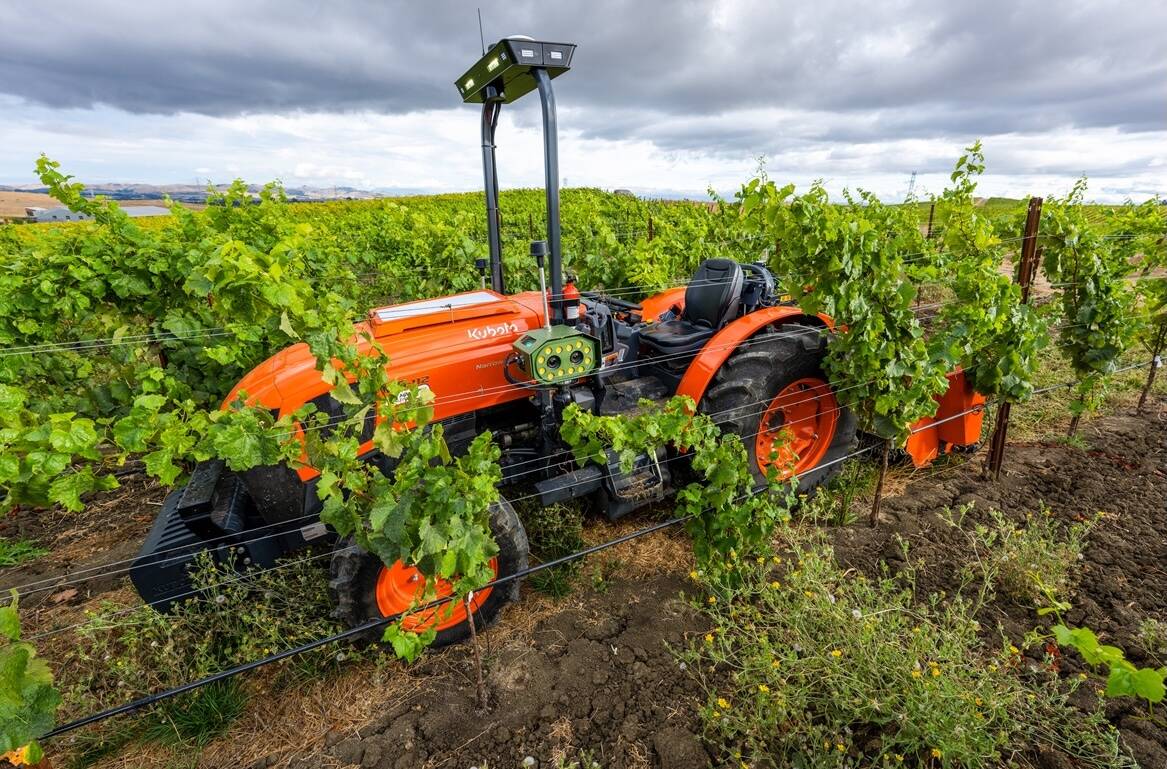
“That’s the exciting thing for me at this year’s show, is we have something real, not just concept visions.”
The M5 is an off-the-shelf 105-horsepower diesel model that has been retrofitted with drive-by-wire components to operate fully autonomously. It is about to be delivered to a select few customers in California.
“The first market for it is California,” Greenaway says.
“We have four of them being delivered to a vineyard to do mowing, tilling and crop spraying. They’re customers Kubota USA has had a close relationship with. They know they’re at the forefront of our technology and foray into this.”
A few more are on order for orchards and others in the state.
READ MORE: Would an autonomous tractor really fit your operation?
Although the tractors are being sold to customers, this is the early stages of commercialization, and the company will be closely monitoring their performance. It will be kind of an early-release test bed.
However, the company wants this autonomous machine to be more than just a tractor that can drive itself around. There is a digital AI system on it that uses sensors to evaluate crop conditions and identify problem areas. That improves overall farm management efficiency.
Todd Stucke, general manager of Agri Solutions Headquarters, Kubota Japan, and president of Kubota North America, said in a press release that the additional technology built into the tractors is a critical element.
“Our go-to-market solutions are the culmination of our customer-driven innovation cycle, where the goal is not simply to automate what you’ve always done, but to rethink how work can be done more intuitively and efficiently.”
Greenaway says the strategy has two prongs.
“We have Blumefield, which is a Kubota-owned company, which specializes in crop monitoring and autonomous functionality. We’ve also partnered with a company in San Francisco called Agtonomy.
“We supply the tractor and sensors and Agronomy supplies the AI analysis, the actual farm management smarts.”
Kubota expects to monitor the performance of the machines over the next 12 months and then make a decision as to whether they are ready for wider commercialization. From there, the brand will need to ready its dealer network to sell and support the technology before it becomes more widely available.
“The intention is to spend the next 12 months with the customers and then judge the readiness for market and go from there,” Greenaway says.
“We have a responsibility to our dealers and customers that anything we launch has support on the ground. That’s the next step I see as we prove out and refine the technology.”