
Fixed costs come out of the gross margin (gross revenue minus operating costs). Ideally the margin over operating costs should be around 35 per cent of gross revenue, with equipment costs at 12 per cent, owner withdrawals at five per cent and land costs at 18 per cent of gross revenue.
But as land purchase and cash rental prices continue to rise across all of Western Canada — cash rents now range from 18 to 22 per cent of gross revenue on average — they are increasingly putting the squeeze on net margins. “After the operating expenses are paid, the margin that’s left has to cover land, equipment and profit for the owners,” said Arnott. “If producers overspends on land rent how are they going to cover these other costs?”
Read Also
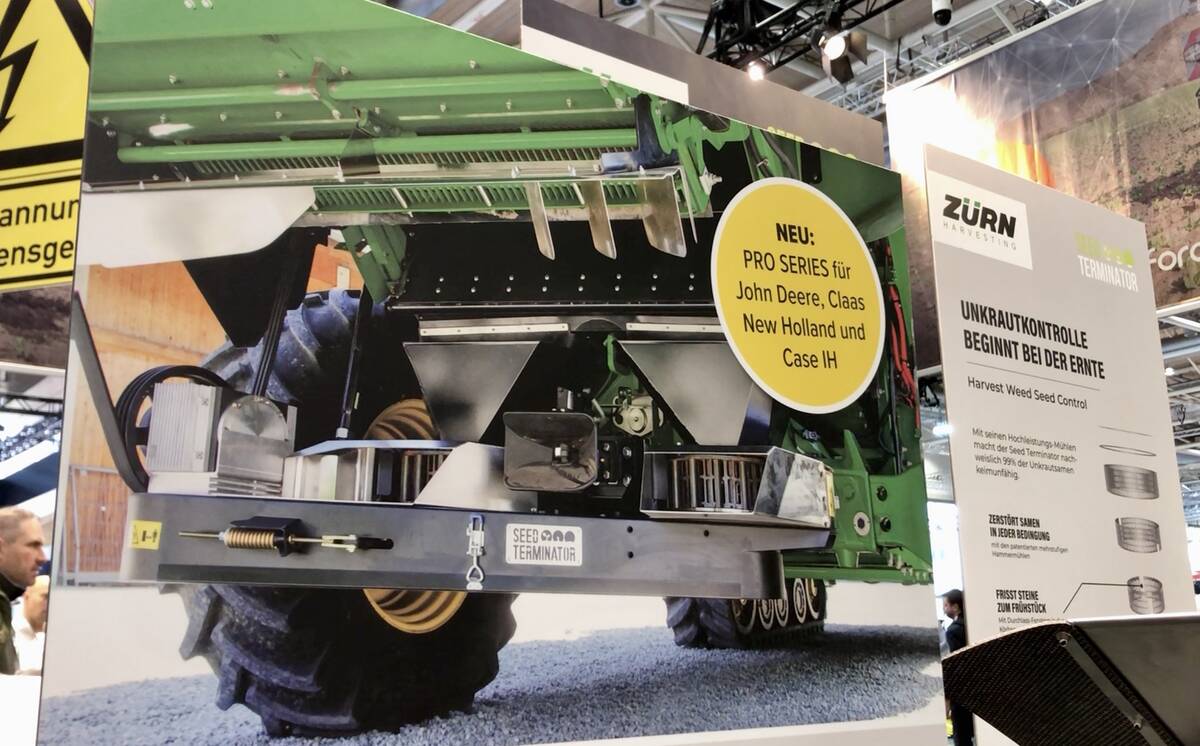
A Prairie farmer’s praises of mechanical weed control, at Agritechnica
Saskatchewan farmer Josh Lade talks about his experience using the Seed Terminator on his farm and how the mechanical weed control device reduces herbicide costs.
- Read more: Production costs for spring planning
As a check and balance, said Arnott, landowners and producers should assess cash rent based on the rate of return on land values. “If we take a land that is valued at $2,100/ac. and we add a long term investment rate of return at 2.5 per cent, then add in $12 per acre for property tax, we would expect that land to rent for around $64.50 an acre to protect the investment value that of the landowner,” he said.
“A landowner with land valued at $3,600/ac., using the same formula, might expect to rent that land for $102/ac. Looking at some of the land prices today the reality could be anywhere from $60 to $140 based on gross revenues of $350 to $450/ac. and that’s a huge range which isn’t necessarily based on the productivity of the land.
“My huge caution on land planning based on gross revenues or margin over operating is what if we have flat or falling commodity prices, or increased interest rates or production costs? I worry about making all of our decisions based on gross revenue.”