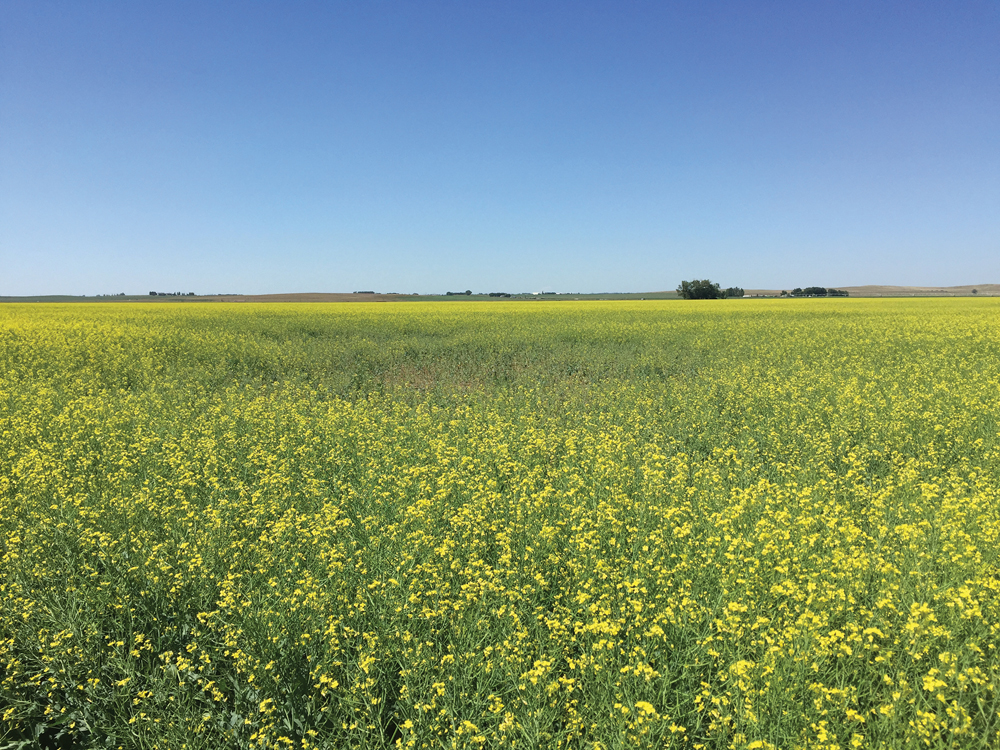
Clubroot was first discovered on canola in Alberta in 2003. Since then, it has spread across the Prairies, affecting many fields in Alberta and staking claim in Saskatchewan and Manitoba too. If you haven’t yet found clubroot in your fields, count yourself lucky — but also actively practice clubroot prevention on your farm.
“Prevention is by far the best management tool you have available to you. Once clubroot shows up, you’ve got a big problem that’s not easy to manage. Any time and mental energy you can spend developing a plan to prevent clubroot from moving around is time and energy well spent,” says Michael Harding, crop health assurance lead with Alberta Agriculture, Forestry and Rural Economic Development.
Countering clubroot depends on a multi-pronged attack, with disease-resistant genetics a critical line of defence.
Read Also
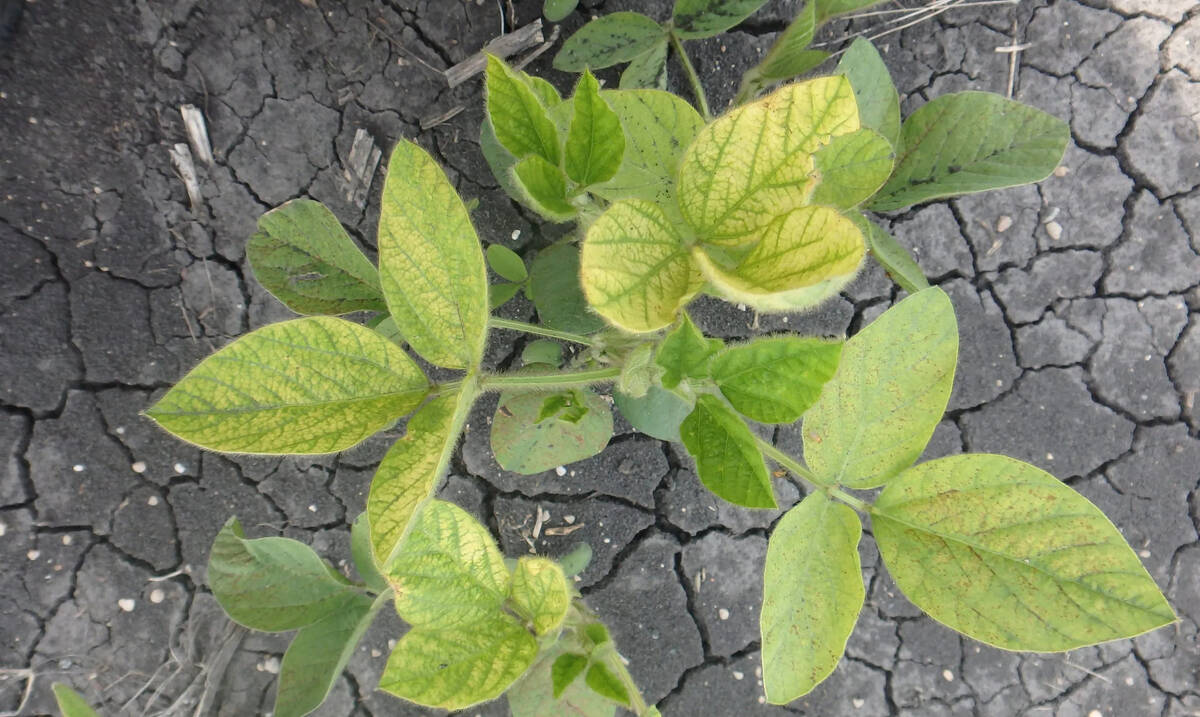
Selecting IDC-tolerant soybeans doesn’t reduce yield, Manitoba study confirms
University of Manitoba research shows soybean varieties selected for iron deficiency chlorosis (IDC) tolerance protect yield in affected areas without reducing performance elsewhere in the field.
Agdata reports in 2018 resistant hybrids were planted in only about 20 per cent of acres. That number rose to 35 per cent in 2019, just under 50 per cent in 2020 and about 65 per cent in 2021. Not surprisingly, Alberta leads the country in planting clubroot-resistant hybrids at nearly 80 per cent in 2021. Saskatchewan followed at just over 60 per cent and Manitoba producers planted disease-resistant hybrids in about 55 per cent of total acres.

In a presentation about clubroot at Ag in Motion in 2021, Corteva Agriscience’s North American breeding lead Chad Koscielny said clubroot-resistant-hybrid uptake needs to increase further still. In fact, he said 100 per cent of Canadian canola fields should be planted to clubroot-resistant hybrids.
“You’re not going to see these spores. You’re not going to know when it’s going to come in, how it’s going to come in.… But if you grow clubroot-resistant genetics, it’s protection that’ll stop it from coming and manage that spore load.”
And companies need to support that shift too.
“We (Corteva Agriscience) were actually at the point two years ago in 2019 where we said we would not commercialize a hybrid that did not have clubroot resistance in it,” said Koscielny. “We just think it’s such an important piece for the industry going forward. We want to get in front of it, manage spore loads, keep spore loads across the West low, that as a company we only commercialize hybrids that are clubroot resistant. That’s an important piece. I would suggest it’s going to be necessary across all genetics in the near term.”
Why is it so difficult to manage?
Part of what makes clubroot so difficult to manage is its population consists of multiple pathotypes (11 in total, with three — A3, D3 and H3 — proving the most dominant). Effective, resistant hybrids carry multiple sources of resistance. Still, in areas heavily hit by clubroot, rotating resistant hybrids is as critical as rotating crops. In other regions, crop rotation is necessary but growing the same hybrid — so long as it carries some form of resistance — may be relatively safe.
“If you are part of the about 30 per cent who have never grown clubroot-resistant hybrids and are not growing clubroot-resistant hybrids … just get a clubroot-resistant hybrid. It doesn’t matter the source,” said Koscielny.
“If you go to some of those hot spot areas around Edmonton, or areas where they’ve found some potentially different pathotypes, then you want to start thinking about different resistance sources and how they affect things. Depending on where you’re at, (rotation) may be front of mind or may not pertain to you for a few more years.”
While an excellent control method, disease-resistant hybrids are only one piece of the management puzzle. Producers also need to practice adequate rotation (two- to three-year break from a host crop), effective volunteer/host weed management, frequent scouting for early detection and patch management and careful biosecurity.
“Because of the pathotype diversity that exists, resistant hybrids are always going to be at risk of eroding,” says Harding. “That tool is going to wear out if we lean on it too hard. So, crop rotation and some form of biosafety plan to prevent clubroot infesting new fields are two really important pieces. I understand that biosecurity isn’t very fun and crop rotation is tough when canola is $27 a bushel, but there are some diseases you can’t just turn a blind eye to.”
Best disinfectants
In 2020, Harding and colleagues trialled different disinfectants to determine which might be the best option for on-farm use. Of nine commercial disinfectants and three unidentified (non-commercially available) products tested, four achieved a 95 per cent or greater kill rate on resting clubroot spores. The two products with the greatest efficacy and fastest results were bleach (two per cent sodium hypochlorite), which inactivated all resting clubroot spores within 12 to 15 minutes, and Spray Nine, which was equally effective in about eight to 10 minutes.
Product efficacy is just one component of sanitation. The major hurdle for producers is the time required to adequately clean machinery, especially during the growing season’s busiest times.
“To think that somebody who’s trying to seed 3,000 acres of canola in three weeks is going to stop after every field and wash for five hours, that’s just not realistic,” says Harding. “Operational urgency comes head-to-head with (producers’) knowledge of biosafety and sanitization. And when the two things aren’t compatible, (they’re) often going to pick operational urgency over the risk that might come from not washing that piece of equipment when it moves from one field to another.”
That said, Harding isn’t telling producers to ignore sanitation outright.
“I get it if you can’t wash every single time. You can’t do everything and that’s okay. But it’s not okay to do nothing. You need to have a plan,” he says.
At the very least, Harding advises producers to identify their highest-risk field areas and management activities, then adjust management in those areas to minimize opportunities for inoculum spread. For example, treat differently fields located nearest a neighbour’s infected fields or any other notable risk factor, running equipment through them first or last, then ensuring excellent equipment sanitation before entering any other fields. Likewise, carefully sanitize any second-hand equipment bought from a location with heavier clubroot infection before driving it onto your own fields.