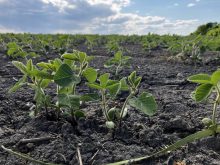



MarketsFarm — Of the pulses being planted in Manitoba this spring, field peas and dry beans appear the best able to handle the difficult drought conditions the province continues to experience throughout its growing areas.
Field peas “have a relatively low water requirement, similar to dry beans,” Cassandra Tkachuk, production specialist with Manitoba Pulse and Soybean Growers, said noting both crops tend to be grown in Manitoba’s drier areas on the western half.
A lack of sufficient precipitation for the last several months put the province into a severe drought, according to the Canadian Drought Monitor. Strong winds on Tuesday were blowing topsoil, but rain is in the forecast from Wednesday onward for a few days.
Read Also
CBOT weekly outlook: Soybeans/corn awaiting acreage data
Soybean and corn futures at the Chicago Board of Trade posted some large price swings during the week ended March 25, as market participants reacted to the shifting news out of the Middle East and adjusted positions ahead of upcoming acreage data from the United States Department of Agriculture.
“You can feel [the dirt] in the air. It lands on everything, including your face,” Tkachuk said.
Among pulses, lentils and chickpeas also prefer drier conditions, she added. Some lentils are being seeded in Manitoba this spring, but very few chickpea acres at best.
Some acres are devoted to fababeans, but such a crop is rather dependent on lots of moisture, she said.
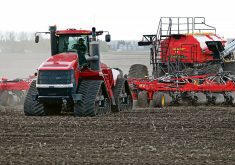
The latest weekly crop report from Manitoba Agriculture found seeding of peas is nearly complete, while dry beans remained under halfway.
Soybean planting ranged from just getting started in the province’s northwest to as much as 85 per cent complete in the eastern region.
— Glen Hallick reports for MarketsFarm from Winnipeg.