
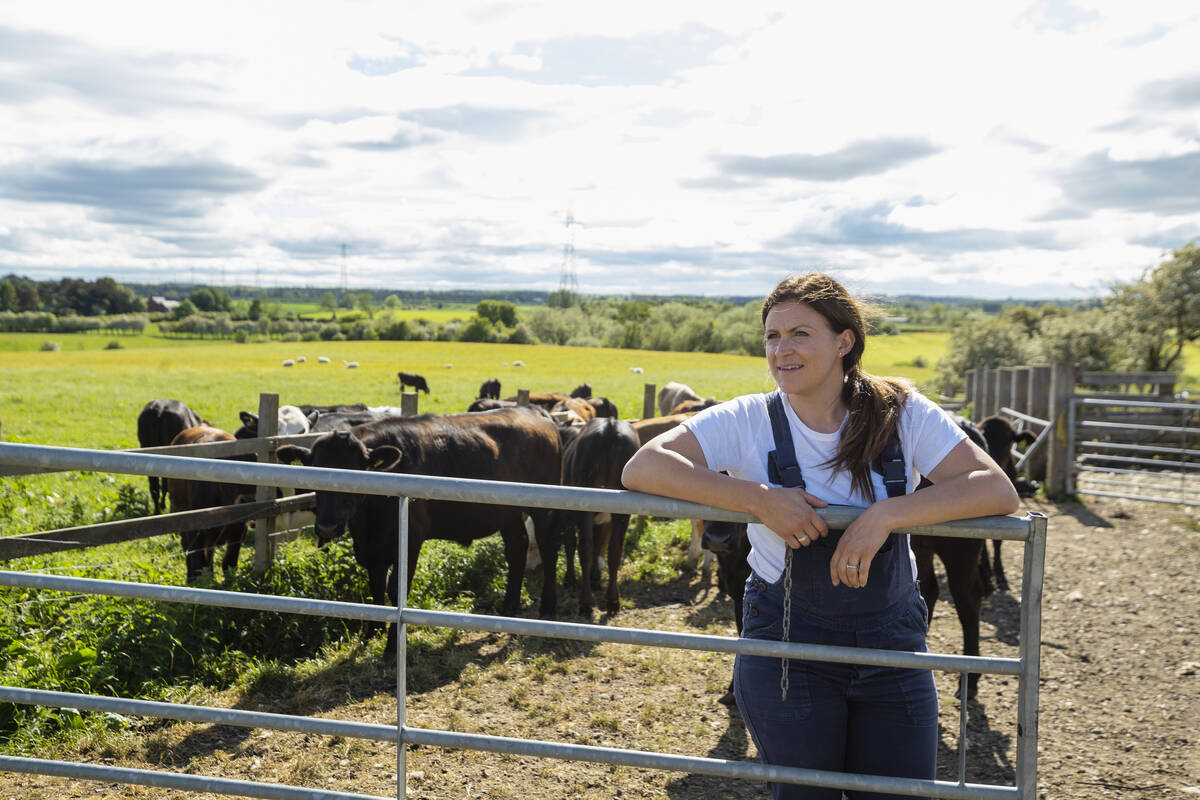
The multiple roles women play on the farm can lead to complex blend of health and safety hazards.
That’s according to speakers at a March 5 webinar hosted by the Canadian Agricultural Safety Association (CASA), which honoured 2026 as the United Nations’ International Year of the Woman Farmer and International Women’s Day, which is celebrated March 8.
Read Also
Federal gov. funds youth employment in agriculture, agri-food
Companies and non-profits hiring young people for agriculture or agri-food jobs may be able to get federal funding for those workers’ wages.
The mental strain of shifting roles
Women often play multiple roles on a farm over the course of the day. This can take its toll mentally said Lauren Van Ewyk, CEO and Co-Founder of National Farm Mental Health Alliance.
“Typically, we think of producers as primary, secondary and tertiary producers,” she said, “and women typically fall into all three of those categories in many settings, in agriculture.”
Van Ewyk gave an example from her own experience.
“I’ll be in the barn, lambing out ewes,” she said. “We have a foster daughter who has brain cancer, so I’ll be getting a phone call from the school navigating medical care while I’m making sure that my lambs are getting what they need.”
She cited a study which stated self-reported mental health among rural women declined, “more than urban women, more than urban men, more than rural men,” post-COVID. This could have to do with the many burdens they shoulder on the farm.
She said there is research to suggest women often take on the role of their male partner’s emotional support. Men in Canada are less likely to seek professional help than women.
Different physical strains
The strains of this balancing act can also be physical, not just mental said Nova Scotia Federation of Agriculture farm safety co-ordinator Adelaide Amuah.
“Because women are physiologically and anatomically different, have different bodies from males, we stand a higher risk of sprains and strains or musculoskeletal diseases,” she said.
“Taking care of the family, doing the books, using the equipment, machinery, playing so many roles on the farm means that this has higher stress on your muscles, your nerves, even when it comes to rest, you don’t have enough.”
These risks may not be immediately apparent. Effects could only show up later in life.
Personal protective equipment (PPE) is also often made with men in mind, which can create issues when women use it.
“There’s lots of different body shapes, body sizes, body strengths, working on farms now,” said Alanna Coneybeare, vice president of Conlee Farms near Listowel, Ont. “So, having safety equipment that is suitable for everybody to use, I think, is something that is definitely overlooked on a lot of farms.”
Amuah said issue this can lead to women farmers using PPE that is uncomfortable or even dangerous.
“Imagine having a coverall,” she said. “It’s too loose, that means that it might get caught up in a machine, or get caught up in equipment, or if it’s too tight, you are not able to move freely in them.”
The role of mentorship, peer support
Unique challenges can create shared experiences, however, and those shared experiences can lead to mentorships, which the speakers said are crucial for women in agriculture.
“Women, we do have different lived experiences,” said Coneybeare. “We can have really fantastic male mentors who have a plethora of expertise and can really help our career as well, but I think there is a special need for kind of women to help other women as well.”
These conversations can lead to women supporting one another.
“If you gain something, I also gain something, the industry gains something.”
Knowing how and where to seek out these relationships is a key first step, Coneybeare said. This is especially important in agriculture, which does not have the same introductory mechanisms as other industries.
Van Ewyk said women need to be willing to step up, even if it involves confrontation.
“Globally, there’s women all around the world in agriculture who suffer because they’re a woman in ag,” she said. “So ideally, it’s to kind of link arms with one another.”
She encouraged those seeking mentorship to reach out to their local chamber of commerce, many of which have mentorship programs.