
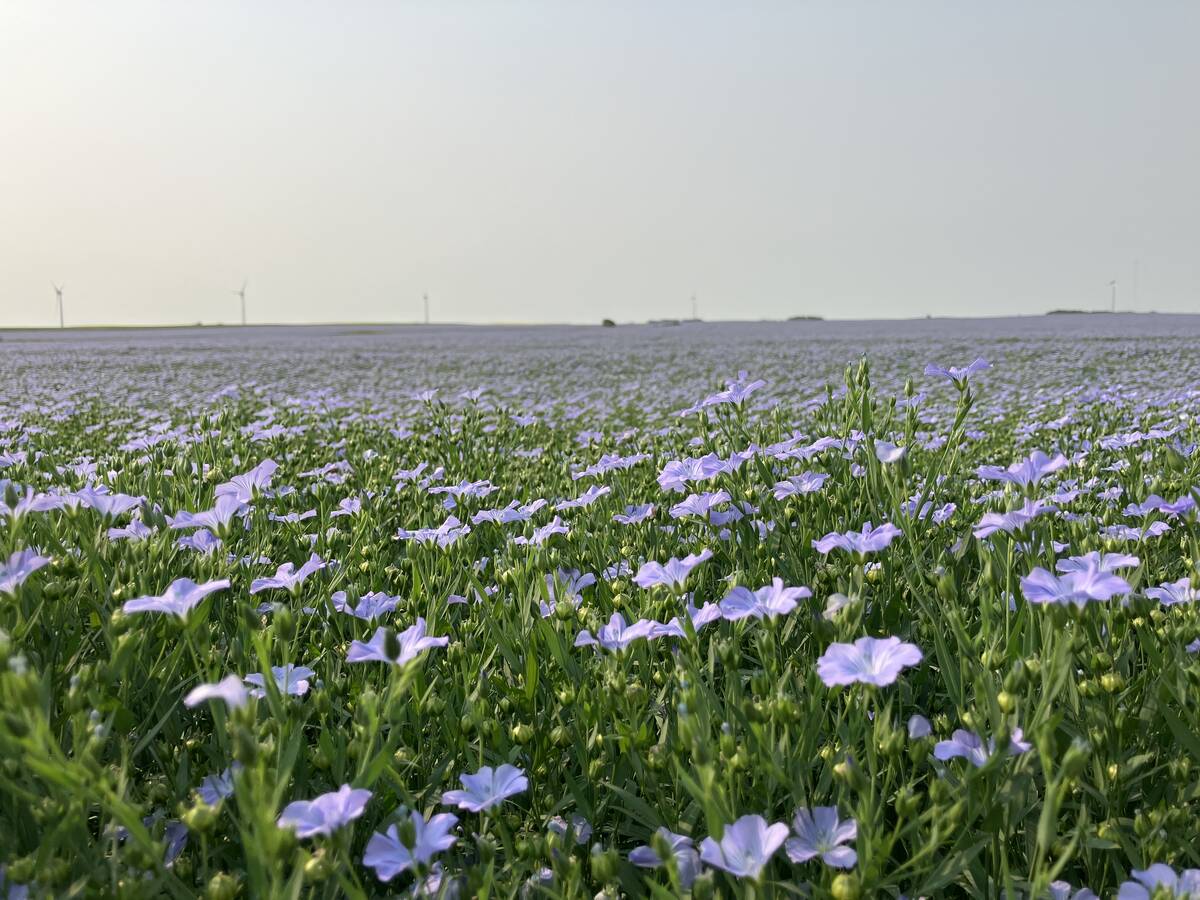
Glacier FarmMedia — Flax is sitting in a good position following this year’s harvest, said Scott Shiels of Grain Millers Canada in Yorkton, Sask.
“A really good flax crop this year. Acres were up and the quality on an overall basis was definitely better than what we have seen in at least five years, maybe 10,” Shiels added.
He said there’s a possibility of more flax being planted come spring.
Why it matters: flax can be a suitable alternative to canola
Read Also
Canadian Agricultural Safety Association promotes new vision for farm safety
The Canadian Agriculture Safety Association announced a new vision and mission statement of promoting a “culture of agricultural safety that protects people through knowledge sharing, support, and meaningful connections” during Canadian Agricultural Safety Week, March 15-21.
Statistics Canada reported earlier in December that Prairie farmers brought in an estimated 454,460 tonnes. That’s up from nearly 258,000 tonnes combined last year and well above the five-year average of about 383,700 tonnes. Virtually all of Canada’s flax is produced on the Prairies.
“It’s been a good year, a little bit of a resurgence for flax,” Shiels said, noting the increase in flax largely came at canola’s expense.
Good prices
While Canadian flax production pales in comparison to the record 21.80 million tonnes of canola harvested in 2025, Shiels said there are a few factors favouring flax going into 2026.
One of those is pricing. Shiels said flax continues to maintain its premium over canola of C$2 to C$3 per bushel, despite the flax pulling back from around C$20/bu. for brown flax to about C$17.
“(Flax) is down a couple of bucks off of the highs that we saw at harvest time and in the late summer,” Shiels said.
Good pricing also fueled the increase in flax production this year, as farmers were able to lock in for C$19/bu. versus C$14 to C$15 for canola, he continued.
Shiels said the demand for flax is strong, particularly when it comes to the bakery and health food markets. Also, the United States hasn’t imposed a tariff on its imports of Canadian flax.
“Flax isn’t for everybody,” Shiels warned. “It’s a little tougher to market and it’s a lot tougher to grow.”
Looking ahead
However, he wasn’t sure if flax prices would improve between now and when spring planting begins in 2026.
“If canola prices stay where they are, we could see another bump up in flax acres,” Shiels said, adding that it depends on flax’s premium over canola. “If that remains when the new crop pricing comes out, we will see (an increase).”
Although canola’s outlook is currently bleak, as the market grapples with this year’s record harvest grapples versus poor exports, Shiels suggested any increase in canola prices could push up flax prices “just to try to stay competitive.”
Shiels said he welcomes more increases in flax production as the North American market doesn’t produce enough and relies on imports.
“We’d love to see flax acres back on the Prairies,” he said. “We would like to buy local.”
Flax production 2024/25 2025/26
Planted hectares 203,800 250,900
Harvested hectares 204,100 249,100
Production (tonnes) 257,974 454,461
Yields (tonnes per hectare) 1.28 1.82
Source: Statistics Canada