

University of Manitoba research confirms that selecting soybean varieties with iron deficiency chlorosis tolerance will not hamper yield in unaffected areas of the field.
The finding addresses a question that has surfaced in U.S. research and among Prairie growers managing high-pH soils: does choosing a low IDC score come at the cost of yield where chlorosis is not present?
Read Also
Corn research looks for Manitoba-based weed control
Manitoba corn growers rely on U.S. or Ontario weed control recommendations. University of Manitoba researchers are developing weed control advice with Manitoba field conditions in mind.
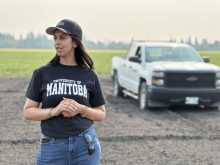
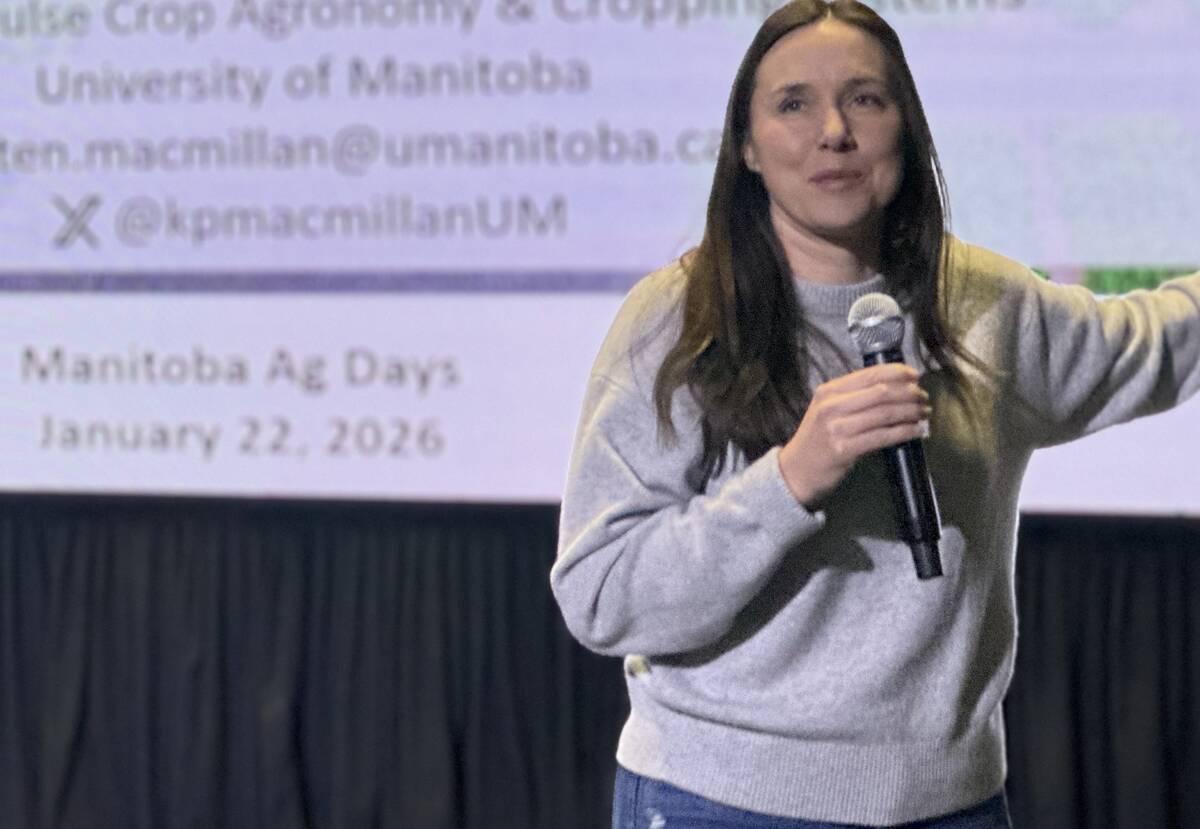
“We didn’t know the answer to this question until just now,” U of M researcher Kristen MacMillan said during a presentation at Ag Days in Brandon.
WHY IT MATTERS: Understanding how variety selection affects yield helps farmers make more confident decisions in challenging soil conditions.
“It’s a highly visual condition,” said MacMillan, who is also Manitoba Pulse and Soybean Growers’ agronomist in residence.
“We’re choosing varieties based on their visual response, but what is the actual yield correlation to that?”
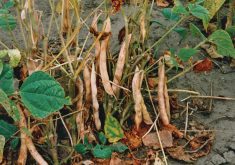
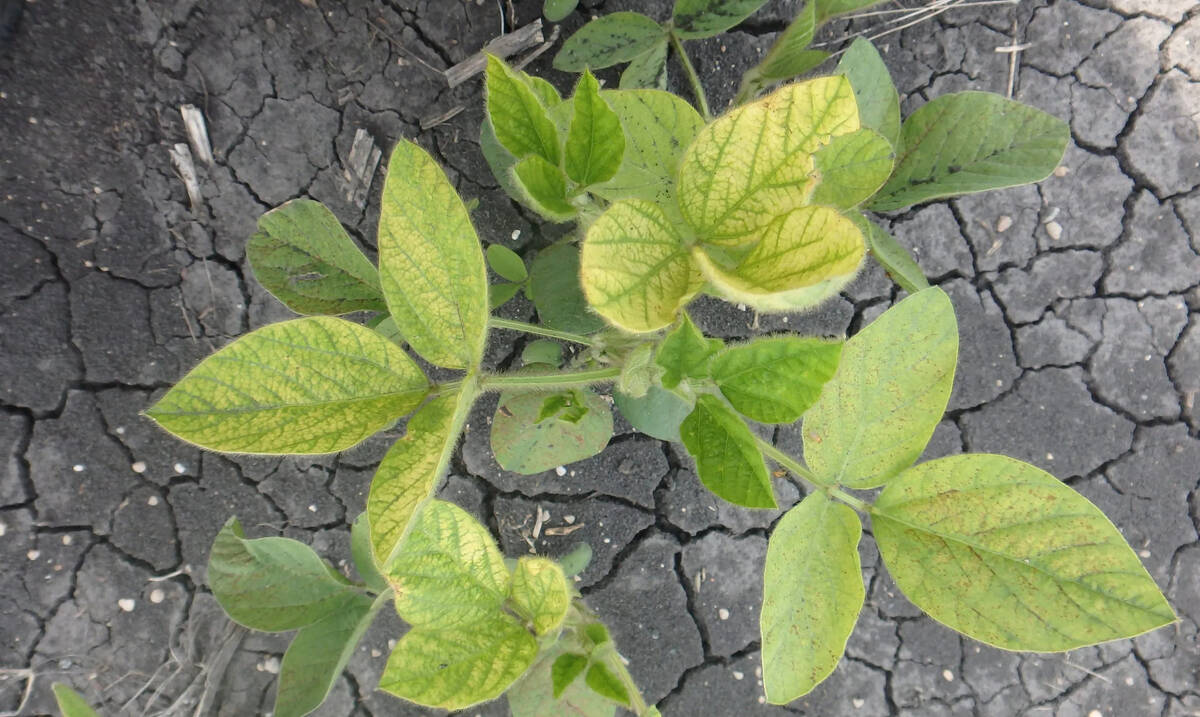
IDC is a common issue in calcareous, high-pH soils, where iron becomes chemically unavailable to the plant.
The condition causes yellowing between the veins of young soybean leaves, typically appearing in patches and lasting from mid-June into July. While symptoms may only persist for a few weeks, early-season stress can reduce yield potential.
How much yield does IDC cost?
To understand how IDC severity translates into yield loss, MacMillan collaborated with Manitoba Agriculture to analyze six years of data from single-row plots rated annually for IDC response near Winnipeg. Those plots were taken through to harvest to compare visual scores with final yield.
The analysis confirmed that yield declines as IDC scores increase in affected areas.
MacMillan reported a yield loss of roughly 1.5 to 2.8 bushels per acre for every one-point increase in IDC score. In practical terms, a two-point difference between varieties could mean a three- to six-bushel swing in IDC-prone zones.
Is there a yield trade-off?
The more pressing question, however, was whether selecting for low IDC scores sacrifices yield elsewhere in the field.
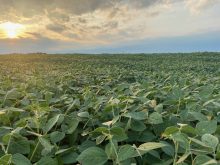
Many growers report IDC often affects only portions of a field, yet variety decisions are made for the entire field. Research in North Dakota and South Dakota has identified yield trade-offs in some soybean populations, where selecting for IDC tolerance reduced yield under non-IDC conditions.
To test whether that trade-off exists under Manitoba conditions, MacMillan established paired trials in IDC and non-IDC areas of the same field using identical varieties. She also identified a common set of varieties grown over three years to ensure consistency in comparisons.
“What we’re finding is that yield is also negatively correlated with IDC score or not related at all. So this is good news,” she said.
In other words, varieties with strong IDC tolerance performed well in affected areas without yielding less in unaffected parts of the field.
MacMillan also examined whether precision-planting different cultivars in IDC and non-IDC zones would provide an advantage.
Because no yield penalty was detected, splitting varieties within a field offered little benefit in most scenarios. Only in fields almost entirely affected by IDC did a particularly strong cultivar show a measurable advantage.
“If IDC is a constraint in your fields, continue choosing varieties with low IDC score and high yield,” she said.
For growers managing high-carbonate Prairie soils, the data reinforce current practice: selecting IDC-tolerant varieties remains the most reliable defence without sacrificing yield potential where chlorosis never appears.