On-farm research gives farmers answers under real field conditions, but real fields are messy, and that can make trial results harder to interpret.
As participation in on-farm research grows across the Prairies, researchers are working to strengthen how strip-trial results are analyzed so farmers can make more confident decisions.
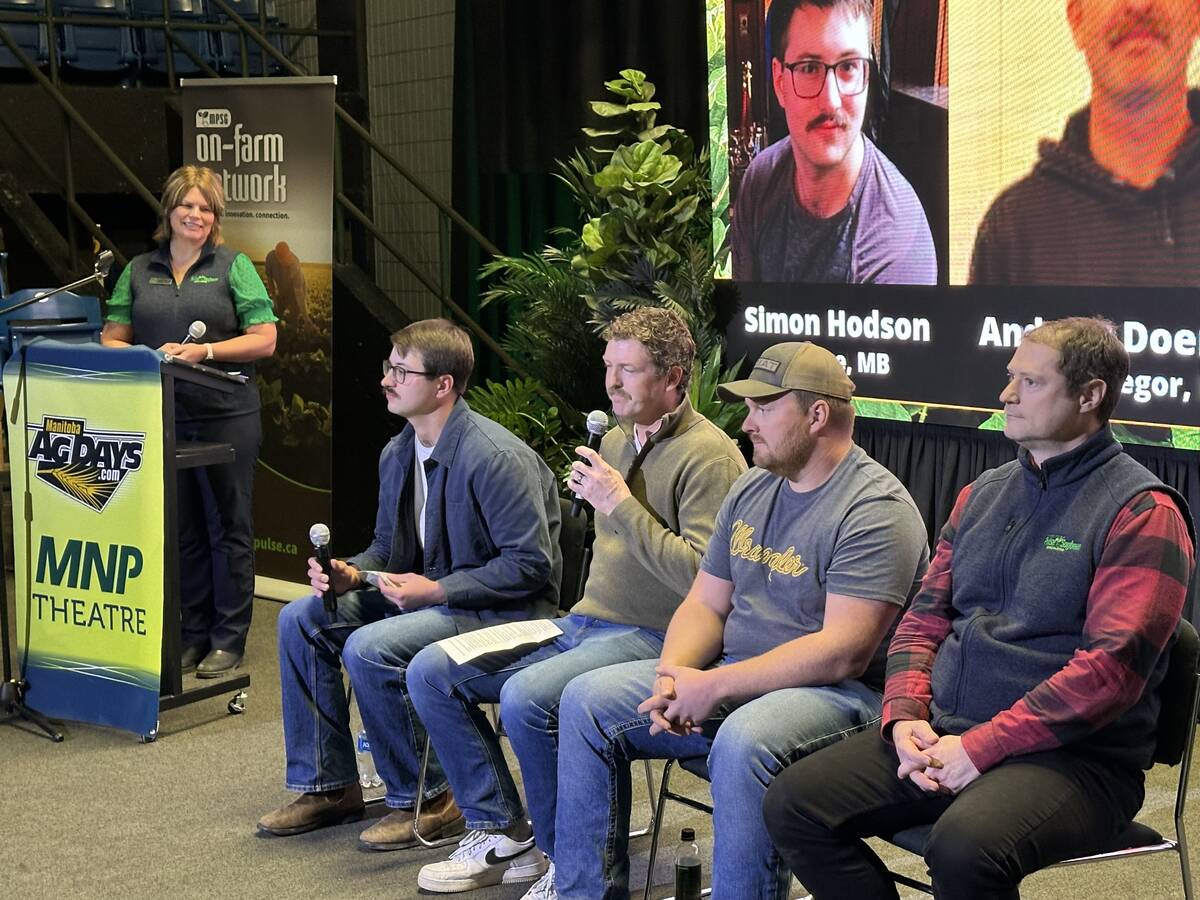
A recent panel at Ag Days in Brandon offered a snapshot of where on-farm research stands today.
Farmers involved in Manitoba Pulse and Soybean Growers’ On-Farm Network shared their experiences and why they continue to participate.
Read Also

Strychnine’s emergency use on Prairies comes with limited times, places
The maker of two per cent liquid strychnine says it’ll take some time to ramp up production to meet the product’s emergency-use registration against gophers in parts of Saskatchewan and Alberta.
WHY IT MATTERS: Improving how those trials are designed and analyzed can make the results more reliable and help growers make better management decisions.
Simon Hodson, who runs Rosebank Farms in Lenore, Man., said the value isn’t necessarily a breakthrough yield response — it’s confidence.
“It’s not an emotional choice, it’s a data-backed decision,” he said.
A null result can still be useful
Andrew Doerksen of Beaver Creek Farms at McGregor, Man., and Jayden Buchanan, who farms near Crystal City, Man., echoed that sentiment.
Several panelists pointed to “no statistical difference” results as some of the most useful outcomes. While that finding can feel anticlimactic, it often confirms that an added input or higher rate isn’t delivering enough return to justify the cost.
Soybean planting rates were one example.
Trials showed similar final plant stands across a range of starting populations, giving growers confidence to reduce seeding rates and save on seed costs.
Inoculant trials also showed little consistent yield benefit in many cases. With tight margins and rising input prices, those null results translated directly into savings.
READ MORE: On-farm research translates crop breakthroughs into ‘farmer speak’
Chris Forsythe, on-farm network agronomist with Manitoba Pulse and Soybean Growers, said most trials do not produce dramatic yield differences.
“Maybe 10 to 20 per cent of the time there is a difference, but 80 per cent of the time there isn’t,” he noted. Used carefully, that information helps growers avoid unnecessary inputs, extra passes or equipment purchases.
In one Manitoba Pulse and Soybean Growers trial on Doerksen’s farm, residual nitrogen spikes proved less consequential than expected, suggesting soybeans may tolerate more fluctuation than previously assumed.
Other trials have revealed subtler insights. In a wheat PGR trial on Hodson’s farm, yield did not change, but plant height did.
“If we weren’t working with the agronomists, we wouldn’t have been able to gain that information, and we might not have realized the value in that product,” said Hodson.
Strengthening trial design
Across the panel, the common thread was not chasing yield gains but narrowing uncertainty. Replication across multiple farms and public reporting strengthened certainty that findings were not local anomalies.
However, realism comes with a tradeoff.
WATCH: AgGronomyTV: Evaluating on-farm research
Field-scale trials capture the variability farmers live with, yet that same variability can make results harder to interpret. Long strip trials, differences in soil zones and yield monitor lag — the delay between crop entering the header and yield being recorded — can all mask real treatment responses.
A project funded by the Western Grains Research Foundation, SaskOilseeds, Saskatchewan Pulse Growers and SaskWheat and led by University of Saskatchewan professor Steve Shirtliffe, is focused on improving how on-farm trials are designed and analyzed.
Research officer Racquelle Peters, who manages the project, said on-farm research fills a gap that small-plot trials cannot. While small-plot research provides generalized recommendations under controlled conditions, field-scale strip trials reflect commercial realities.
“It feels more real to them, and there’s a good reason for that,” said Peters.
READ MORE: A whole new approach to on-farm research
“When you have that small plot research, which is also very valuable, they’re able to provide generalized recommendations, whereas, with the on-farm trials, you get specific recommendations, and that is very meaningful to farmers.”
Most on-farm trials follow a structured strip-trial layout designed to compare treatments fairly across a field. Improving how that framework performs under real field conditions is a central goal of Shirtliffe’s research team.
“What we’re doing is that we’re looking at ways to optimize that, using data that already exists,” said Peters.
Part of that effort involves re-evaluating older trial data with updated analytical tools, testing whether different approaches can strengthen the conclusions drawn from farmer-run trials.
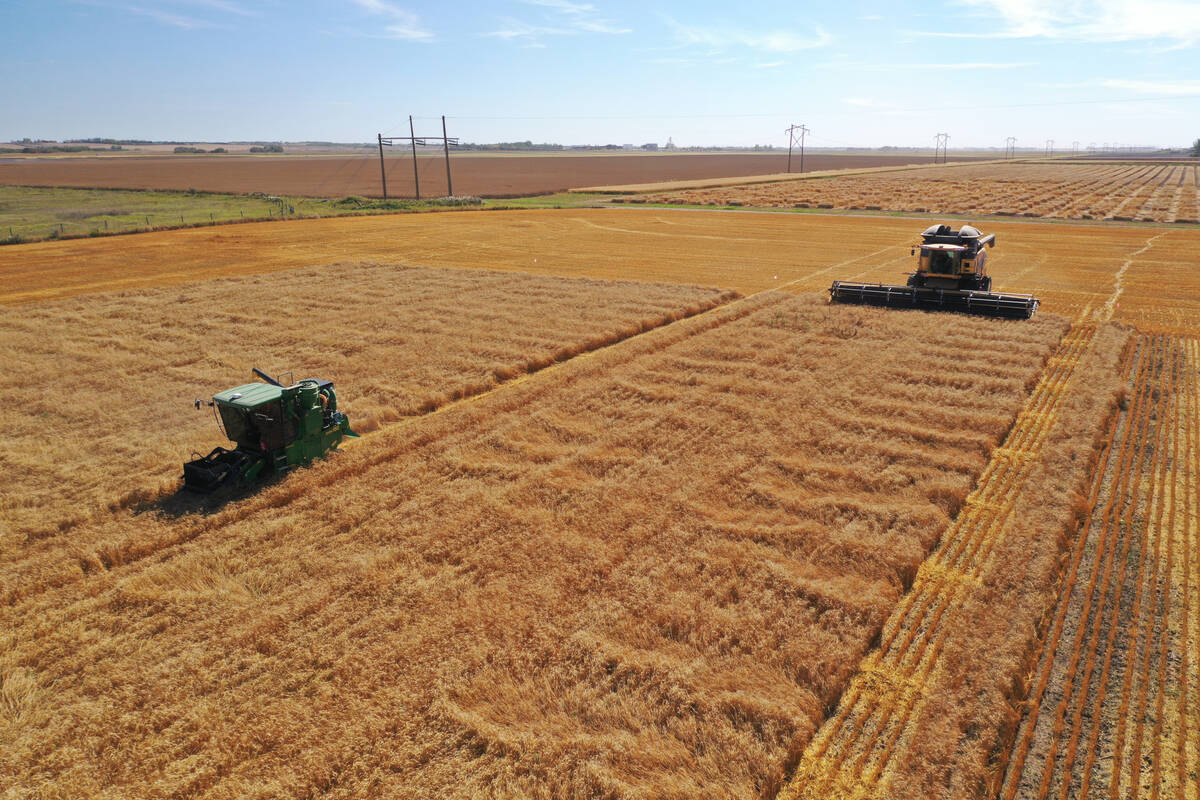
Working at field scale means working with the variability farmers manage every season. That realism can make subtle treatment effects harder to detect.
The project is exploring approaches intended to improve sensitivity without sacrificing the practical advantages of on-farm trials.
Improving field-scale sensitivity
One method, the modulated on-farm response surface experiment, replaces single-rate strips with smooth ramps of application rates within a single pass. That allows researchers to analyze responses as a curve rather than a simple comparison of averages, improving sensitivity when identifying optimal input rates.
“I think of like turning one strip into a dozen mini-plots without any borders,” said Peters.
For fixed-rate decisions, such as fungicide application, the project is also testing precision strip trials that alternate treated and untreated segments within a single pass.
READ MORE: Sask. producer learns from his own on-farm trials
Varying the length of those segments helps account for yield monitor lag and allows spatial analysis to separate real treatment effects from background noise.
“It’s kind of like an on-off treatment system,” Peters said.
Keeping trials farmer-friendly
Peters said improving trial design isn’t about making on-farm research more complicated for growers. Most modern equipment already supports variable-rate prescriptions and precision application, so many of the improvements focus on making better use of the data already being collected.
That matters because on-farm research only works if it fits into normal operations. At the Ag Days panel, growers repeatedly stressed that trials must be practical and easy to integrate into busy seasons.
“The goal is to get precise, trustworthy recommendations that reflect their local conditions,” said Peters.