Canada’s finance minister and his Chinese counterpart discussed supply chain integrity and other trade matters including tariffs on Canadian pork during talks in Beijing on Friday.
The Trump administration on Monday urged World Trade Organization members to rethink the body’s core principle of “Most Favored Nation” bound tariff rates, arguing in a new position paper that this has led to discriminatory practices and imbalanced trade, including with China.
As China heads into the 2026/27 marketing year, the United States Department of Agriculture attachés in Beijing projected a few minor to moderate changes in the country’s soybean, canola, corn and wheat crops.
China’s state planner on Friday said authorities will make timely adjustments to hog reserves and continue to strengthen the management of hog production capacity.
China is clamping down on fertilizer exports to protect its domestic market, a number of industry sources said, putting an additional strain on global markets that were already grappling with shortages caused by the U.S.-Israeli war on Iran.
Top U.S. and Chinese economic officials held “remarkably stable” talks in Paris on Sunday that touched on potential areas of agreement in agriculture, critical minerals and managed trade for U.S. President Donald Trump and Chinese President Xi Jinping to consider in Beijing, two sources familiar with the talks said.
China will release fertilizers from national commercial reserves ahead of spring planting, it said on Friday, as the effective closure of the Strait of Hormuz due to the conflict in the Middle East disrupts global supplies.
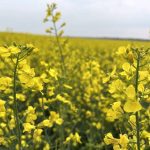
China has suspended anti-discrimination tariffs on canola meal and peas until the end of the year and reduced tariffs on canola seed, Canada’s government confirmed today.
China on Saturday sharply reduced its tariff rate on Canadian canola seed in the final ruling of a 17-month anti-dumping investigation, following a thaw in relations between Beijing and Ottawa.