

CNS Canada — Wet weather across the Prairies has put a damper on the region’s crop prospects, according to one weather specialist.
While drying events in coming weeks will limit further quality declines, it’s not expected to do so as much as some producers would like.
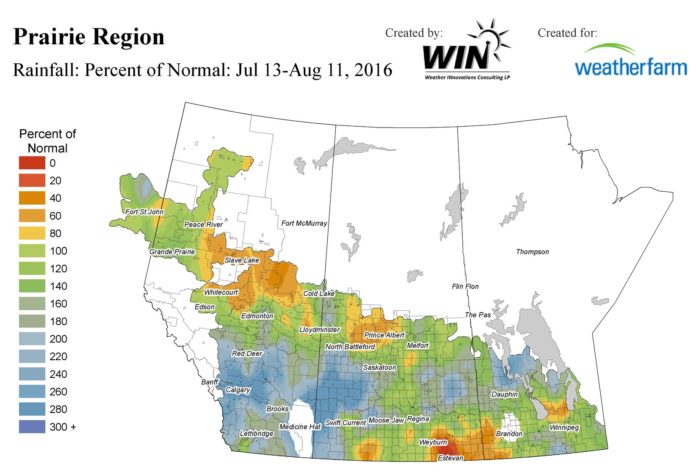
“It’s really quite wet in some locations, and it’s quite a threat to the quality of the crop,” said Drew Lerner, senior ag meteorologist at World Weather Inc.
“Most of these guys out there want to be absolutely dry at this point onward, and I’m not sure we can muster up that kind of a wish.”
Read Also
CBOT Weekly: USDA predicts declines in planting intentions
Declines in projected planting intentions for 2026/27 were not as big as the market expected, after the United States Department of Agriculture released its estimates on March 31. The USDA also issued its quarterly grain stocks report with stocks for soybeans bigger than anticipated, while those for corn were smaller and wheat virtually matched the average trade guess.
Durum and lentil crops are among those most at risk.
The quality of maturing lentils is steadily declining, Lerner said, adding that dry weather at this point is important to protect crops.
Durum could also be affected by excess moisture, Lerner said, and any additional rain could reduce crops to feed quality.
Growing conditions will see improvement near-term, but there is a high chance of increased rain at the end of the month.
“But I think we’ll see a lot less precipitation a lot less frequently,” Lerner said.
Temperatures will be on the mild side, he said, but not cool enough to stop the drying process.
“We’ll start a slow process that will get us toward improving conditions. It’s going to be imperative that these improved conditions prevail for an extended period of time,” he said.
“But for right now I don’t have high confidence that it’s going to be lasting for an extended period.”
Some of the areas most affected by moisture are in west-central and central Saskatchewan and south-central Alberta, Lerner said.
— Jade Markus writes for Commodity News Service Canada, a Winnipeg company specializing in grain and commodity market reporting.