
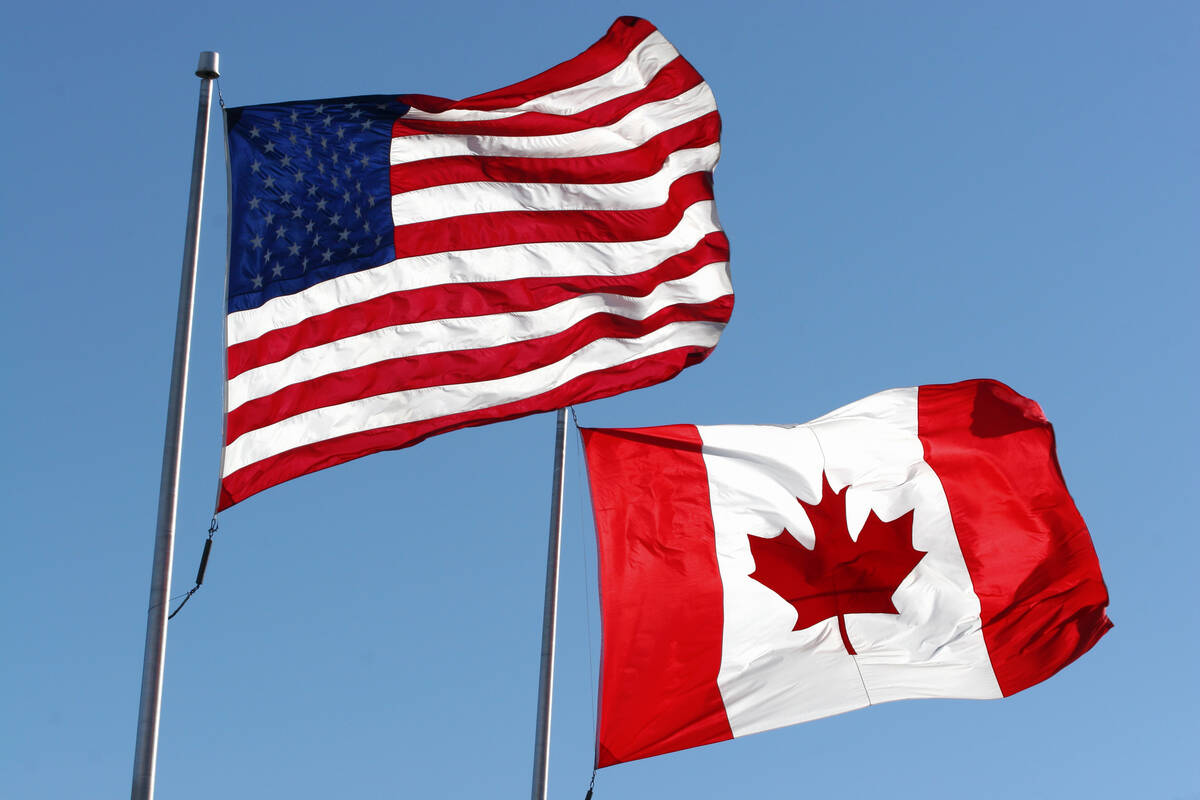
Toronto | Reuters — U.S. Ambassador to Canada Pete Hoekstra said Washington wants to renew the Canada-U.S.-Mexico trade pact but faces resistance from Canada, underscoring uncertainty as a mandatory July 1 review approaches.
Speaking on Thursday at the Canadian Crops Convention in Toronto, he said the U.S. believes CUSMA, known as USMCA in the U.S., has worked well but there have been no “substantive” talks with Canada since October.
Read Also
Expana cuts EU wheat, barley export outlook due to Middle East war
Consultancy Expana lowered its forecast for European Union soft wheat exports in the 2025/26 season for a fifth consecutive month after reducing projected wheat and barley shipments to the Middle East due to the war in the region, it said on Thursday.
The Canadian minister responsible for Canada-U.S. trade met with his counterpart, U.S. Trade Representative Jamieson Greer, last week.
“I think we want to get to an agreement, but we are facing some headwinds in the negotiations,” Hoekstra said, citing a lack of “substantive” discussions since October.
A representative for the Canadian minister responsible for U.S. trade did not immediately respond to a request for comment.
Hoekstra said:
- Canada should do everything it can to get into the lowest tariff buckets.
- The U.S. is looking for coalitions with countries that will make sure that if there are trade agreements, then the non-tariff trade barriers are removed.
- U.S. President Donald Trump has said there will be some tariff for getting access to the U.S. market so the Canadian government and businesses should make the case why it is beneficial for the U.S. to do business with Canada at the lowest tariff rate.
- Canada and the U.S. can also work more closely on energy. The U.S. already imports a lot of oil and natural gas from Canada, the U.S. processes much of this energy, and it would want to expand the partnership.
- Canada should also build a stockpile of critical minerals in Canada or the U.S. to use during emergencies. Canada has many critical minerals and it should develop a full supply chain to become an ideal partner for the U.S.
— Additional reporting by Promit Mukherjee in Ottawa