

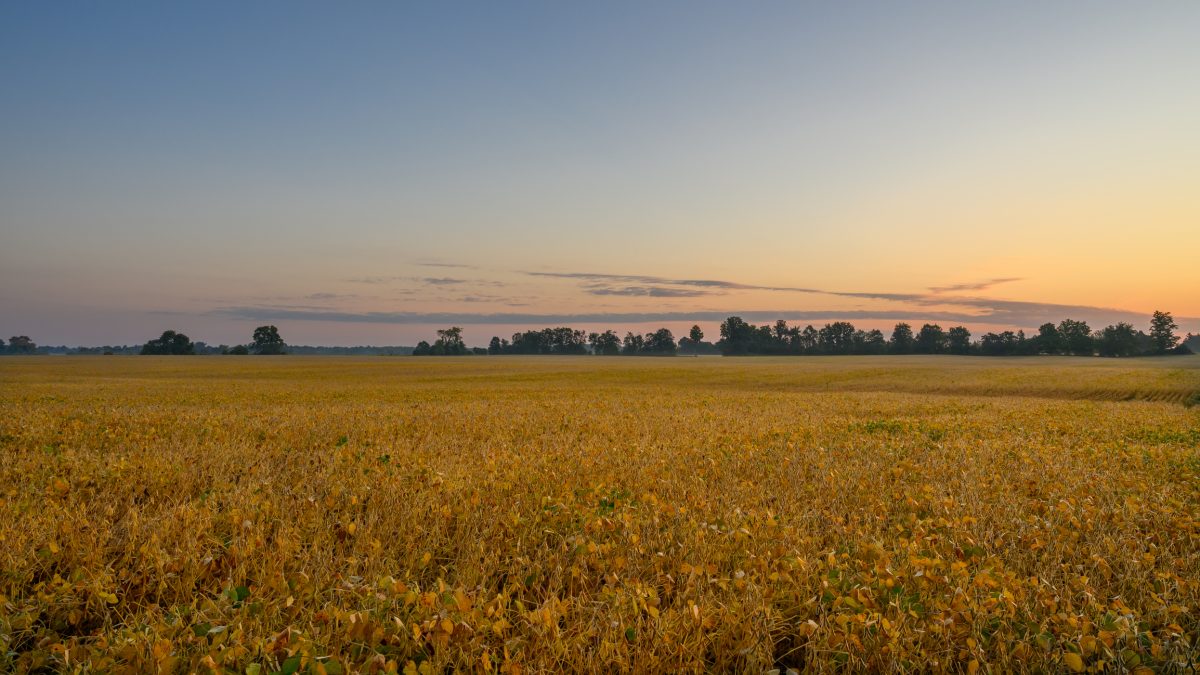
Glacier FarmMedia — A rising tide is supposed to lift all boats, but that rule may no longer apply to Prairie farmland.
Realtors in Saskatchewan have noticed a shift in the market, where some properties are going up in price and others are not.
Buyers are still willing to pay a premium for productive land, but demand is much softer for mediocre cropland.
Read Also
Board appointments hint Richardson Int. may rejoin canola council
The Canola Council of Canada has appointed a Richardson International official to its board.
Tim Hammond, founder of Hammond Realty in Biggar, Sask., described the current situation as a “split market.”
WHY IT MATTERS: After 15 to 20 years of rising values, Canada’s land market may have entered a new phase.
“Good land in a good area, is still going up,” he said.
“Average land in an average area, it’s struggling. It is going sideways and in some cases it’s going down…. I haven’t seen a mix like this since I started in 2002.”
Hammond made his comments March 10 during a webinar hosted by Dan Aberhart, who runs Aberhart Ag Solutions in Brandon, Man.
Aberhart invited Hammond and Trent Klarenbach, a market analyst who turns Klarenbach Research in Saskatoon, to discuss farmland values on the Prairies.
A snapshot of prices will be revealed next week, when FCC releases its annual report on farmland values March 24.
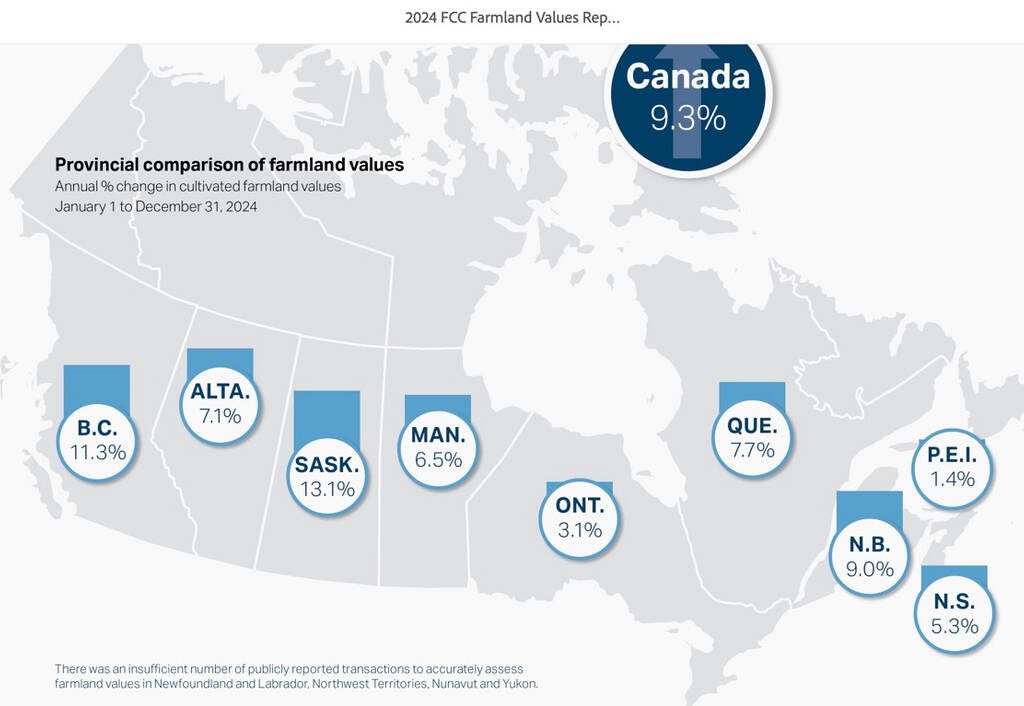
In 2024, values increased 9.3 per cent year over year across Canada, including a 13.1 per cent jump in Saskatchewan.
It’s possible that FCC will report another increase in 2025, but realtors like Hammond say something has changed.
Two or three years ago, when he put cropland up for tender, Hammond would receive 10 offers.
The top three or four bids would be very close on price.
“What we’re seeing now, instead of getting 10 offers, we’re getting two or three,” he said.
“And the spread between the top bid and second highest bid is five, 10, 15 percent.… I’ve always said, land is only worth as much as the second highest bid.”
Other experts have made similar comments about demand and buyer interest.
It remains strong in certain geographic pockets, but less so in other areas.
“Farmland is still very much a regional market,” Justin Shepherd, senior economist with Farm Credit Canada, said last August.
“There could be areas that see (more) farmland value growth … but there could be other areas where there is (less) competition for that farmland, where you could see things slow down.”
Similar market for U.S. farmland?
A comparable situation has developed in the United States, where buyers are driving up the price of productive cropland while demand is weak for less fertile land.
Sellers of land, outside of the best areas, might need to lower their expectations, said a January report from Farmers National Co., a firm that manages farmland across the Midwest and Northern Plains.
It’s not necessarily a buyers market, but buyers are getting picky, said Colton Lacina, Farmers National Co. senior vice-president of real estate operations.
“(They) are carefully assessing soil quality, the percentage of tillable acres, water access and how a parcel fits into their current operations. Those details matter more than ever.”
A plateau in values would be a significant change for Canadian producers, landowners and the psychology of investors because the market has increased for nearly 20 years.
An FCC report on historical farmland values indicates that the average price increase was 10.7 per cent annually from 2007-23 across Canada.