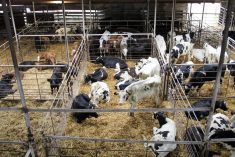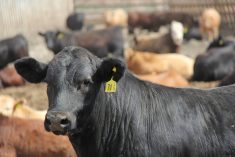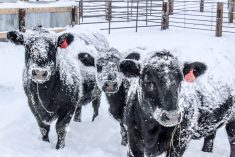


Western Canadian feeder cattle prices continued on a downward trajectory trading $3-$5 below week-ago levels. Erratic buying interest resulted in inconsistent price action across the Prairies which made the market difficult to define. Smaller groups of various quality cattle were on offer, justifying the softer tone, but feedlot operators demonstrated unwavering fortitude even on genetically premium built cattle. There’s a nauseating view on the market these days as cattle feeders wear off the venomous sting from the last round of feeding. The deferred live cattle futures bounced off the contract lows, but this did little to rejuvenate the melancholy attitude.
Read Also

USDA attachés forecast some changes in China’s oilseeds, cereals
As China heads into the 2026/27 marketing year, the United States Department of Agriculture attachés in Beijing projected a few minor to moderate changes in the country’s soybean, canola, corn and wheat crops.
Mixed steers averaging around 950 lbs. were quoted in the range of $166-$172 in central and southern Alberta. Steers averaging 800-825 lbs. with no special features were quoted from $175 to $183 across the Prairies. The market was relatively even from central Alberta to southern Manitoba, with the southern regions generating more market activity. Slightly larger than normal freight discounts were noted in the northern regions of Alberta and B.C., but this was likely due to limited cattle available.
There was no flourish of trumpets for calves this week. The focus will be on yearlings over the next month so buyers appeared to shy away and discount calves. Quotes from southern Alberta and southern Manitoba had steers averaging 550 lbs. in the range of $205-$210; heifers of similar weight were formulated from $180 to $185.
Alberta packers were buying fed cattle from $144 to $146 which is near breakeven pen closeout levels. U.S. wholesale choice beef prices dipped below the psychological price of $200/cwt — the first time since December 2015. This should enhance beef movement through the retail pipeline. Feed barley in southern Alberta traded from $175 to $180 this past week, which is bringing down the cost per pound gain. All these factors may stabilize the feeder market in the short term.
— Jerry Klassen is manager of the Canadian office for Swiss-based grain trader GAP SA Grains and Produits. He is also president and founder of Resilient Capital, which specializes in proprietary commodity futures trading and commodity market analysis. Jerry owns farmland in Manitoba and Saskatchewan but grew up on a mixed farm/feedlot operation in southern Alberta, which keeps him close to the grassroots level of grain and cattle production. Jerry is a graduate of the University of Alberta. He can be reached at 204-504-8339.