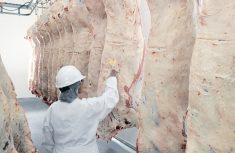
Dublin | Reuters — Ireland said Wednesday that a dead cow had been confirmed as having bovine spongiform encephalopathy (BSE), but said it had not entered the food chain and there was no risk to human health or beef’s trade status.
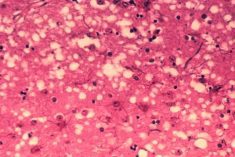
The animal tested positive for “atypical” BSE, Ireland’s agriculture department said in a statement, referring to the strain that it said has been identified more recently and which occurs spontaneously in older animals with a low incidence rate.
That type is distinct from “typical” BSE which was the basis of widespread cases of mad cow disease that began in the 1980s. There have been 101 atypical cases identified in the EU from 2003 to 2015 compared to 2,999 typical cases, it added.
Read Also

U.S. urges WTO members to rethink core tariff rule in face of China threat
The Trump administration on Monday urged World Trade Organization members to rethink the body’s core principle of “Most Favored Nation” bound tariff rates, arguing in a new position paper that this has led to discriminatory practices and imbalanced trade, including with China.
“The disclosure of this case of atypical BSE does not have any impact on Ireland’s current OIE (World Organization for Animal Health) BSE ‘controlled risk’ status or trade status,” the department said.
Beef is one of the agriculture sector’s largest exports. In 2015, Ireland became the first EU country to regain access to the lucrative U.S. market, 17 years after Washington banned EU imports over the BSE epidemic that spread from Britain to mainland Europe.
China also agreed to lift its ban on Irish beef two years ago.
The agriculture department also said Wednesday that it had found a third case of the H5N8 bird flu strain in a swan in the south of the country, following the confirmation of a first case on Dec. 30.
— Reporting for Reuters by Padraic Halpin.