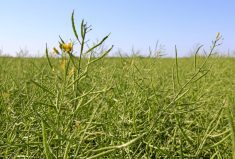
CNS Canada — ICE Futures Canada canola contracts are facing some bearish weather conditions as more rain is expected to fall across parched regions of the Prairies.
During the week ended Wednesday, most canola contracts posted losses. The dominant November contract fell $7.80, to $489.60. The lone exception was the nearby July contract, which eked out a gain of 10 cents.
“There’s finally been some good rains across Manitoba and eastern Saskatchewan,” said Keith Ferley of RBC Dominion Securities in Winnipeg.
Another factor weighing down the price of canola has been the steady rise of the Canadian dollar. The loonie was trading at US74.03 cents early last Thursday morning, but had climbed to US75.71 cents by Wednesday’s close.
Read Also
Feed Grain Weekly: Seasonal gains expected this spring
Feed grain prices have not yet been affected by rising fuel costs, but will continue to rise nonetheless, said a Lethbridge-based trader.
The next thing that could impact prices are crop reports, Ferley said. “What didn’t get in the ground? Is it two per cent, three per cent?”
On the technical end of things, Ferley said the July/November spread is still active as commercials get out of old crop and roll into the new month.
“November has the most open interest and is driving the bus,” he said.
Funds are going short on canola because the technical picture has turned negative, he said.
“That will be watched as this technical picture continues to roll over,” he added. “Do the funds start to ramp up and add to their shorts?”
Resistance for the November contract is pegged at $495-$496 by Ferley. Support is near $477.
Farmer selling has been quiet, which has also helped prop up canola.
Further support could come if dry weather returns, Ferley said. “The concern is, we still have July and August, so is there a chance the heat comes back in and fries the crop at a critical stage?”
Ferley did note, however, that some farmers west of Edmonton were still having trouble getting onto the land due to excess moisture.
— Dave Sims writes for Commodity News Service Canada, a Winnipeg company specializing in grain and commodity market reporting.