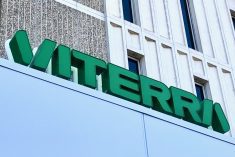

Commodities firm Glencore, the owner of Prairie grain-handling heavyweight Viterra, is reported as already moving forward on plans to bring minority investors into its ag business.
Glencore announced earlier this month it plans to tame the debt it’s racked up in its recent major expansions, partly through sales of assets and new shares.
Those assets, the Swiss trading and mining company said at the time, are “including, but not limited to” the “minority participation of third-party strategic investors in certain of Glencore’s agriculture assets, including infrastructure.”
Read Also

U.S. finalizes biofuel blending quotas for 2026-27, cuts RINS for foreign feedstocks
The Trump administration on Friday finalized new biofuel blending volumes mandates for the U.S. oil refiners, requiring more of the fuels made from corn and other agricultural products than initially proposed,in an apparent win for U.S. farmers.
Regina-based Viterra, which Glencore bought in late 2012, was mentioned by company brass in reports at the time as a desirable asset, but the company didn’t confirm which agricultural assets were on the table, saying more details would come “at the appropriate time.”
Javier Blas of news service Bloomberg on Friday quoted an unidentified “person familiar with the situation” as saying Glencore has already hired banks Citigroup and Credit Suisse Group to handle the sale of a minority share in the ag business.
Such a deal, the source said, could put a valuation on the company’s whole ag division at up to US$12 billion.
The Swiss-based company is in talks with “about a dozen sovereign wealth funds and Asia-based trading houses,” Bloomberg quoted the same source as saying.
Glencore is likely to sell the minority stake to a group of funds and trading houses as opposed to a single party, the same source told Blas. — AGCanada.com Network