

Glacier FarmMedia — Farmland values continued rising on the Prairies in 2025, despite trade uncertainty, relatively high interest rates and hefty input costs for Canadian farmers.
Producers made strong bids for available land, increasing values by 12.2 per cent in Manitoba, 11.4 per cent in Alberta and 9.4 per cent in Saskatchewan, says the 2025 Farmland Values report from Farm Credit Canada.
In its report, FCC said agricultural land values were “resilient” last year and defied expectations of a downturn.
Read Also

Russia stops ammonium nitrate exports for one month amid global supply crunch
Russia, which controls up to 40 per cent of the global trade in ammonium nitrate, said on Tuesday it will stop exports of the fertilizer for one month until April 21 to ensure sufficient supply during the spring planting season.
“The market remained supported by farmland’s long-term investment appeal, tight supply and strong competition from expansion-focused producers,” says the FCC report, released March 24.
“The Prairie provinces drove much of the year’s average increase (across Canada).”
Overall, the value of cultivated land jumped 9.3 per cent from coast to coast, but provinces outside of the Prairies saw weaker gains or losses in value:
- British Columbia, a 1.7 per cent decline.
- Ontario, 2.2 per cent increase.
- Quebec, 4.8 per cent gain.
FCC attributed the modest rise in Ontario to farmers becoming picky. They were willing to pay high prices for top-quality land but avoided marginal properties.
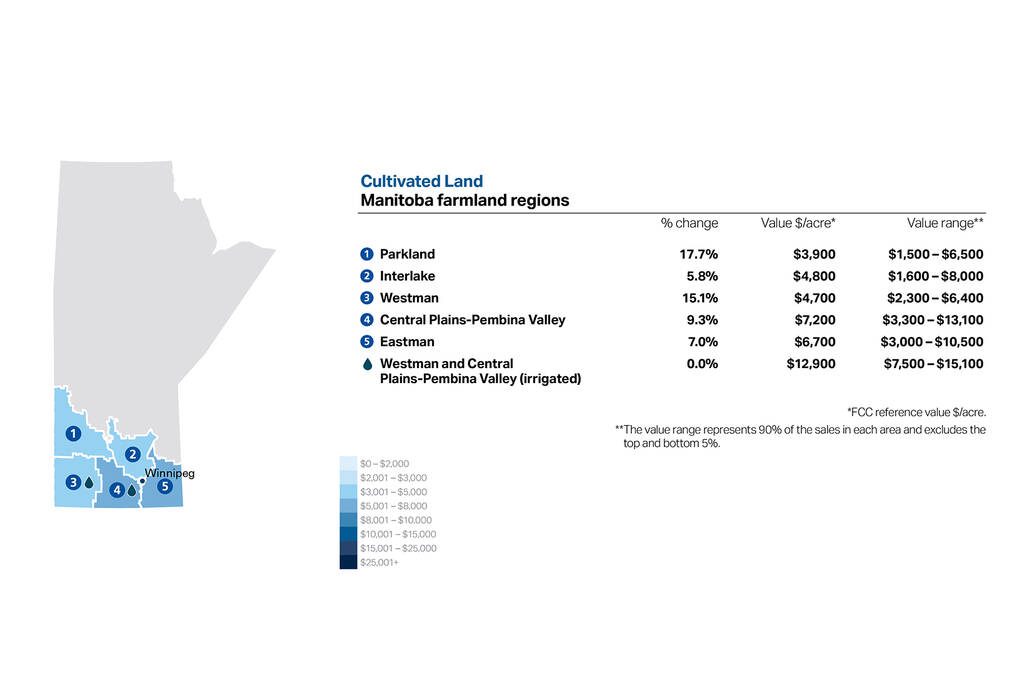
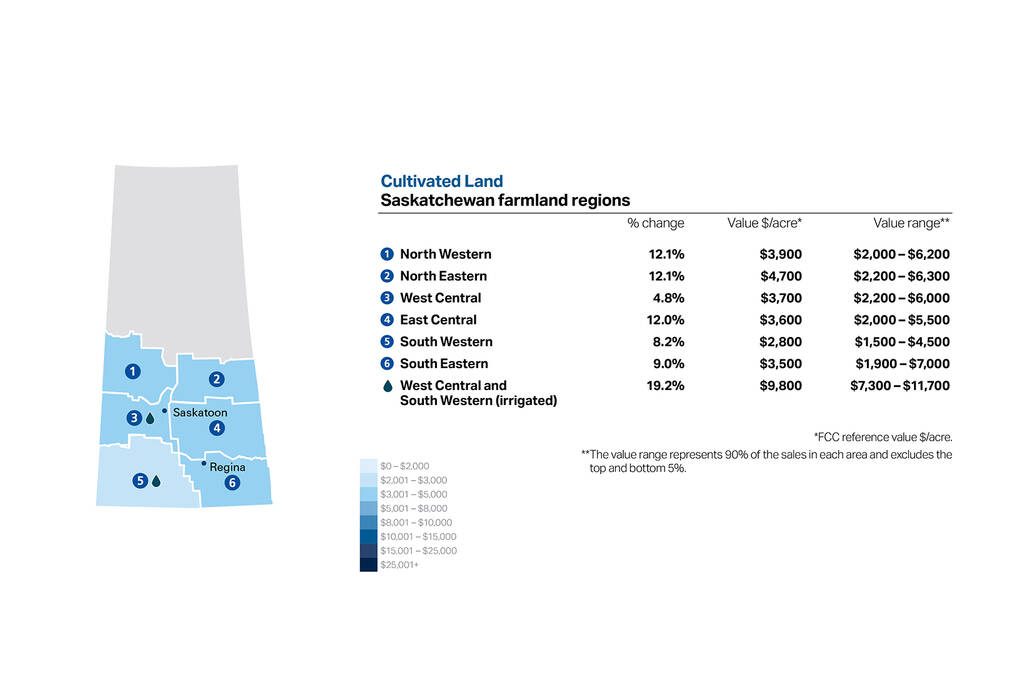
A similar situation has developed in Saskatchewan. Expanding producers are driving demand for the best land in the most productive regions.
In 2025, price increases in northeastern, northwestern and east-central Saskatchewan were around 12 per cent. Those regions produce the highest yields for key crops like canola and wheat.
In west-central Saskatchewan, where yields are lower, farmland values increased 4.8 per cent in 2025.
The average price of cropland in northeastern Saskatchewan is getting close to $5,000 per acre. That’s a massive jump from 2019, when average values in the northeast were $2,000 per acre.
Farmland realtors on the Prairies have also noticed this trend of robust demand for fertile land.
“Good land in a good area is still going up,” said Tim Hammond of Hammond Realty in Biggar, Sask.
In southern Alberta, dryland prices surged upward by a 16.4 per cent in 2025. Irrigated land, which is now at $20,000 per acre in the province, played a role in the value gains in southern Alberta.
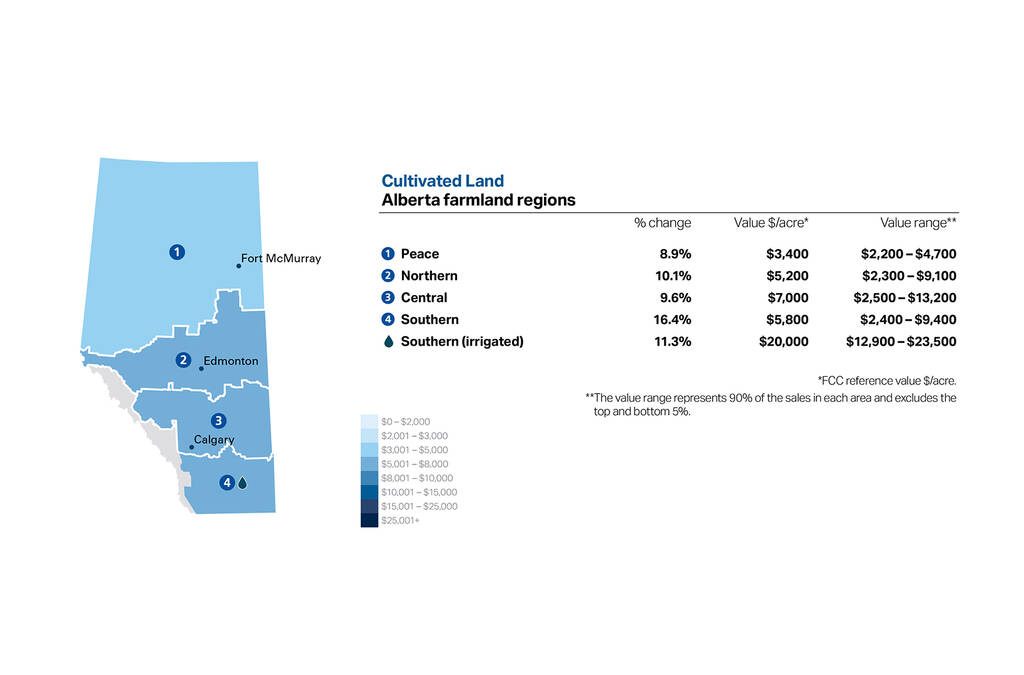
As irrigation districts have expanded, dryland acres close to irrigated land have become more valuable, FCC said.
A major theme in the FCC report was the shortage of land for sale in multiple provinces and regions.
This could be part of an ongoing trend, for the last 15 years, where retiring farmers rent their land instead of selling.
Whatever the reason for the shortfall of properties on the market, it’s clear that supply is “tight”, said J.P. Gervais, FCC executive vice-president of ag operations.
“This is something that has been certainly documented last year, and if I’m not mistaken, the year before,” he said.
“One of the overall drivers of farmland values, how tight the supply, does matter when (it) comes to the valuations that we’re currently seeing…. Generally speaking, very tight availability of farmland (for sale).”
Pastureland also higher
The FCC report had data on pastureland values, which saw a 5.2 per cent increase across Canada thanks to stronger prices for beef cattle over the last few years.
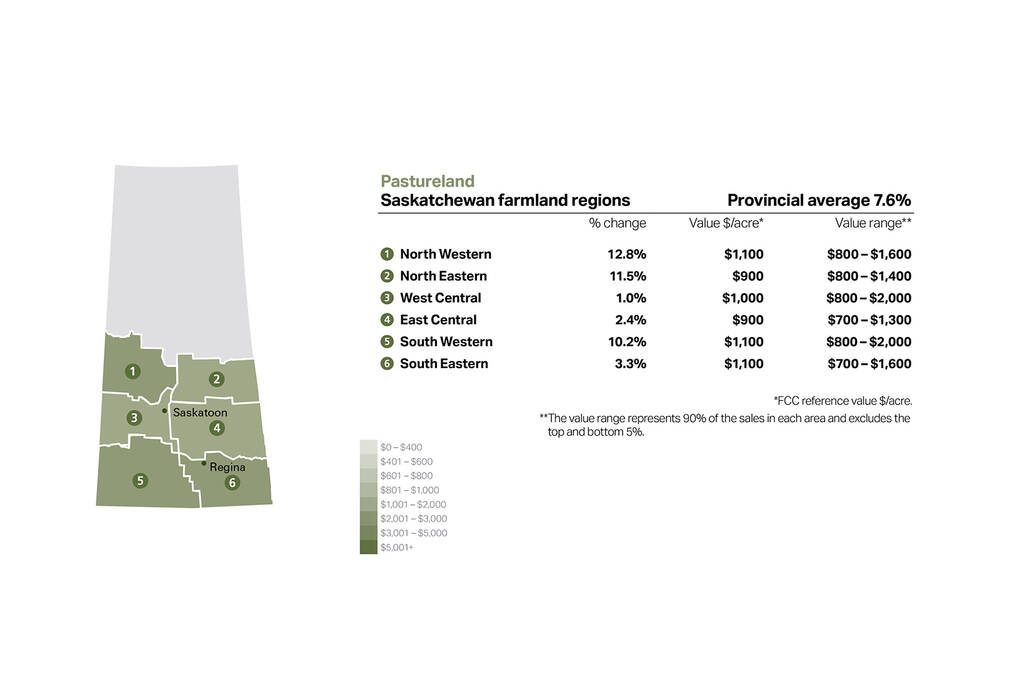
Gains were much higher in Alberta’s Peace region and northern B.C., where values climbed 17 to 18 per cent.
Across the Prairies, Saskatchewan saw the largest increase in pastureland prices of 7.6 per cent.