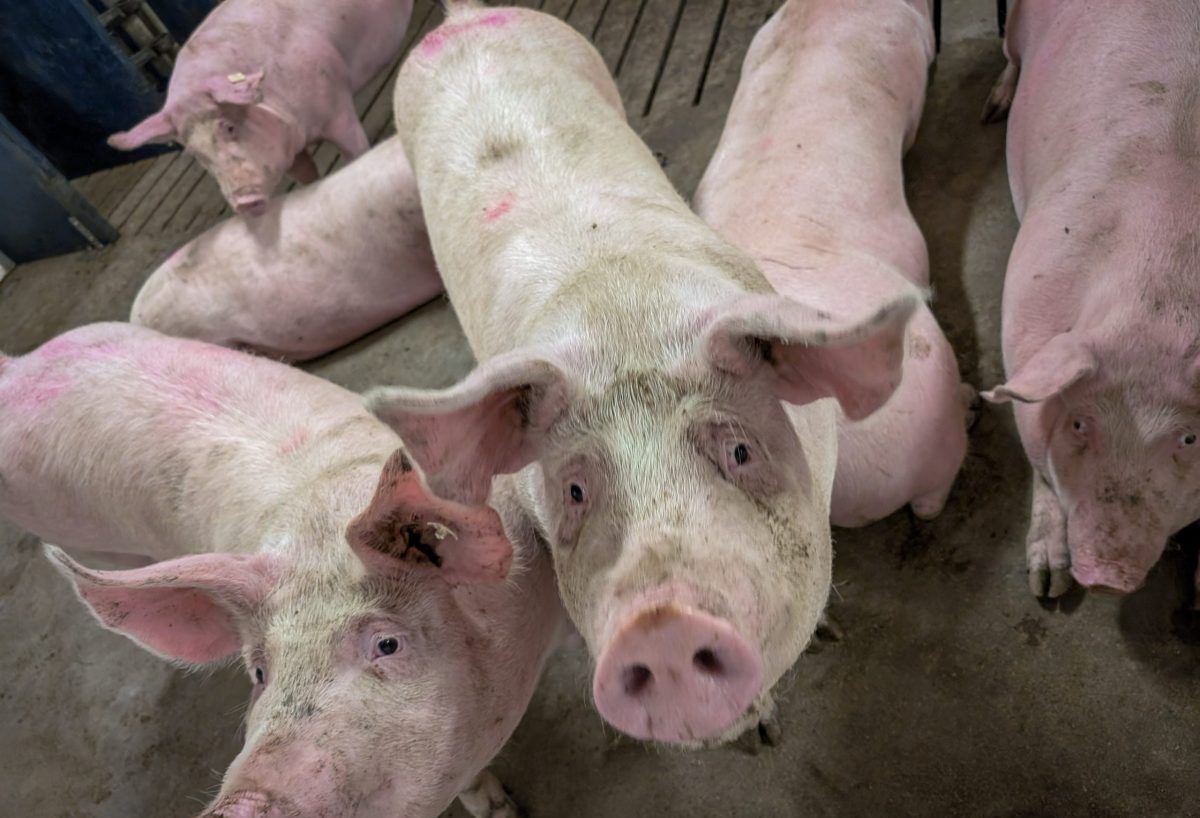
Madrid | Reuters — A task force of EU vets specializing in epidemics began work in Barcelona on Tuesday to help contain an African swine fever outbreak as Spain said the number of wild boars found infected with the virus rose to nine.
The experts in virology and risk management will visit the affected area in the Bellaterra municipality northwest of Barcelona to survey the situation, provide advice and prepare a follow-up report with recommendations, a European Commission spokesperson said.
Read Also

Farmers see fertilizer price surge as Iran war blocks exports, threatening losses
The world’s farmers face soaring fertilizer and fuel prices as the war in the Middle East escalates, leaving some scrambling for supplies as the spring planting season approaches.
Spain is the European Union’s leading pork producer, accounting for a quarter of the bloc’s output, ahead of Germany, with annual exports worth about 3.5 billion euros (C$5.7 billion).
It resumed shipments on Monday from other regions to China, which accounts for almost 42 per cent of Spanish pork exports outside the EU, after Beijing confirmed it would only limit imports from the Barcelona area, in line with a recently-signed agreement that adopted a regional approach to pig disease and trade.
But other countries including Britain, Mexico and Canada have suspended a wide range of pork and by-product shipments from across Spain. Prime Minister Pedro Sanchez urged them to continue buying from regions outside the containment zone.
“It is very important to keep markets beyond Europe open for pork exports,” Sanchez said in an interview with the TVE broadcaster.
Outbreaks around Europe
The EU task force was last deployed in September to help monitor a swine fever outbreak in Estonia.
Croatia is also trying to contain an outbreak, while Italy and Germany have recorded cases in recent years that have prompted the culling of pigs.
In France, which is currently free of the disease, the Agriculture Ministry said it will meet with experts later this week to assess the situation and propose any necessary additional surveillance measures.
“Biosecurity measures must be reinforced even more with three countries (Spain, Italy and Germany) around us now affected,” said Anne Richard, director of French pork industry association Inaporc.
Officials suspect the virus may have spread after a wild boar ate contaminated food, possibly a sandwich brought from outside Spain. The virus is harmless to humans, but spreads rapidly among pigs and wild boar, for whom it can be fatal.
It was first detected in two wild boar in a wooded, hilly area outside Barcelona. Seven more boars in the same area also died from the disease, Spain’s Agriculture Ministry said on Tuesday.
Catalan authorities have restricted all leisure activities, including hunting, within a 20 km radius of where the first two pigs were found. A tighter, 6 km perimeter has been fully closed off, with traps installed to catch and test wild boars.
Pig farmers pay the price
Even if the outbreak is contained, the costs for pig farmers in the affected area will be significant, said pork trader Nemesio Sanchez.
“It will be a long winter for Barcelona province, as it is one of the largest exporters of Large White pork and would lose access to China, its major customer,” Sanchez said.
The outbreak could allow U.S. farmers to gain market share.
“With more EU countries finding ASF within their borders, U.S. producers have an opportunity to meet global demand,” U.S. consultancy Steiner Consulting Group said.
The U.S. Department of Agriculture forecasts U.S. pork exports, at 6.96 billion pounds next year, but Steiner Consulting said it could exceed 7 billion pounds if the outbreak in Spain is not contained.
— Additional reporting by Gus Trompiz, Tom Polansek, Corina Pons and Victoria Waldersee.