

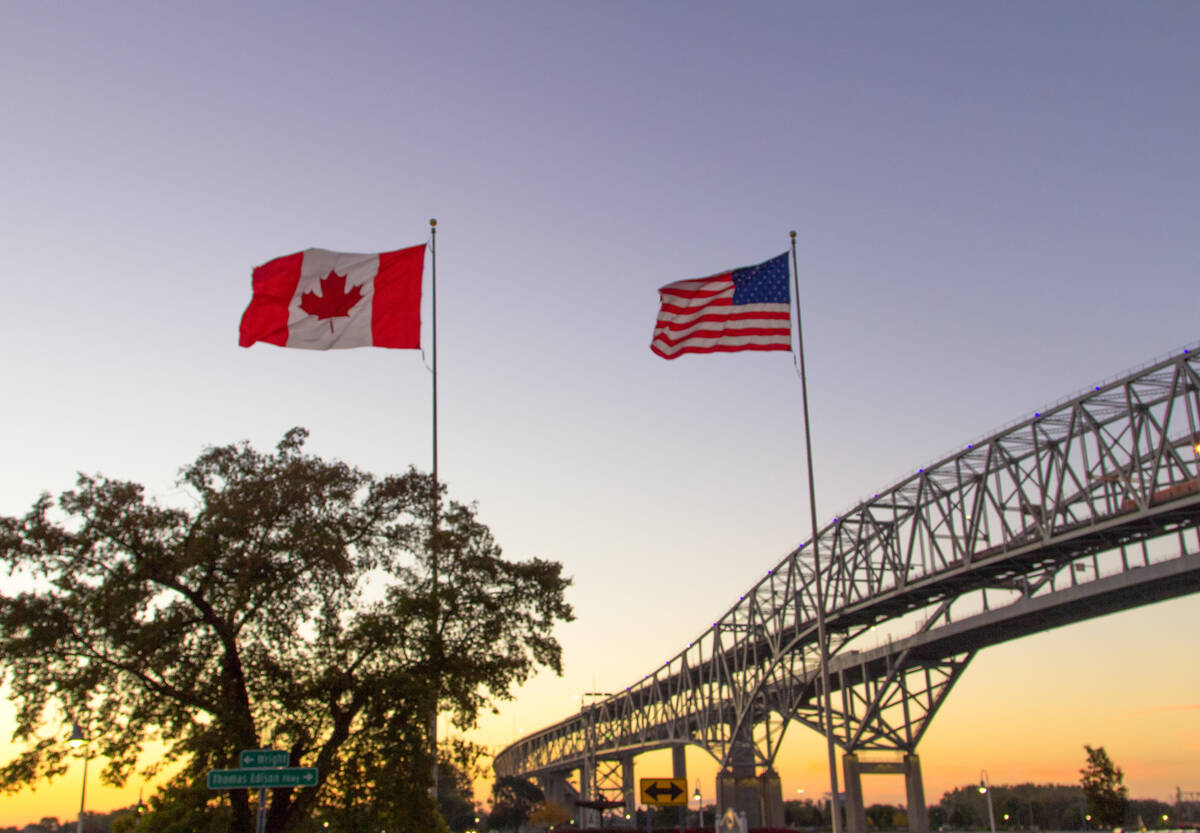
The upcoming Canada-Unites States-Mexico Agreement (CUSMA) review could set the tone for the future of Canadian agri-food trade. Here’s everything you need to know about CUSMA, the upcoming review process and what it could mean for the agriculture sector.
CUSMA replaced the North American Free Trade Agreement (NAFTA), which was active from 1994 to 2020. The current trilateral agreement allows producers in all three countries to trade with each other in a mostly tariff-free environment.
WHY IT MATTERS: The review of CUSMA could set the stage for a new era of trade and tariffs between Canada and the U.S.
Read Also
More canola, spring wheat likely to be seeded this spring
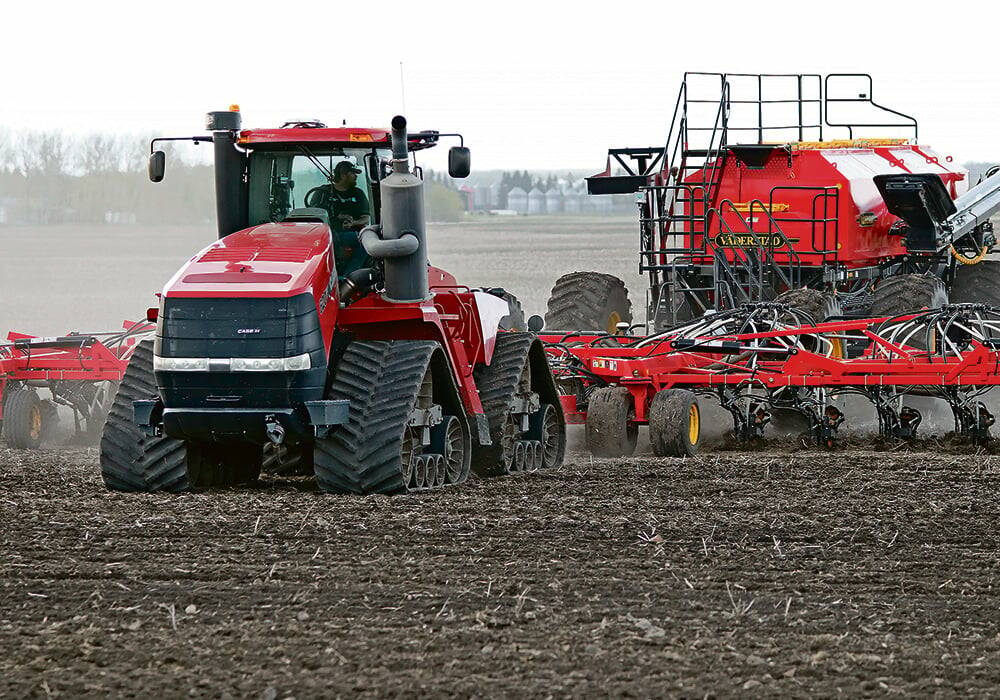
As spring planting approaches, farmers are busy planning which crops to seed this year and how much. With that, market thoughts have turned toward planted area projections, as Statistics Canada is set to issue its report on Thursday.
U.S. President Donald Trump has consistently expressed his displeasure with CUSMA despite the fact that it was negiotiated during his first administration.
Prime Minister Mark Carney has also claimed the relationship Canada thought it had with the U.S. is over, signalling a possible new era in North American trade.
According to Patrick Leblond, a professor at the University of Ottawa’s Graduate School of Public and International Affairs, it is unlikely the three countries will return to the original mode of tariff-free trade under CUSMA.
“It sounds like the Americans are not in a compromising mood,” Leblond said. “It sounds like, ‘Okay, we’re going to put the gun to your head, and you’re going to give us what we want.’”
Can the U.S. pull out of CUSMA?
Any of the three parties may leave the agreement as long as they provide six months’ notice, but Leblond said nothing is stopping the U.S. from taking more drastic action.
He also said there is nothing forcing the parties to start negotiating on July 1, the official start of the review.
“The reality is, … the U.S. can just pull out and say, ‘yeah, as of tomorrow, we are not applying (CUSMA) anymore,” said Leblond. “We’re pulling out and we don’t care about the six months’ notice.’”
“The sort of attitude would be, ‘well, just sue us.’”
If Canada and Mexico were to sue, a panel of arbitrators would likely rule the U.S. at fault and give permission for the two countries to retaliate with tariffs.
It would still be on Canada and Mexico to decide how to react.
“It’s a bit of a moot point where yes, the U.S. legally has to give notice, but in practice, they can do what they want.”
It leaves Canada in a precarious place, especially as the terms of the agreement may not feel permanent.
“The Trump administration ultimately cannot be trusted,” Leblond said. “And therefore, yes, we can negotiate, we can try to come to a deal, but we have no guarantee whether that deal will be respected. And even existing deals are not being respected.”
U.S. could face challenges in leaving the agreement
Michael Harvey, Executive Director of the Canadian Agri-Food Trade Alliance (CAFTA), said it’s unlikely Trump will pull out of the agreement completely.
Under the American system, the President would need congressional approval for major changes. Harvey said this could be a problem for Trump, who is already seeing pushback on his tariffs including a recent Supreme Court challenge.
“Significant changes to the treaty would require going to Congress, and we haven’t seen the administration be all that interested in going to Congress with trade agreements,” Harvey said.
There could also be disagreement within the administration’s base. Harvey said in the two trade missions it took to Washington D.C. last year, CAFTA started to see increased doubt about the tariff agenda amongst Republicans, particularly in agriculture states.
U.S. producer groups have also shown support for a CUSMA renewal.
“That’s really positive, because first, it’s our direct counterparts in the United States,” Harvey said. “Second, the agri-food sector, let’s face it, they tend to be supporters of President Trump. So, it’s a positive thing for supporters of President Trump to be so in favor of the agreement.”
“Tariffs mean increased cost for consumers, for producers,” he said. “We’ve been working hard at making sure that decision-makers understand that, and what we’ve seen in Washington is that they do, and it’s great to see the U.S. ag sector being sold about it.”
Trump has also protected the agri-food elements of the agreement. When the President imposed tariffs on Canada, CUSMA-compliant agri-food goods were exempted.
What’s Canada’s best-case scenario?
Harvey said the best-case scenario for Canada would be a full renewal with some minor updates on agricultural technology, but “just renewal with no changes at all would be a great-case scenario.”
The deal works well for the agri-food sector.
“It’s one of the best agreements in the world,” Harvey said. “We’ve got three countries working together, highly integrated supply chains, highly integrated markets. That’s something that we need to protect.”
It’s still likely Trump will hardball in the initial negotiations.
“He has a style that attracts attention to his demands,” Harvey said. “His demands are often quite high at the beginning of a negotiation and often change quickly.”
Leblond also called it a best-case scenario for Canada to maintain the current terms, but suspected the U.S. would continue to push for more access in Canada, particularly in supply-managed sectors.
“If we can play for time and try to maintain the status quo, to me that would be the best option for now for Canada,” he said. “And hopefully then, … for a lot of the agricultural goods that we export to the U.S., they will continue to be exported without tariffs because we meet the rules of origin.”
That’s why both sides seem to be pushing for “just don’t make things worse,” Leblond said.
“Talk, engage, negotiate, but don’t look for a quick deal,” he said. “That that would be my view.”
Bilateral vs. trilateral negotiations
Leblond said the U.S. could push for bilateral negotiations instead of trilateral, meaning individual meetings with Canada and Mexico.
This could weaken the leverage Canada and Mexico would otherwise have working together.
Leblond said there are three likely options.
“One is really trilateral negotiations, comprehensive,” he said.
“There’s the (option) we renew CUSMA, but the U.S. negotiates bilaterally with Canada, bilaterally with Mexico, and then they try to fit that within the existing CUSMA.”
Or the countries could make bilateral deals outside of CUSMA.
There is precedent for this, as the U.S. recently negotiated a new deal with South Korea which goes against the countries’ existing agreement. The free trade agreement is still there, but it’s superseded by the new deal.
“Is that what the Americans are going to try to push with Canada on the one hand and Mexico and the other? It’s very possible,” Leblond said.
The ever-present possibility of the U.S. pushing more tariffs on Canada should be motivation for the government to seek other trade deals in the interim, he added.
Carney and other government officials have recently taken several trips to countries like India and Vietnam.
Longer-term, reducing dependency on the U.S. is a good idea, Leblond said.
“Even if we have a deal, let’s say some kind of renegotiation, a deal that we reach with the U.S., what’s the guarantee that that deal is going to hold? There is none.”