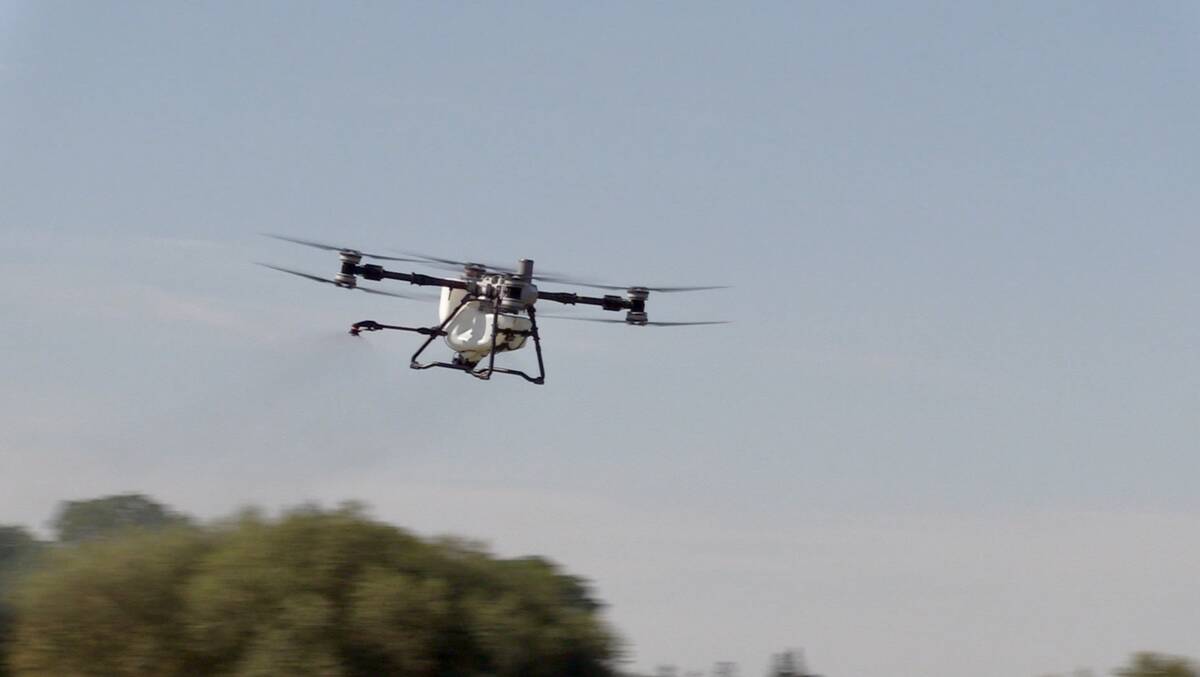
Health Canada is seeking public opinion on proposed rules that would allow pesticides to be applied by drone if they are already registered for aerial application.
To date, only pesticides registered for use with drones — often called remotely piloted aircraft systems (RPAS) — can legally be applied by drones. Almost none are registered for drone application.
WHY IT MATTERS: The proposed regulations would make many existing pesticides available for application by drone. To date, almost no products have been made available for legal application by drone — though anecdotal evidence suggests drone application is happening on the down low.
Read Also
Canadian aquaculture should be classed as agriculture, industry groups say
Canadian aquaculture organizations say aquaculture should be classed as agriculture and overseen by Agriculture Agri-Food Canada so the sector can get more support from the government.
Health Canada’s Pest Management Regulatory Agency (PMRA) proposes to allow currently registered products, where the label permits aerial application — that is, by fixed wing or rotary aircraft — to be applied by drone.
Applicators would need to comply with all the label directions for aerial application, including spray volume, application rate, droplet size, treatment interval and spray buffer zones.
When used according to aerial application instructions, the PMRA said, drone application is not expected to impact the value of the pesticide being applied.
Based on data from global studies, spray drift with drone application is similar to ground application. Spray buffer zones established for conventionally-piloted rotary wing aircraft will be adequate. The PMRA also said pesticide residues on food crops are not higher than with conventional applications.
The PMRA said there isn’t enough data for a full risk assessment on safety risks of operators exposure to pesticides; however, it says available evidence suggests it’s “unlikely to be higher than with conventional equipment” — particularly because tasks such as mixing, loading and application must be done by different people, just as with other aerial spraying.
Consultations opened on Feb. 23 and close March 25.
Drone pilots would still require the relevant licenses from Transport Canada.
PMRA passes five-year mark on regulation studies
The PMRA began studying drone regulations in 2019. In September, members of the federal standing committee on agriculture asked the PMRA’s senior director general Frédéric Bissonette what was taking so long.
Bissonette cited scientific issues — for example, that a drone did not behave the same as an airplane — and pledged to have “something in place for next year.”
“Canada seems to be kind of falling behind other jurisdictions in terms of allowing this type of use,” CropLife Canada CEO Pierre Petelle told Glacier FarmMedia in late 2025.
“With these products being used in many other western-type jurisdictions … there should be ways of coming to conclusions much quicker than we have,” he added.
Crop protection companies, meanwhile, have been conducting studies to collect drone-specific data for their products.
Anecdotal evidence suggested farmers were using already drones to apply pesticides on the down low.