

The creation of a new pulse protein research centre in India is being explored by the Canadian and Indian governments, along with the University of Saskatchewan.
WHY IT MATTERS: More than 80 per cent of pulses exported from Canada to India are grown in Saskatchewan.
The Canada-India Pulse Protein Centre of Excellence would be built at the National Institute of Food Technology Entrepreneurship and Management in Kundli, 40 kilometres north of New Delhi, said the Saskatchewan government in a March 3 news release.
Read Also

More canola, spring wheat likely to be seeded this spring
As spring planting approaches, farmers are busy planning which crops to seed this year and how much. With that, market thoughts have turned toward planted area projections, as Statistics Canada is set to issue its report on Thursday.
The proposed centre would focus on the advancement of pulse protein processing and the development of fortified foods. It would also strengthen the relationship and support economic growth between the two countries, as well as improve global nutrition, reduce environmental impacts and advance sustainable agriculture.
Both the U of S and NIFTEM were named by their respective federal governments to be the co-chairs of the facility.
“The University of Saskatchewan has a strong history of developing agricultural innovations that have real world impact,” said Baljit Singh, the U of S’s research vice-president.
“We are committed to addressing the global demand for plant-based proteins and applying our world-class researchers, labs and infrastructure to address these needs. We look forward to working alongside our partners in India and the Government of Saskatchewan to create sustainable solutions.”
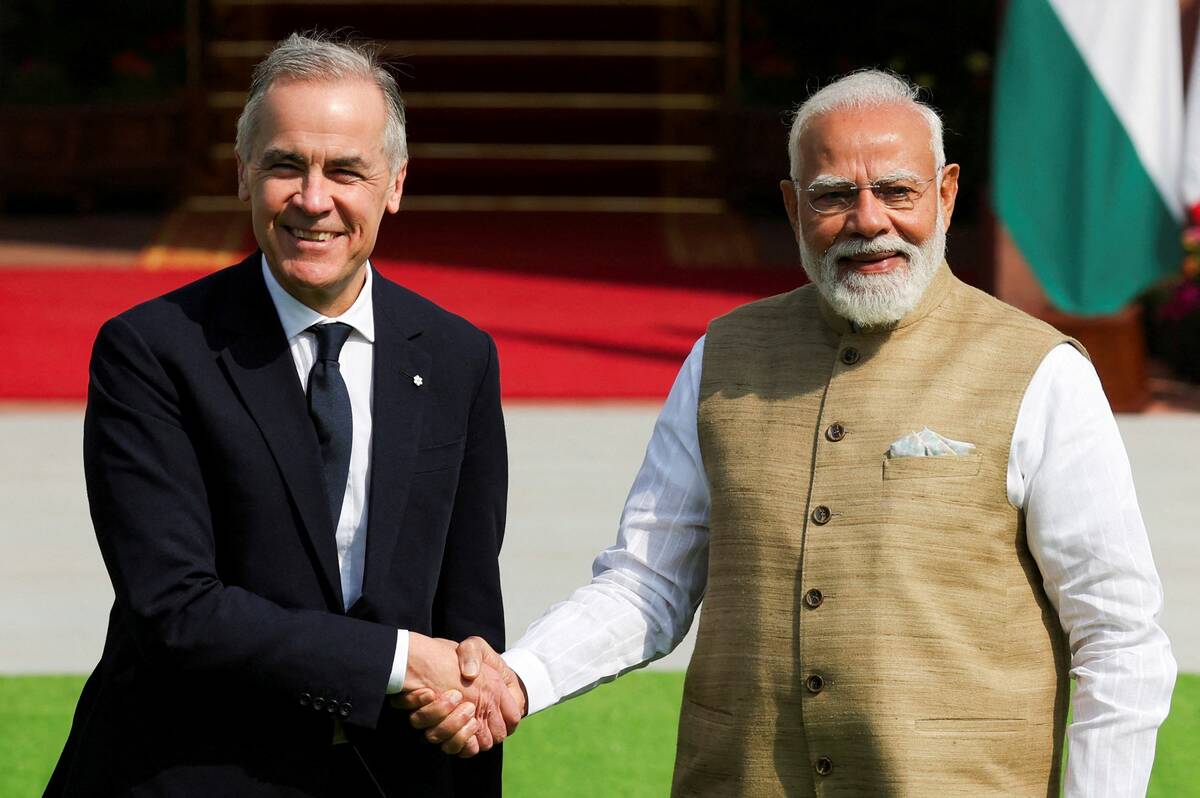
The pulse protein centre was announced during a trade mission to India by Canadian officials, including Canadian prime minister Mark Carney and Saskatchewan premier Scott Moe.
“Our province is essential for global food security,” Moe said.
“This announcement represents an opportunity to bring Saskatchewan’s expertise and ingenuity in pulse production to the people of India. By working together, we will accelerate innovation, expand processing capabilities, and help meet growing demand for affordable, high quality, sustainably grown foods.”
More than 80 per cent of all pulses exported from Canada to India are grown in Saskatchewan, primarily lentils, chickpeas and yellow peas.
“The Centre of Excellence underscores the long-term partnership between Saskatchewan and India in pulses,” Saskatchewan Pulse (SaskPulse) Growers chair Stuart Lawrence said.
“This collaboration between academia and government can help ensure more pulses are included in large-scale food applications and enhance the role pulses play in delivering nutritional security for the benefit of Indian consumers and Saskatchewan farmers.”
Saskatchewan has exported more than $18 billion worth of goods to India since 2007. The province opened a trade and investment office in New Delhi in 2021, one of nine worldwide.