

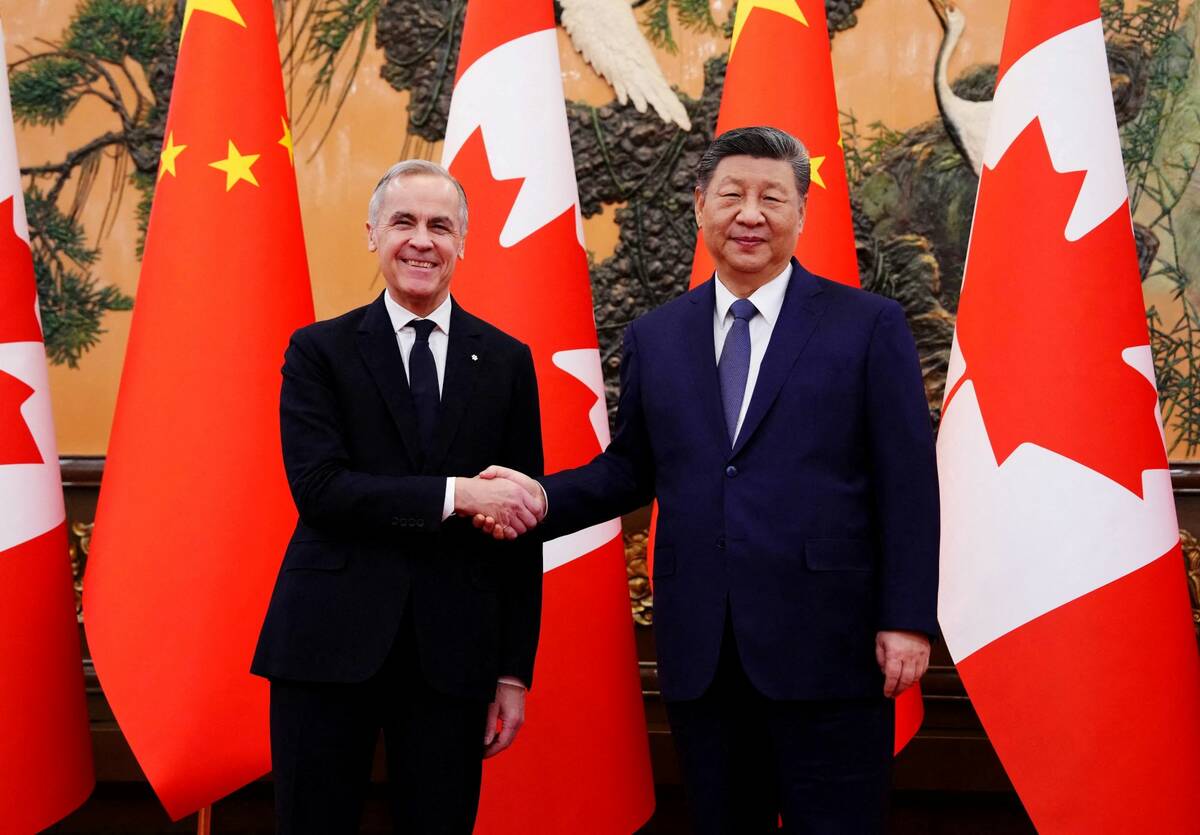
Producer groups across Canada expressed a mix of relief and cautious optimism following the news that Canada had struck a deal with China to lower tariffs on canola, peas and other goods, in return for relaxing duties on Chinese electric vehicles.
Canada expects China to lower tariffs on canola seed to combined rate of about 15 per cent by March 1 the federal government said in an explainer. Anti-discrimination tariffs against Canadian canola meal, peas and seafood are to be dropped after March 1. Canada also expects China to “accelerate the resumption” of exports to China including Canadian beef and animal genetics.
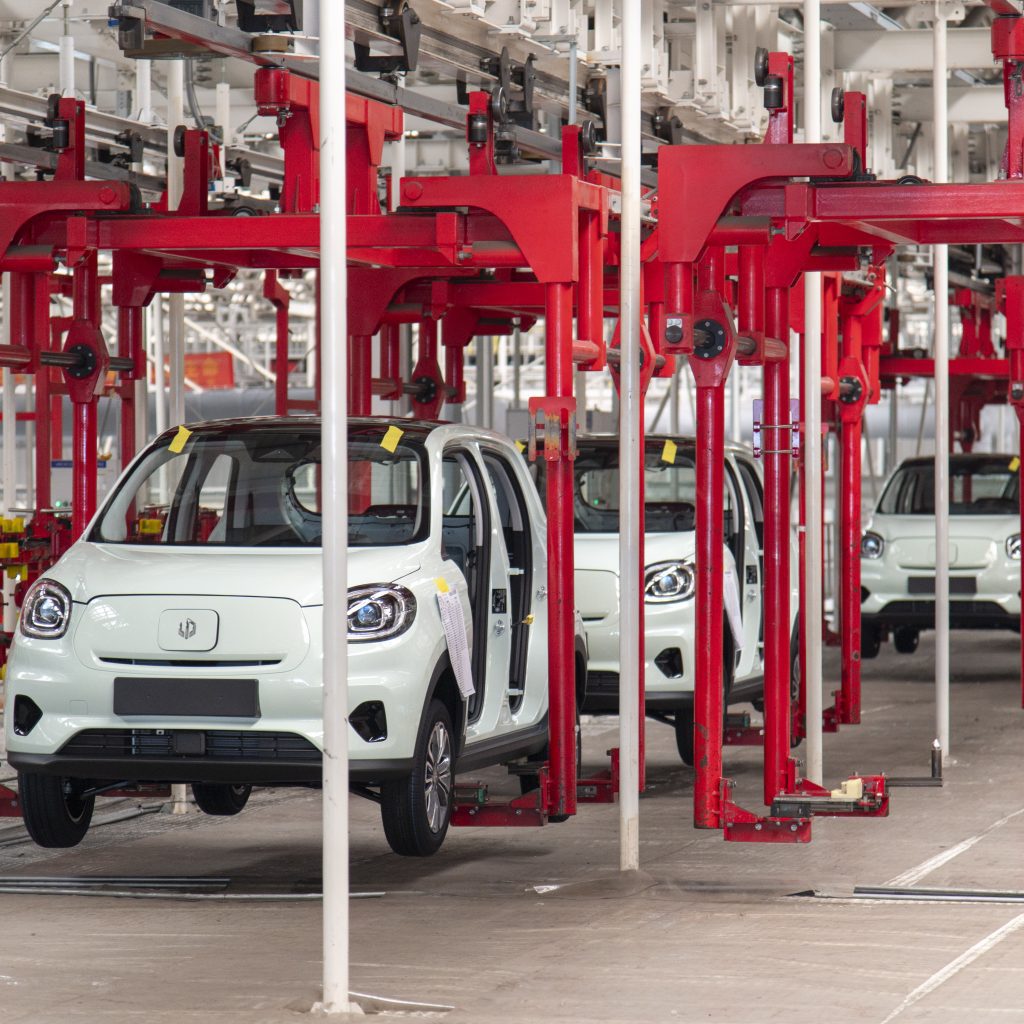
In return, Canada will allow in 49,000 Chinese electric vehicles at a “most-favoured-nation” tariff rate of 6.1 per cent.
Read Also

Farmers see fertilizer price surge as Iran war blocks exports, threatening losses
The world’s farmers face soaring fertilizer and fuel prices as the war in the Middle East escalates, leaving some scrambling for supplies as the spring planting season approaches.
Here is a rundown of reactions to the deal and analysis from across Glacier FarmMedia publications.
Moe, western leaders pleased
Saskatchewan premier Scott Moe interrupted his vacation in Asia to join Prime Minister Mark Carney for meetings in Beijing this past week. He was pleased with the outcome.
“Today’s trade deal to significantly reduce Chinese tariffs on canola and other Canadian products is very good news for Canada and Saskatchewan. This deal is a very positive signal that will restore existing trade volumes and open avenues for further opportunities for Canadians,” he said in a statement.
In an interview from Beijing on CBC Saskatchewan radio, Moe said the trade world is increasingly uncertain, and Carney’s engagement with China has alleviated some of the challenges Saskatchewan’s agriculture sector faces.
Moe credited federal ministers and officials for tackling the job. He also said the agreement with China shows the importance of working together and what foreign trade missions can achieve.
The Agricultural Producers Association of Saskatchewan (APAS) was among producer groups that applauded the agreement between Canada and China.
“Through this agreement, the resilience and dedication in our government-led negotiations were on full display,” said president Bill Prybylski.
“Producers of canola and peas have faced significant export barriers to China. We are grateful for the persistent efforts that culminated in this important breakthrough for the agricultural community.”
Manitoba’s Keystone Agricultural Producers also said the agreement was a net positive.
“Overall, I would say it’s positive and moving in the right direction to see the tariff relief on canola products,” said KAP general manager Colin Hornby. “Ultimately, we would like to see a permanent solution.”
Groups noted that there seemed to be no movement on canola oil or pork.
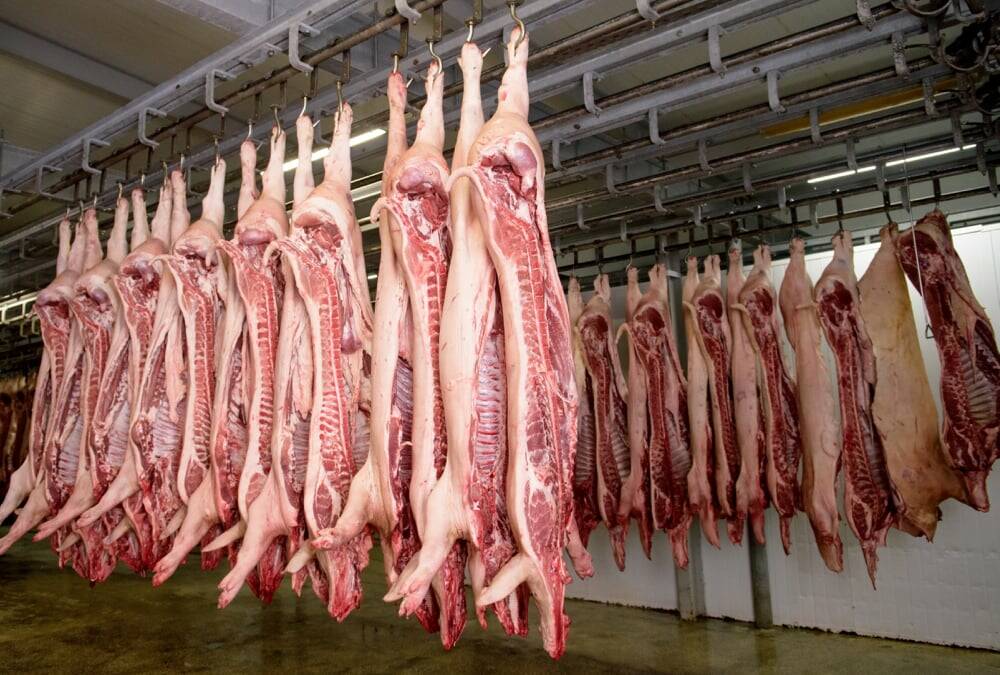
What about Pork?
As of Friday afternoon, there was no word on if there’d be relief on Chinese 25 per cent tariffs on Canadian pork.
Stephen Heckbert, Canadian Pork Council executive director, said it’s positive that Canada and China are now talking, which could mean reduced tariffs on Canadian pork in the future.
“At least we’ve started a dialogue with China. Super happy for canola producers and pulse producers that they’ve got some good news,” Heckbert said Friday morning.
“We weren’t expecting anything,” he added.
The council’s expectations were that it would be part of the dialogue, and it was.
Manitoba Pork Council general manager Cam Dahl said the broader reset of relations with China is welcome.
“I’m sure the pork tariffs were a topic of discussion,” Dahl said. “But we have more work to do.”
“This is a positive step forward. It will be good for Canadian agriculture,” he said.
U.S. reaction
Relaxing EV tariffs diverged from U.S. policy, and some members of U.S. President Donald Trump’s cabinet criticized the decision.
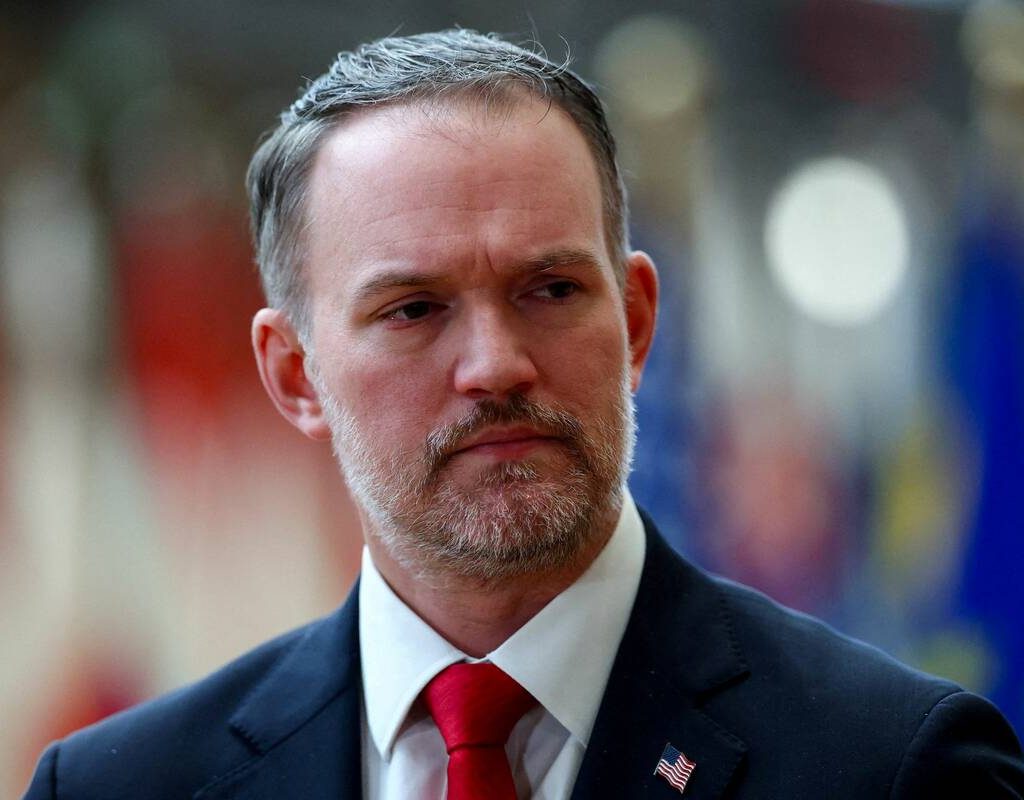
U.S. Trade Representative Jamieson Greer in a CNBC interview called Canada’s decision “problematic” and added: “There’s a reason why we don’t sell a lot of Chinese cars in the United States. It’s because we have tariffs to protect American auto workers and Americans from those vehicles.”
“I think in the long run, (Canada is) not going to like having made that deal,” he said.
But U.S. President Donald Trump himself expressed support for Carney. “That’s what he should be doing. It’s a good thing for him to sign a trade deal. If you can get a deal with China, you should do that,” Trump told reporters at the White House.
Prior to Trump’s comments, Canadian Federation of Agriculture president Keith Currie said he didn’t expect Trump to be happy.
Currie called the deal with China a positive signal for Canadian agriculture.
“And you know what, good on Carney for getting this done,” Currie said. “He realizes that he’s probably not going to be happy, but at the end of the day, the U.S. kind of still needs Canada more than they want to let on.”
Conservative Party Leader Pierre Poilievre criticized the trade deal in a post on X, saying, “There is no guarantee that tariffs on canola and other Canadian goods will be permanently, immediately or completely eliminated.”
Outlook for EVs, security
The agreement to accept Chinese EVs was roundly criticized by Canada’s auto sector.
“This is a self-inflicted wound to an already injured Canadian auto industry,” said Unifor national president Lana Payne in a press release.
“Providing a foothold to cheap Chinese EVs, backed by massive state subsidies, overproduction and designed to expand market share through exports, puts Canadian auto jobs at risk while rewarding, labour violations and unfair trade practices.”
Ontario premier Doug Ford said, “this lopsided deal risks closing the door on Canadian automakers to the American market, our largest export destination, which would hurt our economy and lead to job losses.”
Not everyone agrees.
Ahead of the deal announcement, Barry Prentice, director of the Transport Institute at the University of Winnipeg, predicted that a quota system on EV imports would be the likely outcome of any trade negotiation.
“I would certainly approve of that for a couple of reasons,” Prentice said. “One is we don’t have the North American manufacturing volume that would displace (regular internal combustion vehicle production). We need to get enough electric vehicles on the road to support the charging system (network).”
Glacier FarmMedia writer Scott Garvey noted that — while relations with the U.S. have become fractious — “China, too, has been an aggressive and dangerous threat to our national sovereignty and security.”
While Carney has said “guardrails” were a key component of talks, past precedent suggests China isn’t afraid to interfere on Canadian soil.
For example, in 2024, the CBC reported on a CSIS investigation revealing that Chinese-sponsored actors had infiltrated 20 cyber networks related to the Canadian government and obtained classified information as a result.
A report from the Communications Security Establishment Canada, looking ahead to the 2025-26 fiscal year, names China as “the most comprehensive cyber security threat facing Canada today.”
“When it comes to looking for major trading partners in 2026, there are no easy choices,” Garvey wrote.