

Spraying too early for white mould can leave most of the crop unprotected.
That was one of the central messages from Michael Wunsch, a plant pathologist with North Dakota State University, speaking at CropConnect 2026 in Winnipeg in February.
Fungicides do not protect future growth. They only protect the canopy that exists at the time of application.
“When you spray, you’re protecting the canopy that’s there,” Wunsch said.
Read Also
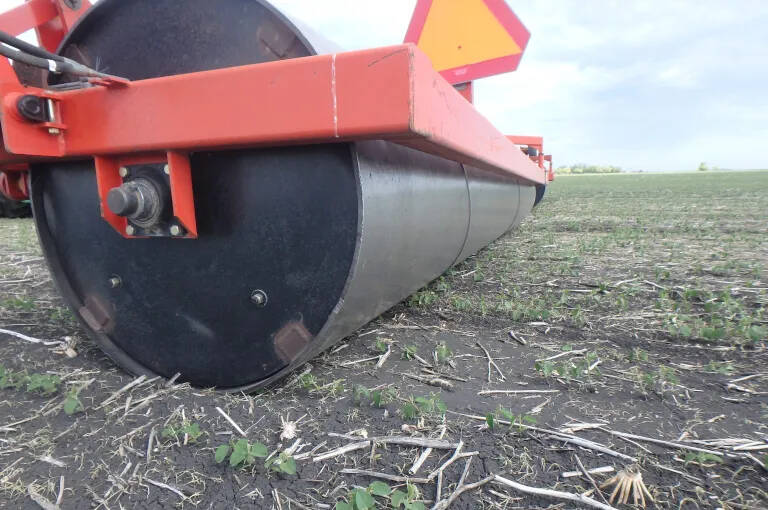
When post-emergence soybean rolling works, and when it doesn’t
New research from the University of Manitoba outlines when post-emergence soybean rolling can be done safely and when plant damage and yield risk rise.
“All that new growth is unprotected.”
That biological reality has implications for fungicide timing, especially if more than one pass is planned.
Bloom stage isn’t the whole story
White mould develops when small, mushroom-like structures form beneath the canopy in moist soil. Wunsch said growers need five to seven days of sustained soil moisture in the top inch of soil as crops enter bloom to produce spores.
Infection occurs through senescing blossoms. Once a blossom dies and forms a small pin-shaped pod, the plant becomes susceptible.
“The per cent of plants with pin-shaped pods is the per cent of plants in a susceptible state,” he said.
Because of that, he uses the percentage of plants with initial pin pods as a guide for fungicide timing.
However, timing isn’t just about bloom stage. Growers also need to think through their season-long plan.
“When you spray should be determined by the number of applications you plan to make,” Wunsch said.
One pass: wait for more canopy
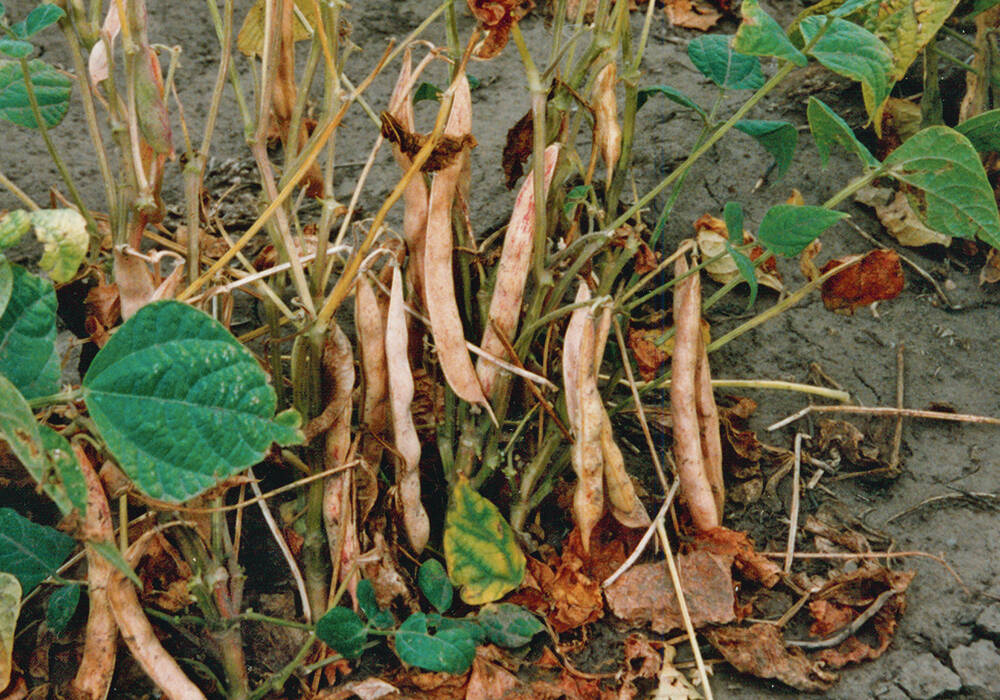
In black and pinto bean trials conducted under high disease pressure, Wunsch’s team tested different timings based on the percentage of plants with pin pods.
When only one fungicide application was made, early applications performed poorly. Spraying at first bloom or before significant pin pod development protected only a small portion of the canopy.
During early bloom, beans are growing rapidly. Within days of an application, plants can be significantly taller and wider. That new biomass is not protected.
If only one application is planned, Wunsch said growers should generally wait until a high percentage of plants have initial pin pods — often 60 to 100 per cent — before spraying, assuming conditions favour disease.
Applying too early sacrifices protection during the period of maximum susceptibility, when the canopy is full and moisture is trapped within it.
Two passes: move earlier
The logic shifts when a second application is planned.
With a two-pass program in dry beans, Wunsch found the first spray often performed best when applied at roughly 30 to 50 per cent pin pod and sometimes as low as 10 per cent under higher-risk situations.
The reason is that the second application protects the new growth that develops after the first spray.
“You don’t want to sacrifice those early infections,” he said.

In this case, the grower is no longer choosing between early and late protection. The second pass covers the expanding canopy.
However, there is still a penalty for going too late.
“Applications must be made prior to pathogen infection,” Wunsch said, adding that once the pathogen has invaded the plant, fungicides cannot eradicate it.
Three passes under high pressure
In high-pressure pinto and kidney bean environments, particularly under sustained cool and wet conditions, Wunsch’s trials showed that three applications — often seven to 10 days apart — provided the most consistent control. Under those conditions, the first application was made earlier, at first bloom, before significant pin pod development.
Subsequent applications protected new growth, and shorter intervals improved consistency under elevated disease pressure.
Even so, three passes did not eliminate the disease.
Soybeans follow the same rules
Although white mould in soybeans is more sporadic on the Prairies than in dry beans, Wunsch said the same principles apply. He recommended that a single application be made when 100 per cent of plants reach the R2 growth stage unless canopy closure occurs earlier. In that case, application should coincide with canopy closure.
As in dry beans, the decision depends on risk. If conditions do not favour white mould as the crop enters bloom, he advised waiting until they do.
Practical field scouting
Wunsch offered a simple method to assess pin pod development.
Walk into areas of the field where white mould risk is highest. Examine 10 consecutive plants in a row and count how many have pin pods. Repeat that in at least 10 locations across the field.
That percentage provides a practical indicator of crop susceptibility and can guide timing decisions.
He also urged growers to pay attention to droplet size when applying fungicides, saying it can “make a world of difference” in efficacy.
However, even with precise timing, optimized droplet size and multiple applications under high pressure, white mould was never entirely suppressed in his trials, indicating the resilience of the pathogen under current management practices.
“White mould control isn’t that good,” said Wunsch.