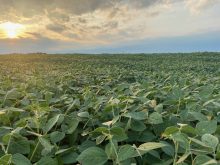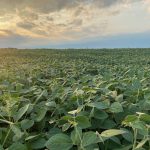


Soybean rolling does not have to be done immediately after seeding, but leaving it too late carries risk.
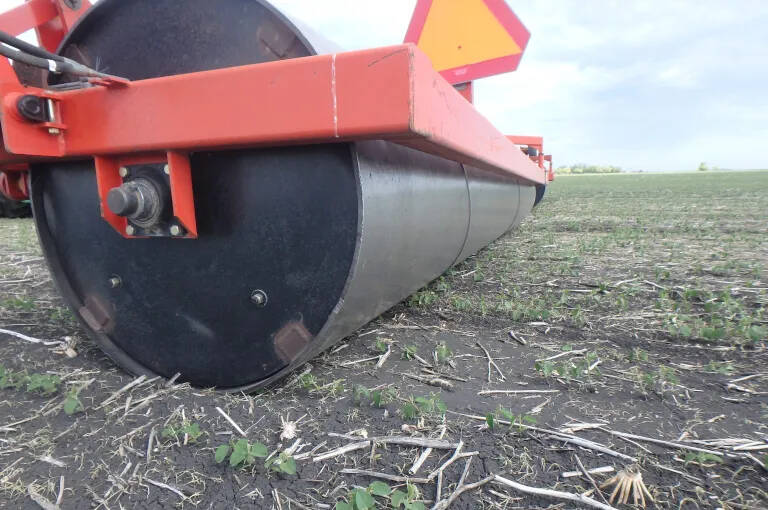
The practice is commonly treated as a get-it-done-early job, with fields rolled soon after seeding to push down stones and smooth the surface.
Extension guidance for post-emergence rolling has typically urged caution, often pointing to the first trifoliate stage as a safer window while also emphasizing the role of soil and weather conditions.
Read Also
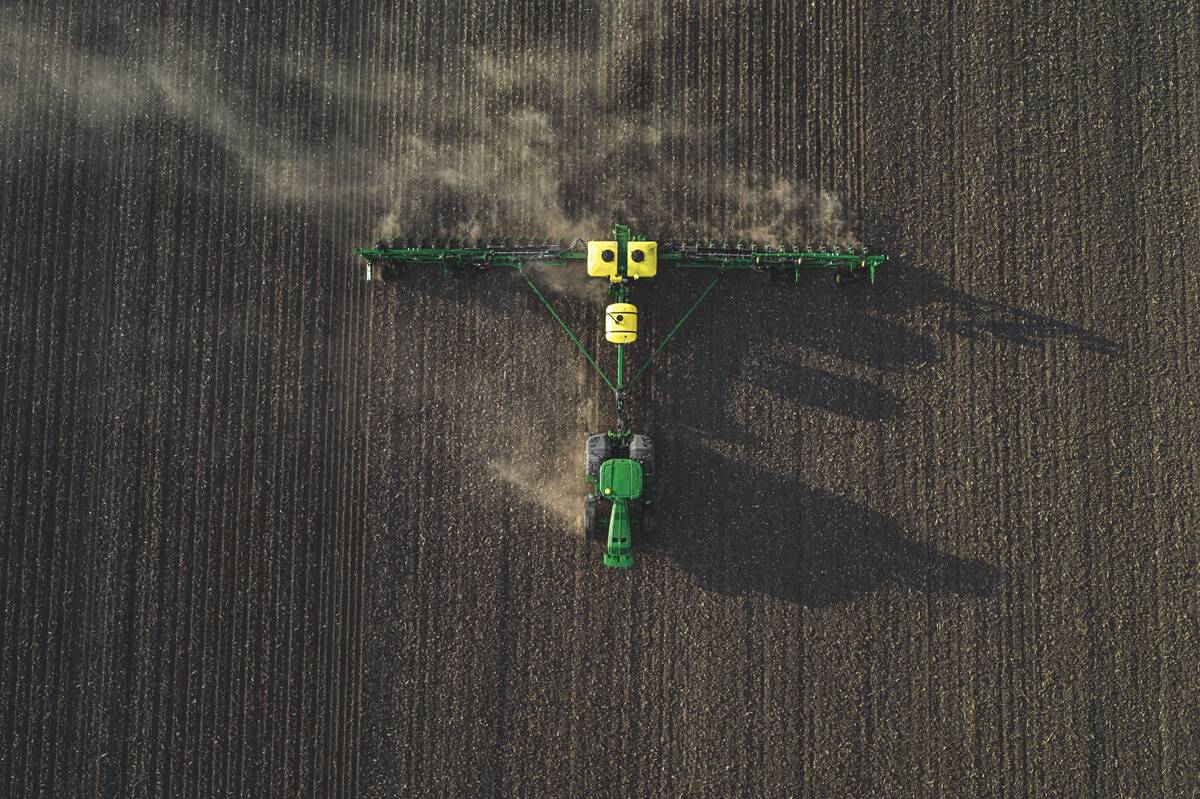
John Deere offers new features, tech for its planters
John Deere offers several new features to its plantersf, allowing for more onboard fertilizer options, better seed placement and residue management.
However, an ongoing study from the University of Manitoba is taking a stage-by-stage look at how that risk develops. The work is helping define the post-emergence window more clearly, showing low risk early and rising damage if rolling is delayed.
A multi-year study led by U of M researcher Kristen MacMillan, with support from Manitoba Pulse and Soybean Growers, tested rolling soybeans across a wide range of crop stages, from post-seeding through flowering, to better understand where that flexibility ends.
The results show a clear window where post-emergence rolling causes little damage and no yield loss — and a sharp line where risk rises quickly.
Rolling is standard practice on many soybean farms, particularly on stony ground. The goal is to protect low-hanging soybean pods and reduce harvest losses by smoothing the seedbed.
However, MacMillan said rolling can also create unintended soil problems.
“We’re crushing those soil aggregates,” she said.
“We’re dispersing them into very fine particles.”
That can lead to surface sealing and poor infiltration during rainfall events, a problem in years when moisture is already limited. It can also increase the risk of wind erosion, especially on finely worked ground.
Those risks prompted the team to ask a simple question: if rolling has downsides, how long can growers safely delay it?
The study compared an unrolled check with rolling at multiple soybean stages: post-seeding, emergence, cotyledon, unifoliate, V1–V2, V3–V4 and flowering.
Rolling was also done under different conditions, including warm, sunny days and cooler, cloudy ones, when plants are more brittle. The roller used in the trial was slightly heavier than most commercial rollers, creating a conservative test.
At the cotyledon stage, damage was minimal.
“Only about one per cent of the plants in the plot were broken,” MacMillan said.
“This was really surprising.”
She noted that the seed furrow plays an important protective role early on. Plants emerging within the furrow were often shielded from the roller, while damage was more likely where the furrow was flattened by tractor tires.
At the unifoliate and early trifoliate stages, results were similar. Plant breakage remained low — generally less than three per cent early, and still less than 10 per cent through V2 — with no yield loss observed.
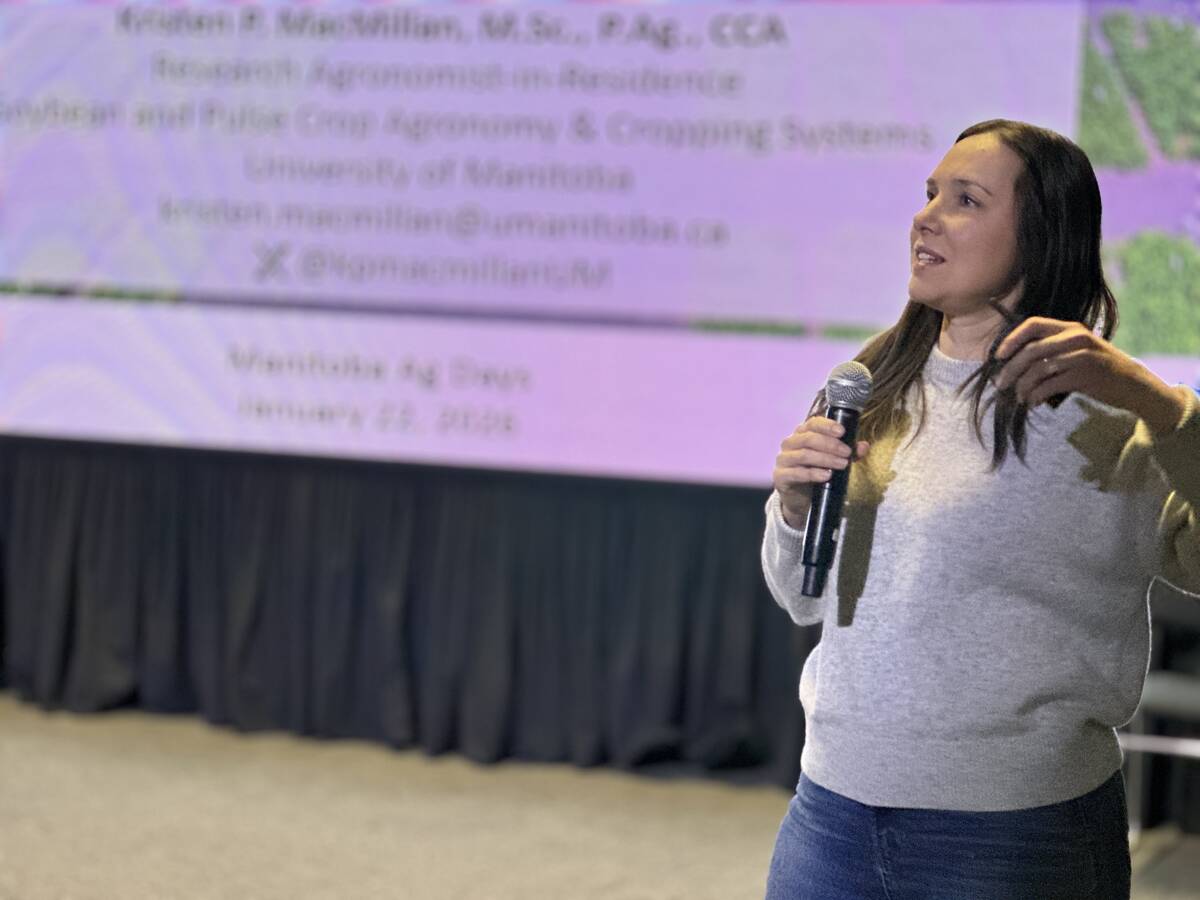
“Plants were bouncing back very nicely,” she said.
As soybeans advanced toward V3 and V4, damage increased sharply, with tire tracks playing a big role in plant breakage.
By the third to fourth trifoliate stage, about 17 per cent of plants were broken overall. Within tire tracks, damage climbed to 24 per cent, compared with about nine per cent in undriven rows.
“More than double most of the plant damage is happening from the tire tracks,” MacMillan said.
Yield losses followed the same pattern, increasing as rolling was pushed later into the season.
At flowering, results were unequivocal. Nearly half of all plants were broken when rolled at R1, with severe stem damage visible immediately after the pass.
“That was really late,” MacMillan said.
“Those plants did not look happy.”
Based on two years of data so far, the study points to a practical takeaway: growers have roughly a two- to three-week window after emergence where rolling can still be done safely.
Under Prairie conditions, that typically means the first three weeks of June, when soybeans range from unfolded cotyledons through V2.
Rolling beyond that point carries rising risk, especially once soybeans reach the third trifoliate stage and tractor tire damage becomes unavoidable.
MacMillan said the work is ongoing, with one more year of data still to come. However, the pattern has been consistent.
“There is a window,” she said.
“They can be rolled post-emergence, and that can help reduce those soil impacts.”