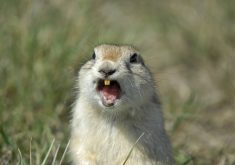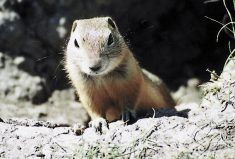

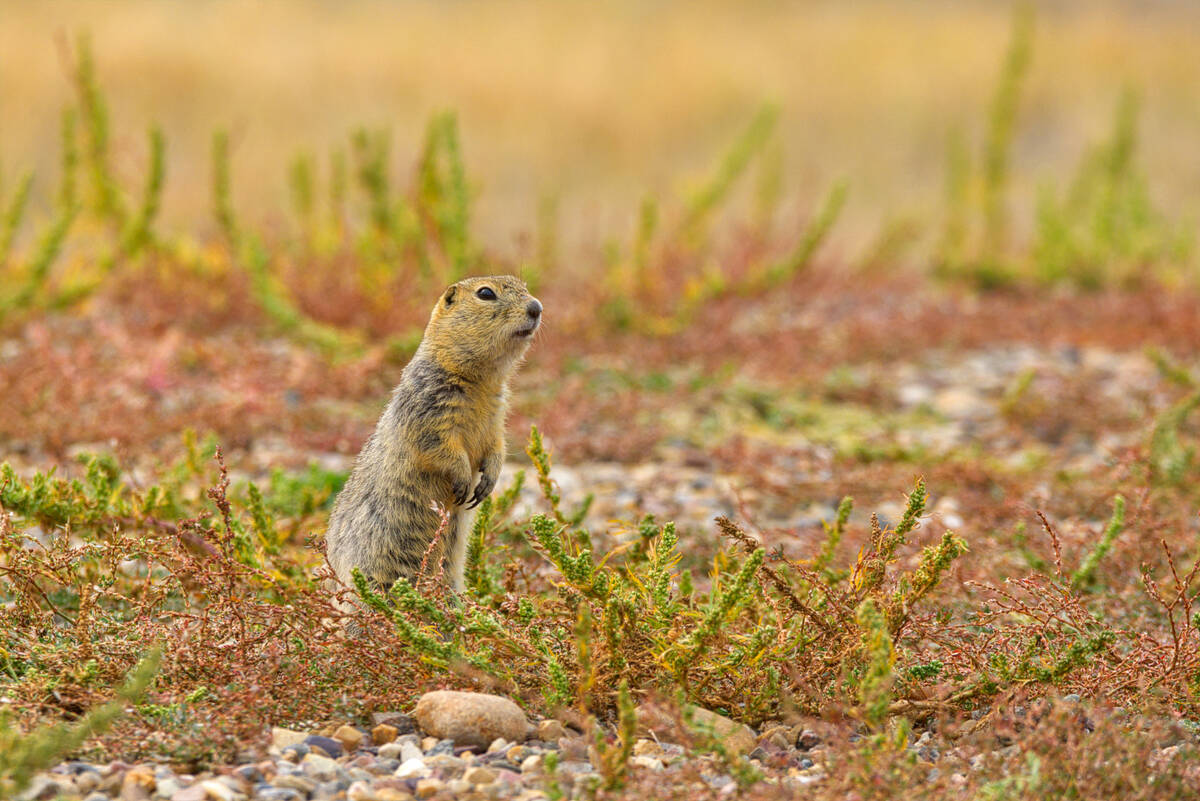
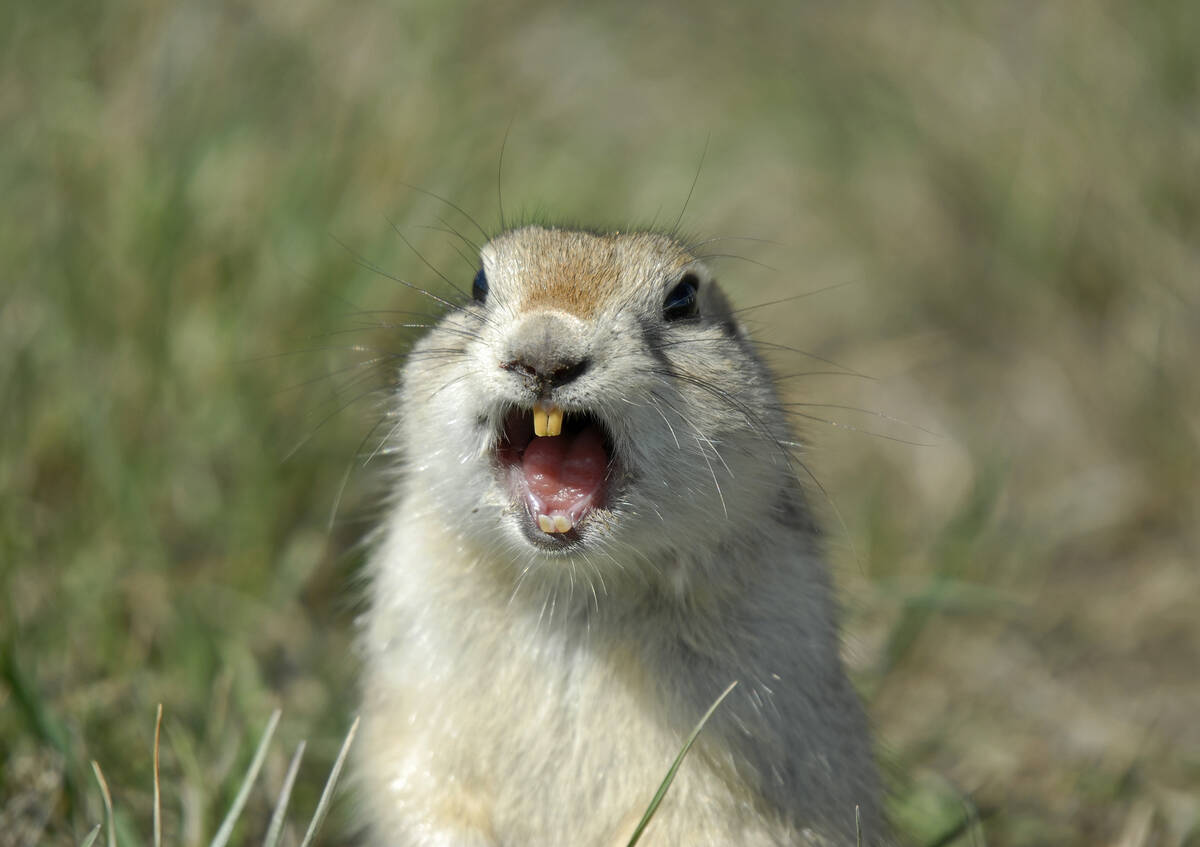
The manufacturer of two per cent liquid strychnine says it will take some time to ramp up production after the federal government granted emergency use registration in parts of Saskatchewan and Alberta to control Richardson’s ground squirrels, more commonly known as gophers.
Brent Punga, owner of AgroMax in Regina, said the raw materials for the product have to be shipped from India.
Once they arrive, the company will begin making the product it discontinued several years ago after the federal government ruled it was too toxic to non-target wildlife and caused an inhumane death.
Read Also
Sask., Alta. farmers get strychnine against gophers until late 2027
Farmers in Saskatchewan and Alberta are cleared to use strychnine this year and next year against gophers wrecking their fields and pastures.
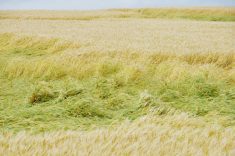
WHY IT MATTERS: Strychnine to control gophers was phased out in Canada starting in 2020 toward a complete ban by 2024. Burgeoning populations and considerable damage to crops and pastures, however, led the two provinces to request an emergency-use registration last fall.
Health Canada announced March 30 it had approved a revised application from the two provinces after initially denying their request for emergency use registration.
It is in effect in parts of each jurisdiction until November 2027, but producers and rural municipalities will have to wait until the poison is available.
Numerous farm organizations had also called for its reinstatement.
Alberta agriculture minister R.J. Sigurdson told the House of Commons agriculture committee that damages in the last three years had increased from $80 million to $800 million.
“This is becoming a disaster in Alberta,” he said earlier in March.
Some restrictions apply
The reinstatement comes with restrictions, including a narrower window in which strychnine can be applied and measures to protect species at risk.
Saskatchewan Agriculture Minister David Marit said for 2026, the product can be used between July 15 and Sept. 1.
In 2027, application can be done between March 1 and June 15 before plants green up, and again between July 15 and Sept. 1.
The species-at-risk measures include increased monitoring, carcass collection and disposal requirements, and enhanced mandatory training. More details on these are still to come.
Saskatchewan is currently developing a strychnine stewardship program and expects training to be available in late spring.
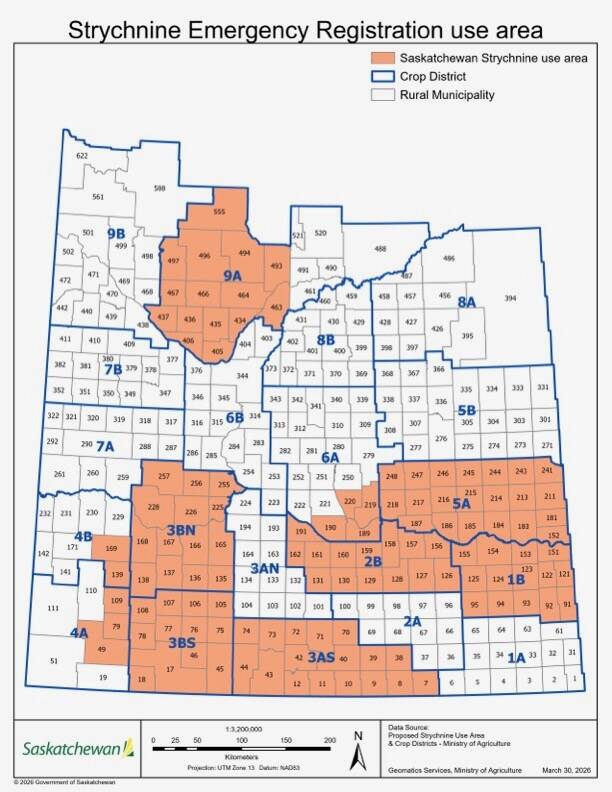
Seven Saskatchewan crop districts in the southwest, southeast, south-central and northwest will have access, based on Saskatchewan Crop Insurance Corp. claims data and the presence of species at risk.
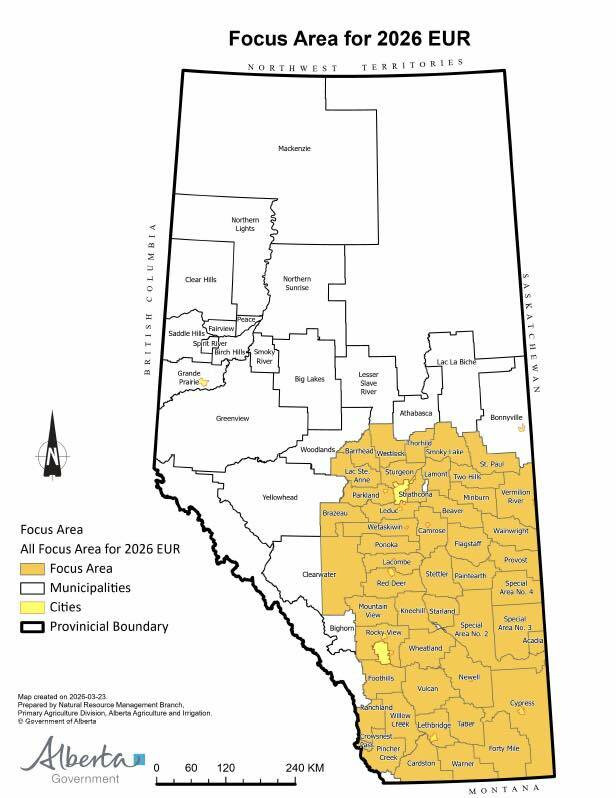
In Alberta, most of the grain-growing region is included.
Both ministers said program details are still in development.
“We are working to procure supply and fully implement the agreement as soon as possible, and we will continue to work closely with farmers and ranchers across the province in the coming days to share more information,” Sigurdson said.
Marit said producers in that province have been clear they face challenges managing gophers with the other products available to them.
Reaction, so far
Saskatchewan Association of Rural Municipalities president Bill Huber said the emergency registration was “a significant win for our members.”
“SARM will continue to work with governments and producers to ensure this tool is used responsibly and effectively,” he said.
Others thanked the provincial government for continuing to push producers’ concerns. Saskatchewan Stock Growers Association president Jeff Yorga called it a “common sense, made-in-Saskatchewan solution.”
Many noted the escalating damage and negative economic impacts since strychnine was eliminated.
SaskOats chair Elwood White said the population has increased sharply in some regions since 2023.
“This revised emergency use registration shows we can use strychnine safely while still protecting wildlife,” said SaskBarley chair Cody Glenn.
Grain Growers of Canada said it is only a temporary measure, and grain farmers need consistent access to effective pest management tools.
Not all were happy, though. Some comments on Saskatchewan Premier Scott Moe’s Facebook page pointed out that strychnine puts pets and other animals at risk.
Animal Justice said it was disappointed and called the decision “an unscientific reversal of (the federal government’s) own earlier findings that the poison poses unacceptable risks to animals and the environment.”
In a letter, it and several other organizations said strychnine causes horrific pain and suffering for animals that can last for 24 hours.
The Saskatchewan Wildlife Federation and SARM announced prior to the recent decision, as they also did last year, that landowners experiencing problems with gophers could contact the SWF. The organization would then connect landowners with experienced SWF members for gopher control.