It’s said that April showers bring May flowers.
Greg Stamp, however, hopes to show seeding in January isn’t so scary.
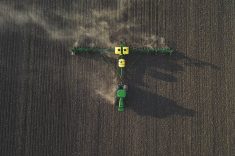
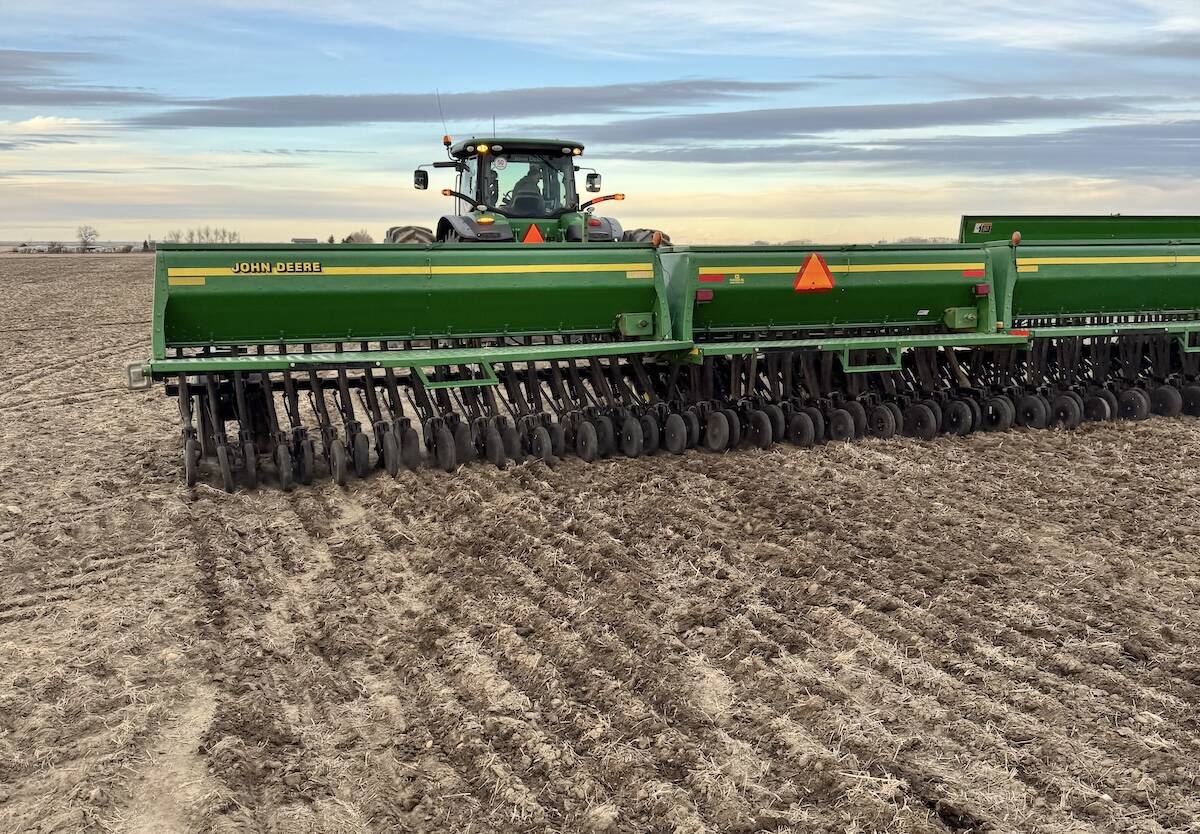
The Enchant, Alta. farmer seeded some spring wheat (AAC Oakman VB/AAC Westking) and durum (AAC Frontier) on Jan. 12 in a demo plot, mimicking recent research by Dr. Brian Beres on ultra-early seeding.
Read Also
Corn research looks for Manitoba-based weed control
Manitoba corn growers rely on U.S. or Ontario weed control recommendations. University of Manitoba researchers are developing weed control advice with Manitoba field conditions in mind.
WHY IT MATTERS: With warmer southern Alberta weather, earlier seeding for spring wheat and durum opens up all sorts of possibilities for farmers, with research to back it up.
Beres conducted a four-year study that involved ultra-early seeding dates with hard red spring wheat on dryland sites in several locations across Western Canada, including Dawson Creek, B.C., Edmonton and Lethbridge, Alta., and Scott, Indian Head and Swift Current, Sask.
The overall conclusion was ultra-early seeding produced yields as good as — or, in several cases, higher than — crops seeded during the more traditional April/May seeding times. Seeding dates in the past have been more arbitrary, determined more by crop insurance deadlines than actual scientific research on sweet spots of seeding timing.
“The idea here is to treat the field like it’s a winter wheat crop. So we’ve got fall rye, trits, and winter wheat right beside it. Then we’re going to go in February and March again if we get a chinook and the soil temperature warms up. Then we’re going to plant our normal spring demos in late April, beside all these as well.”
As a dryland farmer, the goal is to take advantage as much as possible of early moisture, and beating the heat for flowering and maximizing disease control. Stamp was aiming for 1 C at one inch in his planting. Stamp used a Crop Intelligence weather station with temperature and moisture probes to see how the seeding is faring.
The early-seeding practice is the exception, not the norm, in southern Alberta, with other producers like Alison Davie at North Paddock Farms in Taber dabbling in it as well, according to Stamp.
“I think there’s value. I love this kind of research because it’s so practical to farmers. It’s not a typical practice, but I think long term, there’s going to be more people doing this,” said Stamp.
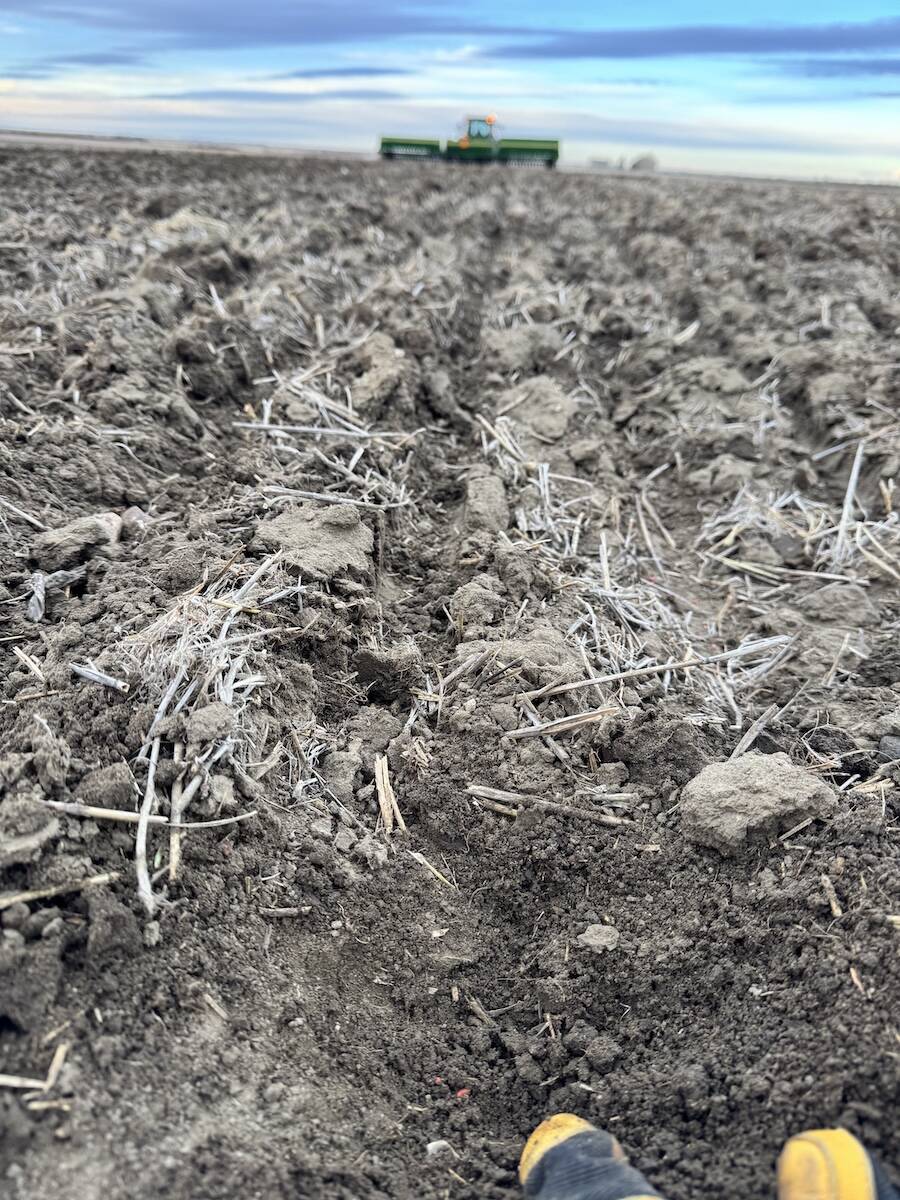
The initial hesitation by some farmers, Stamp admits, is in the logistics — namely, putting a drill in the ground in January, when people are at farm meetings, or on holidays, and/or equipment may be in the shop getting repaired. Another challenge is weed control.
Pre-planning has to be done in September-October, with spraying your field or laying down a residual herbicide — in essence, treating it like a winter crop. Wheat and durum varieties developed in Western Canada have adapted for cold tolerance, battling abiotic stress in more frigid temperatures.
“Even with seed, we need to have the varieties that the person is going to want to plant cleaned and ready to go, so they can buy seed at that point too,” said Stamp, adding he is targeting a high plant stand at 40 plants per square foot.
“There some work being done on what varieties are better. How does vigor impact this? Some of those things are unknowns at this point that we are assessing.”
Ultra-early seeding takes a shift in traditional mindsets, but it all comes down to the bottom line if the practice is to be continued.
“If there is money to be made or risks to be reduced, then I think there’s an opportunity there,” said Stamp.
Stamp is doing a field day in June with hopes Dr. Beres will speak on his ultra-seeding research.