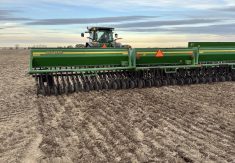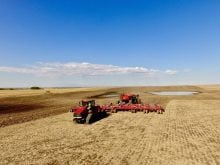

A cool and late spring has delayed field work across the province. However, seeding has just nicely started in the southern areas. Most other areas have some field activity with harrowing, pre seeding herbicide and fertilizer applications. Many producers will be seeding within the week.
Field conditions vary greatly across the province. The southern regions are dry and the northern and eastern regions are dealing with higher field moisture conditions. Topsoil moisture on crop land is rated as six per cent surplus, 64 per cent adequate, 20 per cent short and 10 per cent very short. Topsoil moisture on hay and pasture is rated as three per cent surplus, 63 per cent adequate, 28 per cent short and six per cent very short. High winds are drying up the soil quickly. The soils are slow to warm up and there is still snow and ice in some sloughs and ditches in the north.
Read Also

Corn research looks for Manitoba-based weed control
Manitoba corn growers rely on U.S. or Ontario weed control recommendations. University of Manitoba researchers are developing weed control advice with Manitoba field conditions in mind.
Due to a low yielding hay crop in 2017, an extended cold winter, and a slow start up to spring, many livestock producers are feeding alternative feed sources and feed grains, while they wait for the pastures to green up. Spring runoff in the south was below normal in many areas, leaving some livestock producers looking at how to sustain water supplies throughout the upcoming grazing season. Rain was recorded in the south and east regions during the past week, ranging from trace amounts to 24 mm in the Big Beaver area. Winter wheat survival will continue to be monitored as it is too early to make an accurate assessment.