

Applying nitrogen fertilizer in the fall is an effective way to manage time and efficiency when spring comes. However, it can be hard to assess how much nitrogen is available in the root zone early in the season and what was lost to leaching and denitrification. Leaching is the loss of nitrates to the soil below the root zone due snow melt or rain. Denitrification refers to the loss of nitrogen when soil microbes convert nitrates to gaseous forms that can escape into the atmosphere as a greenhouse gas. A way to overcome these challenges is to protect the nitrogen fertilizer with nitrification inhibitors.
Read Also
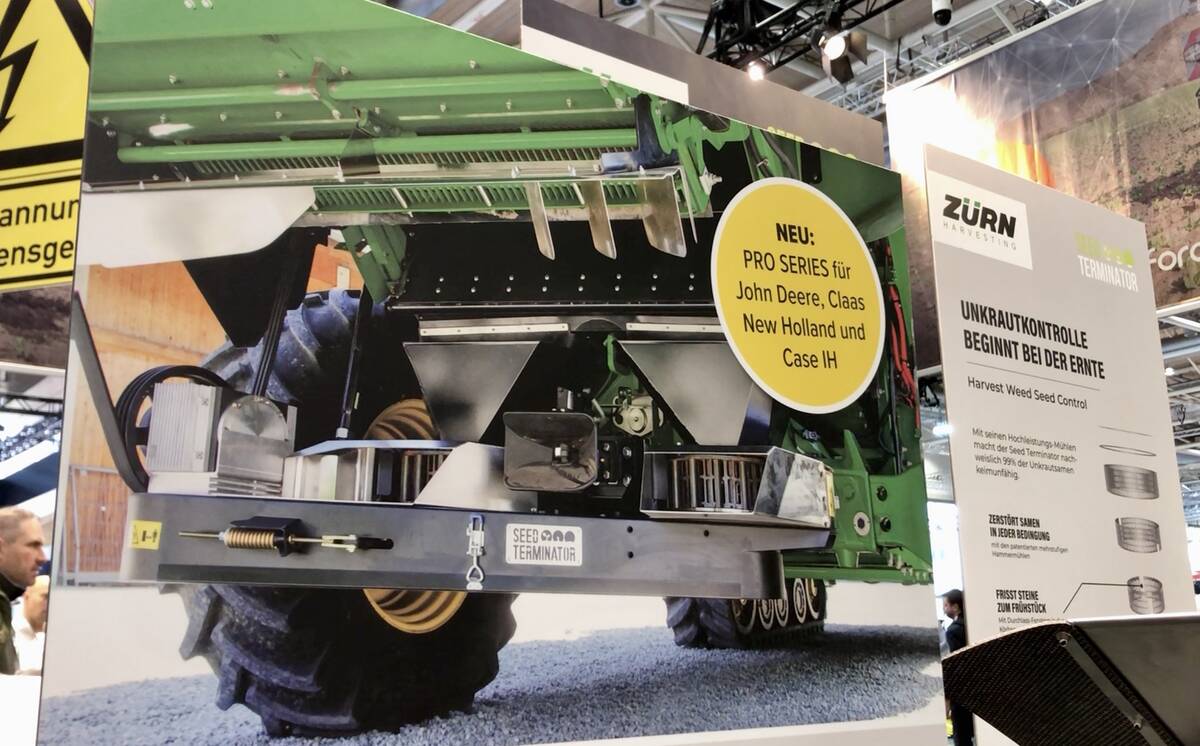
A Prairie farmer’s praises of mechanical weed control, at Agritechnica
Saskatchewan farmer Josh Lade talks about his experience using the Seed Terminator on his farm and how the mechanical weed control device reduces herbicide costs.
Nitrification inhibitors stabilize the nitrogen in the soil by slowing the conversion of ammonium nitrogen (NH4+) to nitrate nitrogen (NO3-). They inhibit the first stage of nitrification, Nitrosomonas bacteria, to store usable nitrogen at the root zone, in a stable form less prone to leaching and denitrification.
Nitrogen stabilizers retain more nitrogen in the root zone where plants need it the most and reduce the environmental impacts of nitrogen fertilizers.
Isabelle Thibout is the marketing communications specialist for the nitrogen stabilizer portfolio at Corteva Agriscience. She is based in Calgary, Alta.