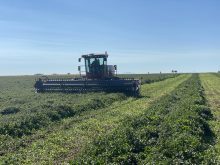
For farmers ready to try a 14-inch row spacing when seeding cereal crops, Guy Lafond, a research scientist with Agriculture and Agri-Food Canada, has a checklist for them in order to take advantage of the benefits it offers:
1) Ensure adequate plant populations per square metre are maintained. Yields will fall off with lower numbers. With cereal crops, higher plant populations are generally better.
2) Be careful to minimize plugged runs. One plugged run when using a wider spacing creates a large gap in the field encouraging weed growth. Equipping drills with sensors to detect stoppages may be a valuable option.
Read Also

New high-performance forage training program to launch in 2026
A new Canadian Forage and Grasslands Asssociation high-performance forage program will be a resource for farmers, agronomists and others in the forage sector.
3) Wider row spacing offers farmers a better opportunity to seed between last year’s stubble rows, which can offer yield advantages from an improved microclimate around young plants, particularly in dry years.
4) Farmers may be able to speed up a little when seeding, within reason, because there is less risk of soil from adjacent openers being thrown onto neighbouring seed rows. That’s due to the increased distance between them. The risk is further reduced if growers are seeding between existing stubble rows.