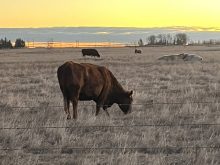

Cattle producers looking to cut their reliance on increasingly expensive feed grains are expected to benefit from a $5.2 million deal for research in Manitoba on grass and forage feeding.
The federal and provincial governments and the Manitoba Cattle Producers Association announced the agreement Friday at Agriculture and Agri-Food Canada’s Brandon Research Centre.
The federal contribution will be $4 million in in-kind support through the Brandon centre. The province will allocate $900,000 in in-kind support, including staff for business and economic analysis. The MCPA will put in $250,000 plus $50,000 in in-kind support costs. All contributions will be spread out over five years.
Read Also

Producers affected by bovine TB receive extended tax deferral
The Government of Canada has extended the tax deferral period for livestock producers affected by bovine tuberculosis in 2024 and 2025.
The three-party research collaboration is intended to help develop new production strategies for grass and forage feeding systems for beef cattle, as well as the use of grain processing byproducts.
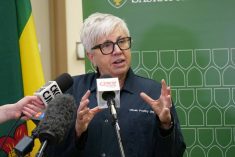
“Changes in feed costs have had a major impact on the competitiveness of the Manitoba beef industry,” provincial Agriculture Minister Rosann Wowchuk said in a release Friday. “This agreement will help develop improved production strategies for beef producers and help maintain the solid reputation our beef producers have achieved for sound management and quality beef production.”
This funding announcement follows a pledge from the province Thursday to allow cattle producers to defer principal payments on existing BSE recovery loans for three years, with principal and interest obligations due to resume in the fourth year.