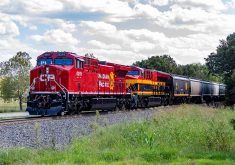


Ottawa | Reuters—The federal government is moving to push back the start of a possible strike by railway workers at Canadian National Railway (CN) and Canadian Pacific Kansas City (CPKC), an official said on Friday.
Workers represented by the Teamsters union last week voted overwhelmingly to strike as early as May 22.
Late on Thursday, federal Labour Minister Seamus O’Regan said he had asked the Canada Industrial Relations Board to look at whether the strike might have safety implications. Until the board has issued a decision, the strike cannot start.
Read Also
USDA attachés forecast some changes in China’s oilseeds, cereals
As China heads into the 2026/27 marketing year, the United States Department of Agriculture attachés in Beijing projected a few minor to moderate changes in the country’s soybean, canola, corn and wheat crops.
In an emailed statement, the Teamsters union said it was reviewing O’Regan’s move and would “obviously comply with any order” from the board.
O’Regan acted after stakeholders expressed concern about the effect of a stoppage on healthcare infrastructure, in particular shipments of propane, which is used as a back-up generator fuel for rural hospitals, said the official, who requested anonymity given the sensitivity of the situation.
There is no set timeline for the board to issue a decision.
Farm groups have said a strike would cause mass disruption to the agricultural sector and the Canadian economy.
“As farmers, our operations are closely tied to rail transport, both inbound to access crop inputs and outbound to deliver grain to export position,” said Grain Growers of Canada chair Andre Harpe.
“A rail strike now is the last thing we need. We’re at a critical point in the seeding season, and any delay in shipping can directly affect our bottom line and cause substantial economic losses across the agricultural sector.”
The organization said about 94 per cent of Canadian grain moves by rail. Job action would mean elevators could not accept grain, leading to delayed payments and financial hardship.
—Reporting for Reuters by David Ljunggren; with files from Karen Briere