

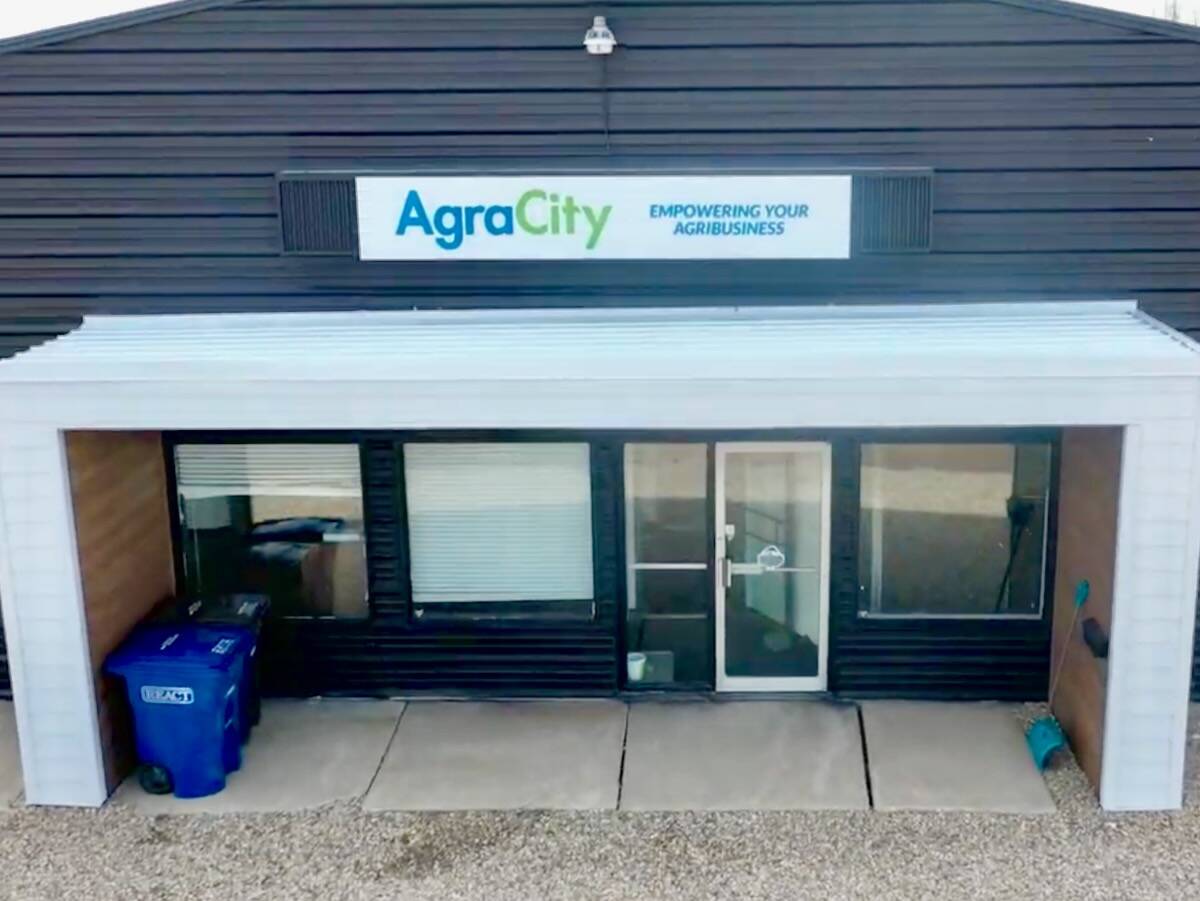
Farmers are closely monitoring receivership proceedings for the AgraCity Group of companies.
AgraCity is a Saskatchewan-based crop input provider that was granted creditor protection by the Saskatchewan Court of King’s Bench on Dec. 1, 2025.
Jason Anderson, a grain farmer from SexSmith, Alta., is owed $74,000 of product from AgraCity.
He prepaid for herbicides and MicroPhos fertilizer for the 2025 growing season. Some of the product arrived but not all of it.
Read Also
Corn research looks for Manitoba-based weed control
Manitoba corn growers rely on U.S. or Ontario weed control recommendations. University of Manitoba researchers are developing weed control advice with Manitoba field conditions in mind.
WHY IT MATTERS: A lot of Prairie farmers have paid for and are owed product — and are also worried about investments they made.
As he was applying the fertilizer that he had received, Anderson was informed that the remaining 60 tonnes would not be coming, so he was forced to make alternative plans.
“With egg on your face, you go begging to your local retailer that you kind of quit dealing with, which really sucked,” he said.
“But they were fantastic and helped me out.”
He had to do the same thing with the herbicides AgraCity shorted him, dipping into his line of credit to finance the duplicate purchases.
Humphrey Banack, a grain farmer from Round Hill, Alta., has purchased a lot of product from the retailer over the years.
A few years ago, he ordered glyphosate from AgraCity that never showed up.
“We kind of swore, ‘we’re not doing that anymore,’ and then we did. We went back to them,” he said.
Banack ordered $21,000 of fungicide from the retailer in the fall of 2024 for the 2025 crop because it was offering by far the best price for the product.
He never received the fungicide and was not offered a refund.
Alternatives
The two Alberta farmers are not alone. Court documents show that 1,228 farmers were owed $32.4 million of product as of June 2025 when the firm’s liquidity problems came to light.
An affidavit filed by AgraCity president Jason Mann claims that customers with orders for approximately $24 million of that total agreed to receive alternative product.
Anderson is one of those customers. He agreed to receive $32,000 of wild oat herbicide, broadleaf herbicide and an herbicide for his pea crop.
AgraCity pushed hard for him to order more product and use up his entire $74,000 credit, but he didn’t want to order product he doesn’t really need.
He is still waiting for the $32,000 of replacement product to arrive. Anderson said he keeps calling his AgraCity sales rep, who repeatedly assures him that the shipment is being organized and will soon be on its way.
Part of the $74,000 he is owed is a $10,000 investment in a glyphosate production facility that never materialized.
“I thought it was a fantastic idea,” he said.
“If they could have got it off the ground, that would have been the greatest thing.”
Anderson has never seen a breakdown of what he is owed, so it is hard to keep track of everything.
“It’s just so frustrating to realize that so much of this turned sideways because of a family feud more so than anything,” he said.
He is referring to a lengthy legal battle between Jason and Jim Mann, brothers who are listed by the court-appointed monitor as directors of the various AgraCity Group of companies.
Banack did not get an offer for replacement product.
He hopes whoever buys AgraCity’s assets will reimburse him what he is owed.
“I go to bed dreaming about it,” he said.
However, when he wakes up, he realizes it is probably unrealistic to expect full compensation from the new owner.
“If you were taking on a business, would you be interested in shipping out ($32.4) million worth of product for nothing?” he said.
“It’s hard for me to expect to have full compensation, but what kind of compensation am I going to get?”
Stalking horse
Banack is also an investor in Genesis Grain and Fertilizer, a fertilizer distribution centre in Belle Plaine, Sask., which is part of the AgraCity Group of companies.
He thinks he invested about $10,000 in that venture. Banack hopes whoever purchases that facility continues to operate it and provides returns to all the farmer investors.
Peter Chisholm, Ernst and Young senior vice-president and court-appointed monitor, said the fate of those farmer investors depends on what happens during the sales process.
“Creditors would have to be paid in full before there would be funds available to any limited partnership unit holders or investors,” he said.
Qualified bidders had an opportunity to submit a non-binding letter of intent to purchase the AgraCity assets by Feb. 6.
The best offers will be selected to participate in phase 2 of the process, where parties will be required to submit binding offers to acquire part or all the business.
The original deadline for that process was Feb. 16, 2025, but it is being extended to a yet-to-be-determined date.
United Farmers of Alberta has been chosen as the stalking horse bidder, agreeing to a base bid of $20 million for the assets, with the right-of-first-refusal to top any winning bid by $2 million.
Anderson thinks UFA would be a good buyer.
“They’re a big enough company and they’ve got a large enough footprint if they could grab ahold of this, I think it could be very successful,” he said.
Banack does not care who ends up with the assets, as long as he and other farmers get paid what they are owed.
“I hope it turns out for everybody and that includes us getting the product we paid for,” he said.