
Well, sitting down to write whatever this turns out to be, I’m seeing reports from our friends at the Reuters news service that China has just bought three cargoes of U.S. soybeans for December-January shipment. Those amount to about 180,000 tonnes, which for China isn’t much out of a typical year of soy purchases from the U.S. — for example, 26.8 million tonnes in 2024, according to USDA’s Foreign Agricultural Service.
So far in 2025, though, it’s a very big deal in one sense. It’s the first U.S. new-crop soy purchase China has made this year and the first purchase of any U.S. soybeans at all since May. Word of the new purchase — made despite Beijing’s retaliatory tariffs on U.S. soybeans — came just hours ahead of a meeting in South Korea between U.S. President Donald Trump and Chinese President Xi Jinping.
Read Also
War hits farm equipment makers’ share prices
There could be a very rocky road ahead for the U.S. economy, and valuations of U.S.-based corporations, such as major equipment makers, could continue to take a beating, Scott Garvey writes.
And it couldn’t have come soon enough for U.S. soybean growers, who watched from the sidelines as Trump’s government in September hatched plans for a US$20 billion currency swap with Argentina to prop up that country’s currency — around the same time as Javier Milei’s government temporarily scrapped its grain export tax and sold 20 cargoes of soy to China.
“The frustration is overwhelming,” American Soybean Association president Caleb Ragland said in September. “U.S. soybean prices are falling, harvest is underway, and farmers read headlines not about securing a trade agreement with China, but that the U.S. government is extending $20 billion in economic support to Argentina while that country drops its soybean export taxes to sell 20 shiploads of Argentine soybeans to China in just two days.”
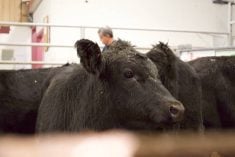
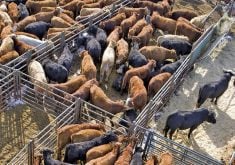
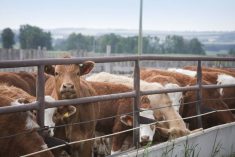
Trump’s helping hand for the Milei government has also left U.S. cattle producers mystified. Readers of Jerry Klassen’s column in this paper, and/or anyone who’s walked past the beef case at a grocery store lately, will know U.S. and Canadian cattle supplies have been tight and retail beef prices have been crazy high. Against that backdrop, in a bid to lower beef prices for U.S. consumers, the Trump administration announced it would quadruple the tariff rate quota (TRQ) for Argentine beef to 80,000 tonnes — maybe four or five per cent of the total U.S. imports from other beef-producing countries in a given year.
Naturally, the U.S. National Cattlemen’s Beef Association said its membership “cannot stand behind (Trump) while he undercuts the future of family farmers and ranchers by importing Argentine beef in an attempt to influence prices.” The protectionist U.S. ranchers’ group R-CALF said that while “beef prices are higher than what a competitive market would predict,” buying from Argentina would serve “to reduce demand for domestic cattle … and there couldn’t be a worse time for this to happen, as many producers are getting ready to sell this year’s production.”
It all depends on where you look, of course, but Trump’s weirdly specific support for the Milei government — which subsequently got a bump in domestic popular support, scoring wins in Argentina’s midterm elections in late October — doesn’t yet seem to have translated to much sympathy for U.S. farmers and ranchers, at least among the segment of the U.S. public who never trusted Trump in the first place. Their general response, to borrow a phrase making the rounds, is “Have the day you voted for.”
Buyer’s remorse
Had this been 20 or more years ago, I’d’ve considered that a harsh judgment at best. In those days I’d always assumed, given candidates’ zealous pursuit of the ag vote, that the U.S. farm belt was, generally, up for grabs in that country’s elections, as the basic planks of Democrat and Republican ag and rural policy were largely indistinguishable.
From about 2012 onward, though, that all began to change. At the outset of Joe Biden’s administration in early 2021, I had a chat online with U.S. farm writer Alan Guebert, who observed that sometime in the stretch from 2012 through to 2016, counties in ag states such as Iowa had gone almost solidly red in favour of the Republicans — and Trump. Guebert’s bleak assessment was that a lot of ag assets in those areas have concentrated in the hands of wealthy and politically influential people, and rural depopulation has further shifted the demographics of those areas, creating electorates far less interested in what the other party might offer. (That, I think, also produces politicians uninterested in reaching out to groups they can’t reach or already have sewn up, but that’s a whole other rant.)
Whether farmers and ranchers in those areas are now experiencing buyer’s remorse remains to be seen — and even if they are, does it matter? Incredible as it may seem amid the lunacy raining down on Canada since Trump returned to office back in January, we all still have at least three years of it to go, and a lot can change in that time one way or the other, be it the outcome of midterm elections in 2026 or any other events or decisions that might or might not swing in U.S. farmers’ favour. And besides, as more people in farming states move off the land into towns or smaller cities, are farmers’ problems still necessarily top-of-mind when they all go to vote? Were they ever?
What’s worse for you out here on the Prairies, though, is that these decisions — tariffs, revenge tariffs, attempts at market manipulation — all ultimately weigh on the prices you receive for your work. Having the day you voted for is one thing; having a day you didn’t vote for is another. Having a day you never got to vote on in the first place, though, is quite possibly the worst.